

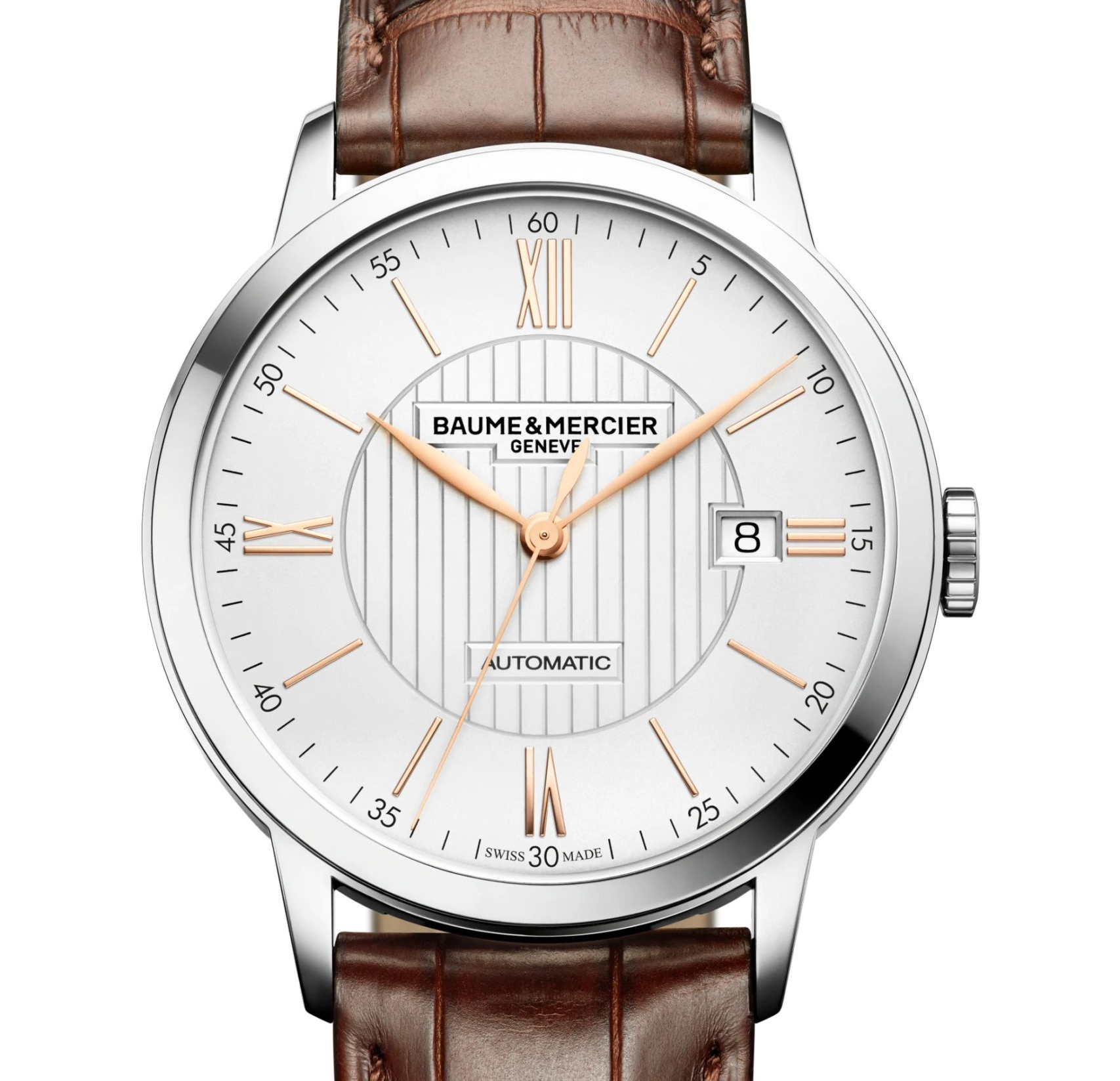
Classima
Model History
The roots of the Classima go back to the 1990s, when the maison presented the Classima Executives line: a watch with a sober dial and a round case, explicitly conceived — as the brand's communication of the time put it — for "businessmen and decision-makers," meaning an audience looking for an elegant yet discreet timepiece, suitable for any occasion without ever appearing flashy. Over time the "Executives" label was dropped and the collection simply took the name Classima, remaining firmly the brand's most representative entry-level product.
In 2015, at the SIHH in Geneva, the Classima underwent a major restyling: the men's case diameter shrank from 42 to 40 mm and the dial was lightened, with the declared aim of bringing the model more in line with contemporary tastes without betraying its essential character. The following year, in 2016, the range was joined by the "My Classima" sub-line, conceived to offer access to the brand at a price under 1,000 dollars and to reach a younger audience or those new to a Swiss-made watch.
Precisely because of its role as a "generalist" collection — capable of covering an extremely wide range of sizes, materials and complications, from simple date quartz to chronographs, dual time zone, moon phases and open-worked balance wheels — the Classima remains today Baume & Mercier's most extensive catalogue, with dozens of men's and women's references in production at the same time: it is historically the maison's best-selling line, even without the iconic or "niche" character of collections such as the Riviera or the Capeland.
Technical Specifications
Main Executions
Despite likely being the best-selling collection in Baume & Mercier's history, the Classima is also the one that appears least often in trade magazines and in the brand's "cult" stories: its very reason for being — discretion, the absence of flashy traits, adaptability to any wrist and occasion — makes it less photogenic in the eyes of the trade press than models with a more defined character such as the Riviera or the Capeland, even though it remains the maison's true commercial engine.