

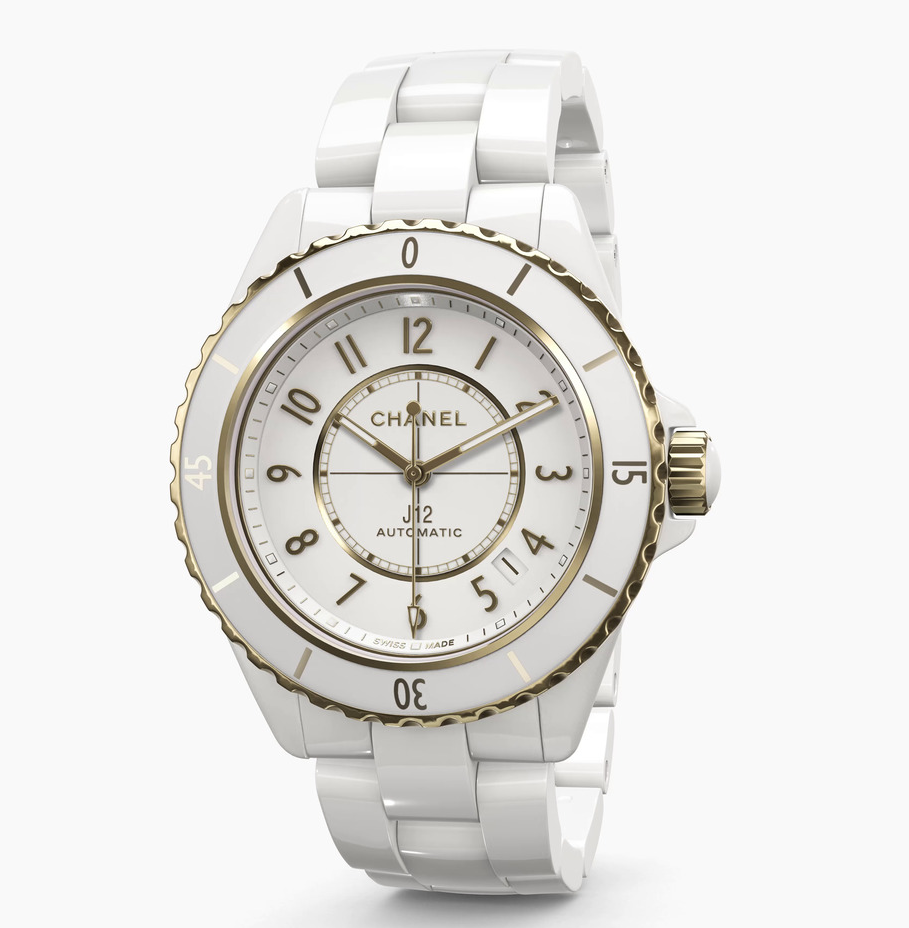
Model History
The J12 was introduced between 1999 and 2000, conceived by then artistic director Jacques Helleu, who drew inspiration from the world of sailing regattas and racing cars — hence the name, which recalls the J Class racing yacht class. It is the first luxury watch to feature a case and bracelet made entirely of high-tech ceramic, a material until then used almost exclusively in industrial and aerospace applications for its extreme scratch resistance, far superior to that of steel.
The J12's success also owes much to its stylistic framework: clean, graphic lines, a knurled rotating bezel recalling the bezel of a dive chronograph, an overall sporty design made precious by the ceramic's finishing, polished with diamond dust until it achieves a smooth-to-the-touch surface. Conceived as a unisex watch, the J12 quickly established itself as one of the rare cases of a "fashion" watch able to earn an independent reputation even among pure watch enthusiasts, helped also by the adoption of certified mechanical movements.
Over the years the line has expanded with the white ceramic version (2003), high-watchmaking editions with a tourbillon, and a thorough redesign in 2019 for its twentieth anniversary, introducing the new in-house caliber 12.1 developed in collaboration with Kenissi and chronometer-certified. More recently, experimental variants have arrived such as the J12 X-Ray, with a transparent sapphire bracelet, and new ceramic colorways confirming the model's vocation to remain a laboratory of material innovation for the house.
Technical Specifications
Main Executions
Despite now being the model most identified with Chanel watchmaking, the J12 was not conceived as a watchmaking project in the strict sense: Jacques Helleu, its creator, was not a watchmaker but the house's artistic director, also historically responsible for the image of Chanel's perfumes — a "fashion" origin that did not prevent the J12 from earning technical credibility recognized even outside the fashion world.