

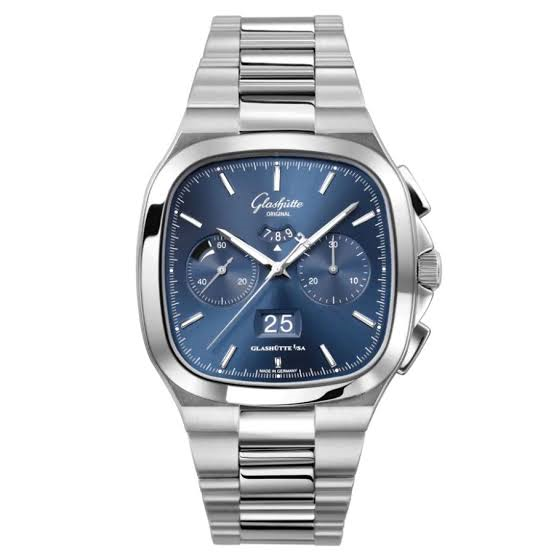
Seventies
Model History
The Seventies line, today part of the catalog's Vintage family, reinterprets in a contemporary key the integrated-case aesthetic that spread between the 1960s and 1970s, a stylistic language that in that period characterized much of European sporty-elegant watchmaking, Glashütte included.
The octagonal case with integrated bracelet, the structured dial and the compact proportions directly recall the sporty models produced in eastern Saxony in that decade, when the local manufacture — then operating under the state management of East Germany — also made timepieces with a more modern aesthetic language than the town's classic tradition.
In its more recent versions the collection has also incorporated the Panorama Date and, in the chronograph variant, a three-counter display, showing how the vintage aesthetic is now paired with the same technical solutions that characterize the brand's contemporary collections, such as Senator and Pano.
Technical Specifications
Main References
The collection directly recalls the sporty models made in Glashütte during the years of the East German regime, when local watch production, though operating under conditions very different from today's, was already experimenting with shapes and languages far from the town's classic tradition.