

Movements & Calibres
History of Movements
It all begins with the verge escapement, the first mechanism able to turn the continuous push of a weight into a series of regular impulses: it appeared in late thirteenth-century Europe and made possible, between the fourteenth and fifteenth centuries, the construction of the first great mechanical tower clocks in town squares and convents. The turn towards portability came with the invention of the mainspring (late fifteenth century), which replaced weights with a coiled steel blade able to store energy: this is how the first table clocks were born and, by the sixteenth century, the first portable pocket and neck watches, still very inaccurate.
The true revolution in accuracy is the balance spring (or "hairspring"), which in 1675 made it possible for the first time to regulate the oscillation of the balance consistently — the invention is traditionally attributed to the Dutchman Christiaan Huygens, although the Englishman Robert Hooke claimed authorship of it all his life, a dispute that watchmaking historians still debate today. A century later, the English watchmaker Thomas Mudge developed the detached lever escapement (mid-eighteenth century): unlike the verge, the lever interferes with the balance only for the instant needed to give it energy, leaving it free to oscillate the rest of the time. It is the principle — perfected over the following decades by English, French (above all Abraham-Louis Breguet) and finally Swiss watchmakers — on which almost all mechanical watches are still based today. In the same period the Englishman John Harrison built his marine chronometers (the famous H4 of 1761), solving the problem of longitude at sea and demonstrating that a portable timepiece could be as accurate as an observatory.
Another practical leap came in 1842, when the young watchmaker Jean-Adrien Philippe (future co-founder of Patek Philippe) invented keyless winding and time setting, both operated from the crown: until then every pocket watch required a separate key, easy to lose. The wristwatch format, already in existence but considered for decades a mainly feminine accessory, established itself definitively thanks to the First World War (1914-1918): officers and soldiers at the front adopted so-called "trench watches", more practical to consult than a pocket watch, and on returning from the conflict made them an everyday object for men as well. In the 1920s came automatic winding: the English watchmaker John Harwood patented in Switzerland in 1923 (granted in 1924) an oscillating rotor system that rewinds the mainspring with the movements of the wrist, presented at the Basel Fair in 1926; in 1931 Rolex introduced with the Oyster Perpetual its own rotor system turning through 360 degrees, which became the reference on which most automatic movements are still based today.
The most recent innovations concern both electronics and materials. In December 1969 Japan's Seiko launched the Astron, the first quartz wristwatch in history (the full story is in the Japan section below): the near-absolute accuracy and low cost of quartz upended the balance of the entire industry within a few years. On the mechanical front, in 1999 Omega introduced on its movements the co-axial escapement, devised by the British watchmaker and historian George Daniels: compared with the traditional lever, it reduces friction between the parts in contact, lengthening the intervals between one service and the next. Over the last twenty years more and more manufactures have also been experimenting with silicon components — hairsprings and pallet forks above all — to reduce wear and sensitivity to magnetism, without changing the underlying architecture, which has remained substantially the same since the days of Mudge and Breguet.
Types of Movement
The Great Watchmaking Schools of the World
🇨🇭 Switzerland
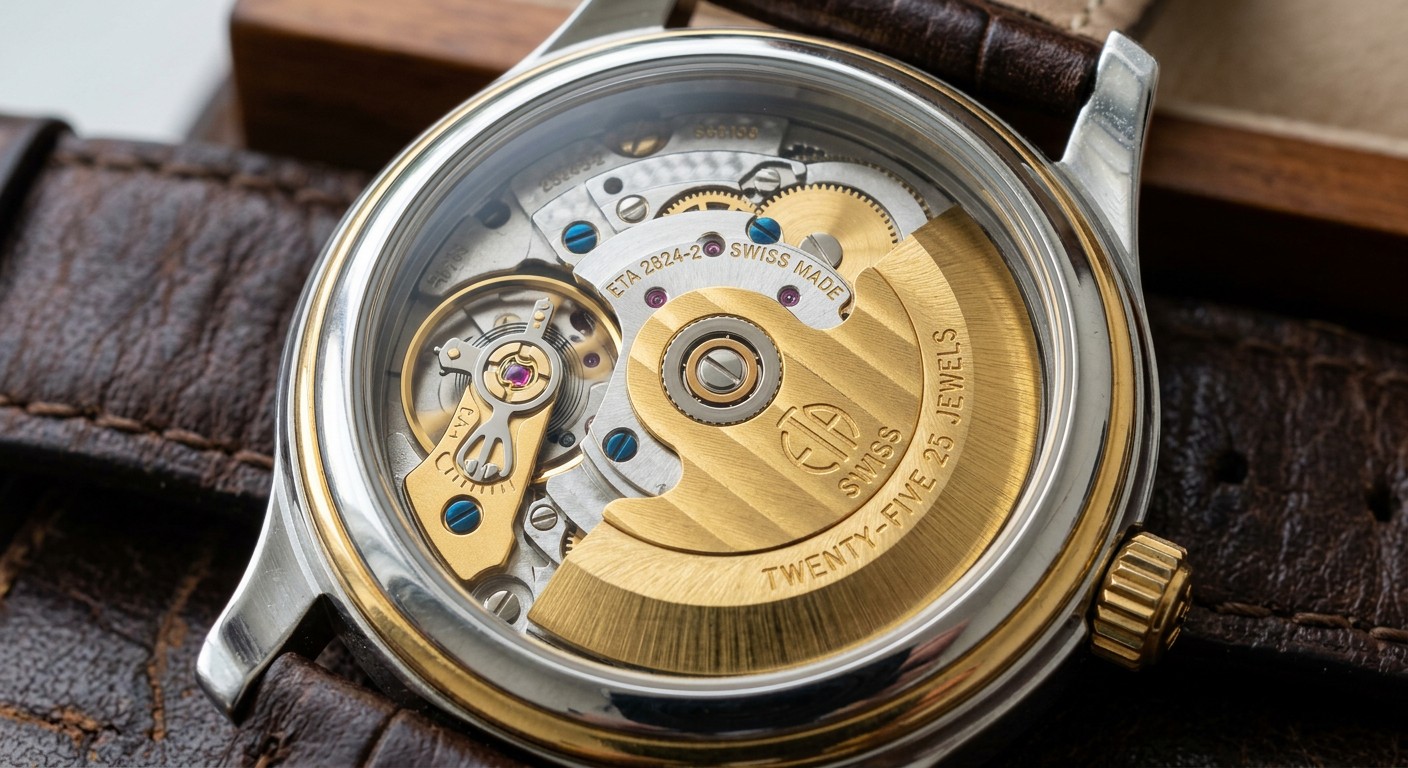
It remains the heart of world mechanical watchmaking, a primacy built over the centuries along the Jura arc — the valleys between Geneva, Neuchâtel and Basel where in the seventeenth century French Huguenots fleeing religious persecution brought watchmaking with them, grafting it onto a peasant workforce used to precision work during the long winters. From this tradition come both the manufactures that produce entirely in-house calibres (Patek Philippe, Vacheron Constantin, Audemars Piguet and many others) and the industrial model of the "ébauches": rough movements produced on a large scale by third-party suppliers and then finished, regulated and assembled by the individual brands. Today this role is played mainly by ETA (part of the Swatch Group, historic maker of hugely widespread calibres such as the 2824-2) and by Sellita, active since 1950 and grown into a supplier of calibres derived from the ETA ones when the Swatch Group reduced supplies to outside brands. The accuracy of Swiss movements can be certified by an independent body, the COSC (Contrôle Officiel Suisse des Chronomètres), which recognises as "chronometers" only those movements that pass strict regularity tests in several positions and temperatures.
🇩🇪 Germany
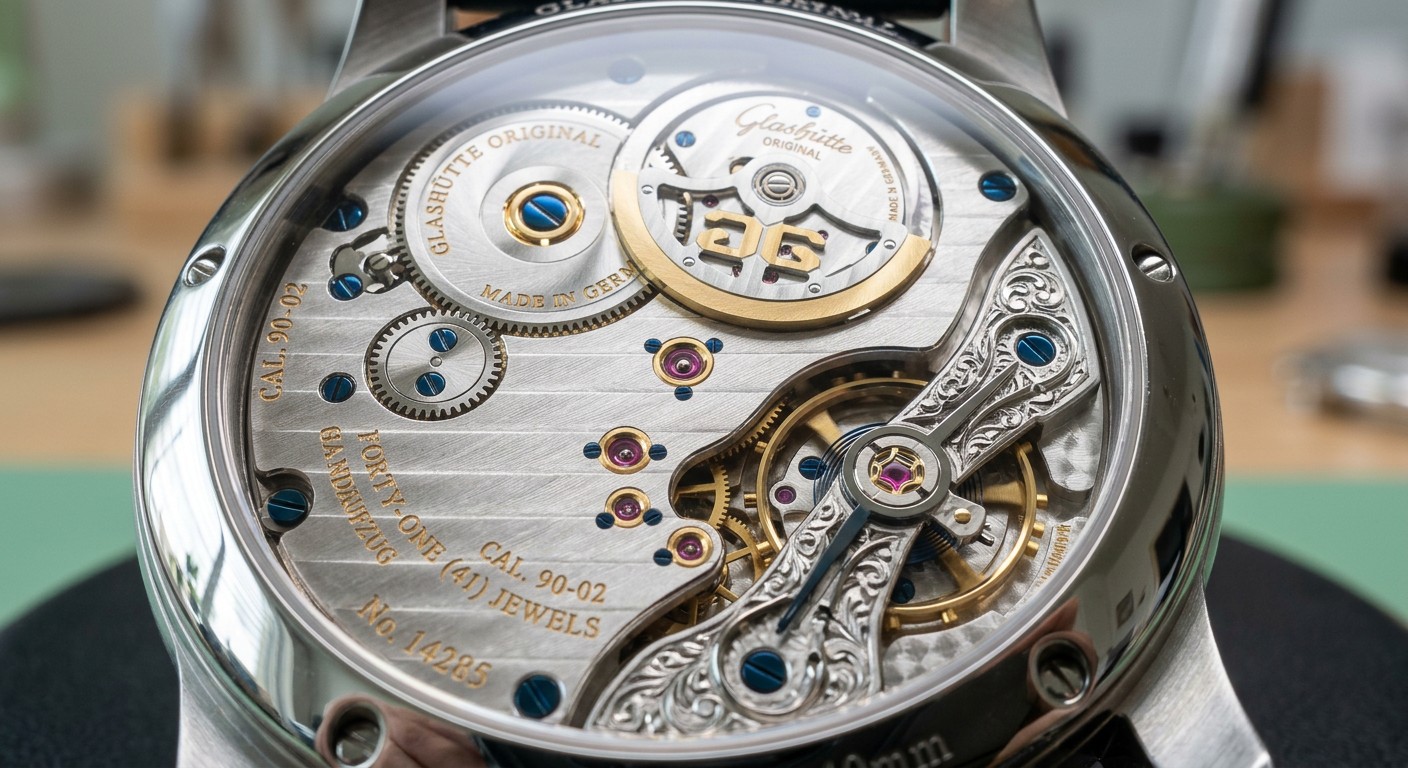
In Glashütte, a Saxon town not far from the Czech border, a watchmaking tradition parallel to and distinct from the Swiss one was born in 1845, founded by Ferdinand Adolph Lange to offer an employment alternative to the decline of the local mines. The German style is recognisable at a glance: the three-quarter plate (a single plate covering most of the movement instead of the separate individual bridges used in Switzerland), the blued screws, hand engravings such as the "Glashütte" ribbing and the swan-neck regulator for fine adjustment of the balance. Nationalised during the East German era, the tradition was reborn after the reunification of 1990 thanks above all to Walter Lange, a descendant of the founder, who re-founded A. Lange & Söhne, and to manufactures such as Glashütte Original; NOMOS Glashütte, which arrived later, instead offers slim calibres with a more modern and minimalist approach.
🇯🇵 Japan
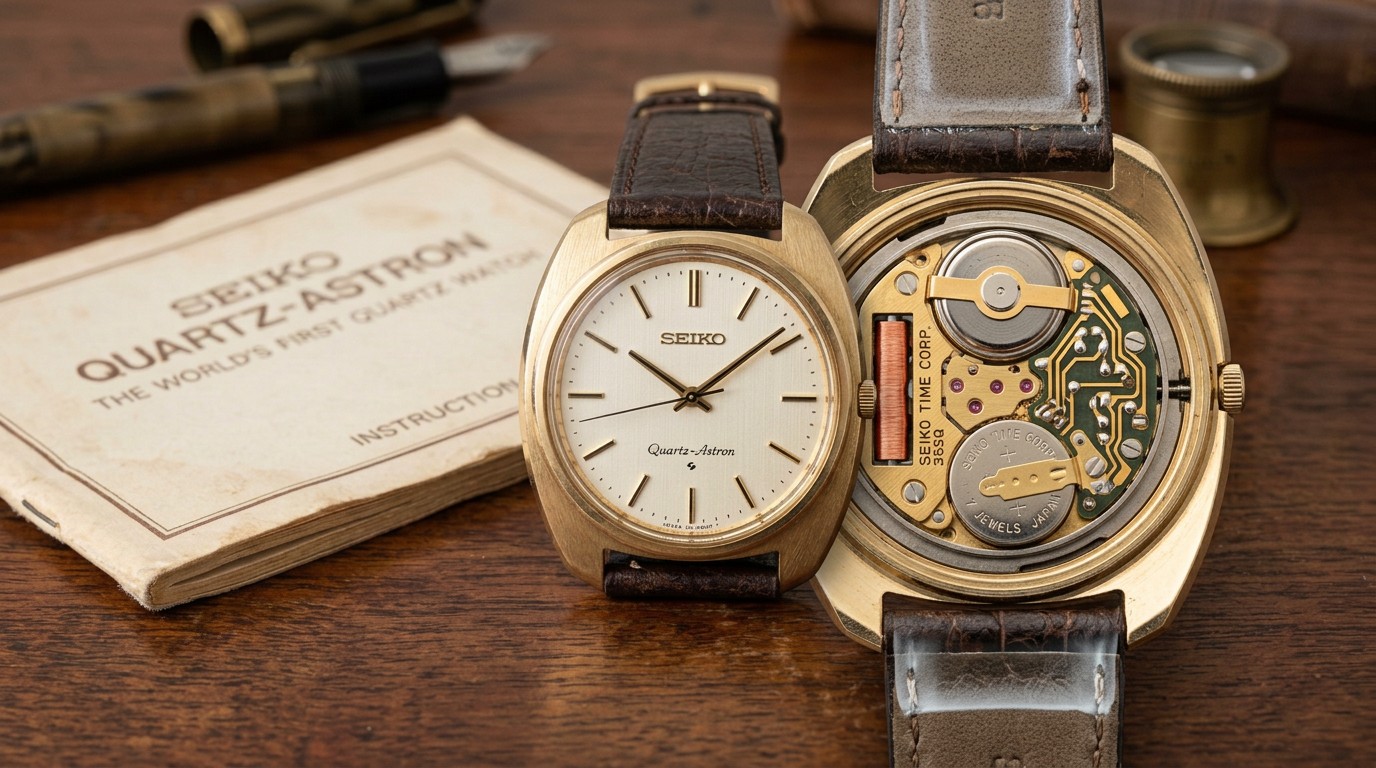
Japanese watchmaking was born in 1881 in Tokyo, when Kintarō Hattori opened a watch and repair shop that in 1892 began producing its own movements under the Seiko brand. Seiko marked two turning points that changed the history of the sector on a worldwide scale: in 1960 it launched Grand Seiko, a line designed to compete on equal terms with Swiss haute horlogerie in terms of pure accuracy, and in December 1969 it presented the Astron, the first quartz wristwatch in history — an event that triggered the so-called "quartz crisis" in the Western mechanical industry of the 1970s and 1980s. Seiko then also developed Spring Drive (in production since 1999), a hybrid movement that uses a traditional mechanical mainspring but replaces the escapement with an electronic quartz regulator, achieving quartz accuracy together with the mechanical gesture of winding and a seconds hand that glides continuously instead of ticking. Alongside Seiko, Citizen (founded in 1918) is known for its light-powered Eco-Drive technology, while its subsidiary Miyota produces some of the most widespread inexpensive automatic movements in the world in mid-range watchmaking; Orient completes the historic Japanese trio, specialising in in-house automatic movements at accessible prices.
🇨🇳 China
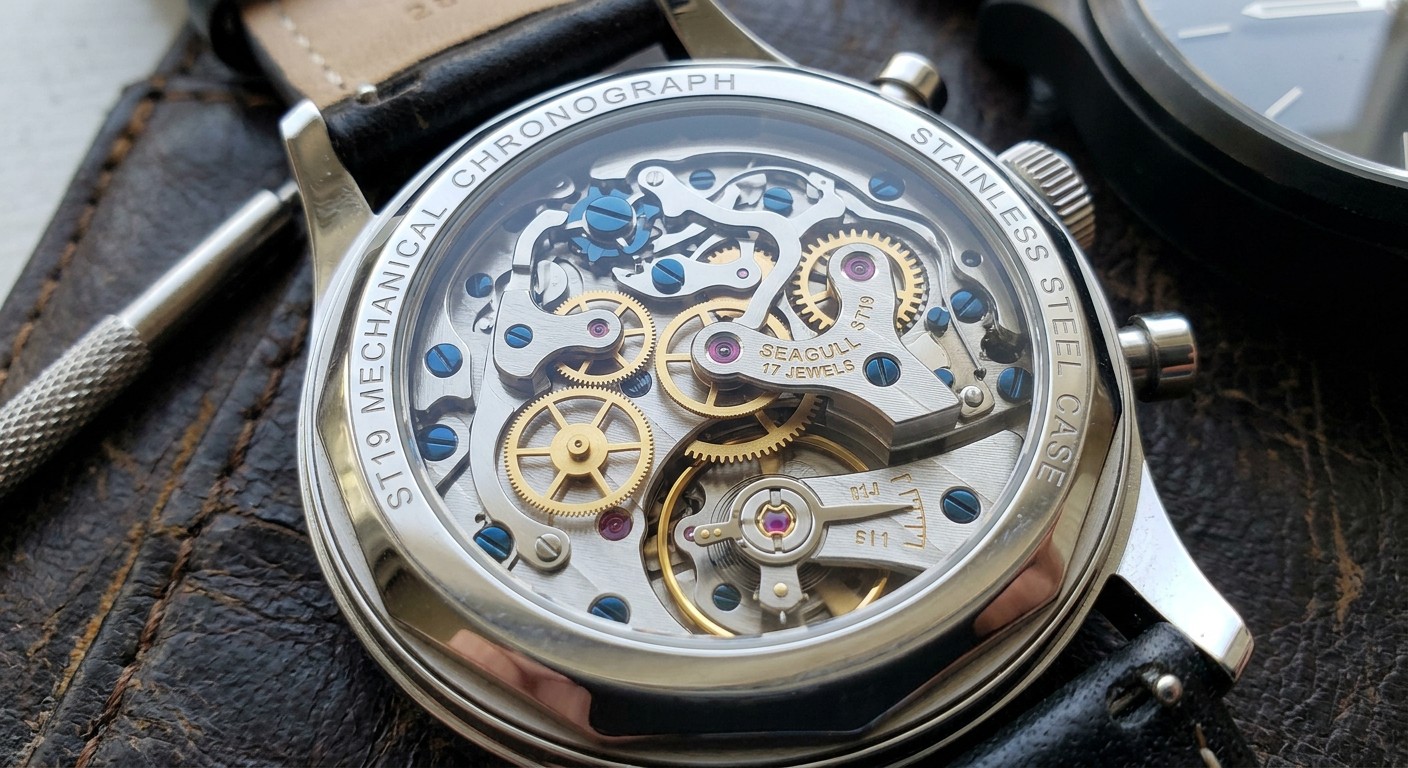
The Chinese watch industry was born in the 1950s, when the state-owned manufacture of Tianjin (later known as Tianjin Sea-Gull, or simply Seagull) produced the country's first mechanical movements. The leap in quality came in the 1960s with "Project 304", an initiative to equip the Chinese military air force with an entirely domestic chronograph: from the 1963 prototypes came the ST3 calibre, delivered to pilots from 1966. In 2002 Seagull presented its modern evolution, the ST19 calibre, still one of the few manual-winding column-wheel chronograph movements produced on an industrial scale outside Switzerland — the basis of many affordable but mechanically serious watches, including reissues of the historic Seagull 1963 chronograph. Over the last twenty years Chinese production has expanded rapidly, from basic movements for the domestic market and for low-end export up to the first attempts at domestic haute horlogerie (tourbillons, minute repeaters), always signed Seagull.
🇷🇺 Russia / USSR
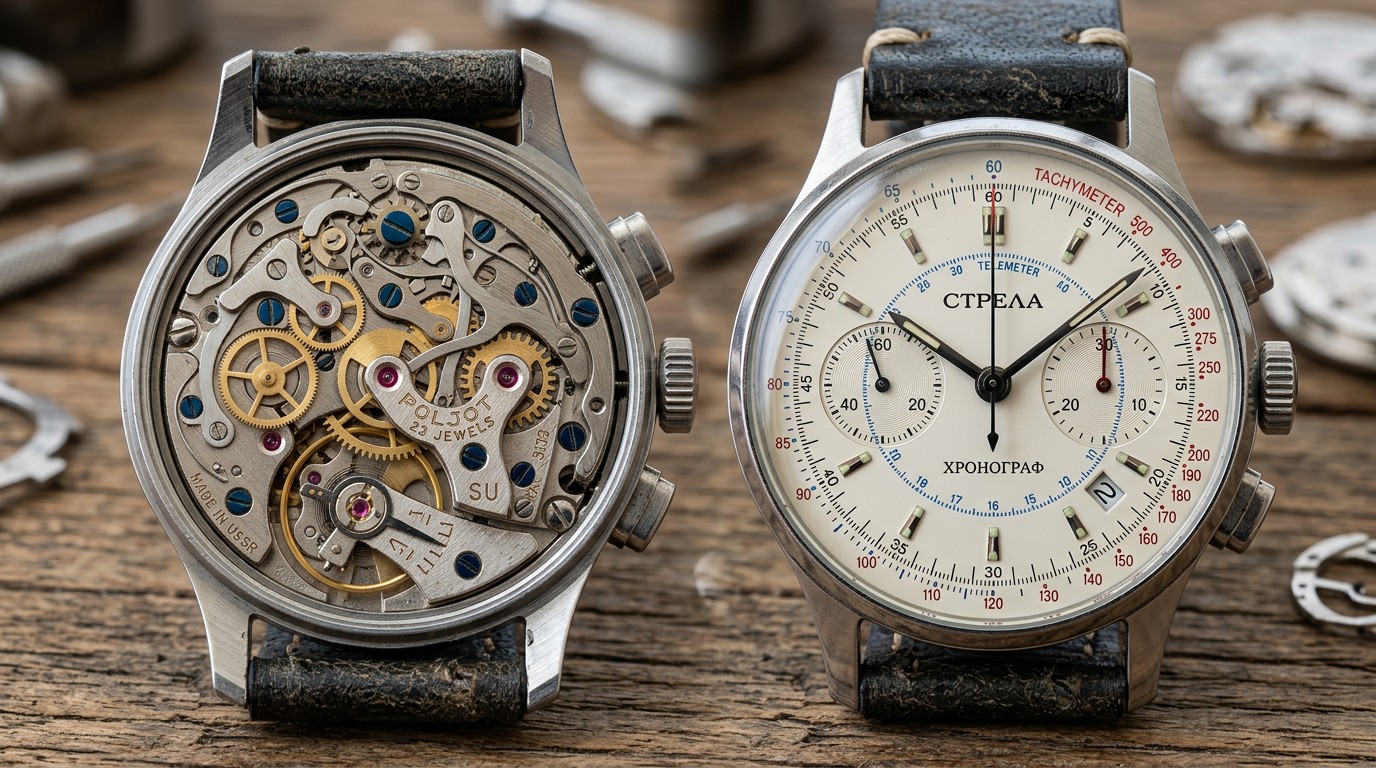
The Soviet watch industry was born in 1930 with an unusual operation: the USSR bought the entire plant of the bankrupt American Dueber-Hampden Watch Company and moved it to Moscow together with twenty-one American technicians, giving life to the First State Watch Factory. From here, over time, came the historic Soviet brands: Poljot (from the same Moscow factory — the name means "flight" and is tied to Soviet aviation and space records, so much so that a Poljot Strela chronograph accompanied Alexei Leonov on the first spacewalk in 1965), Vostok (Čistopol' factory, known for the robust waterproof automatic calibres of the Amphibia and Komandirskie series), Raketa (Petrodvorets factory, near Saint Petersburg, heir to an ancient lapidary workshop founded by Peter the Great) and Slava (Second Moscow Factory). Between the 1950s and 1960s the USSR became the world's second-largest watch producer after Switzerland, with robust calibres deliberately simple to repair, designed for mass use rather than refinement. After the collapse of the Soviet Union in 1991 the industry fragmented, but some brands — Vostok and Raketa above all — survived as independent producers, still appreciated by collectors for the aesthetics and robustness of the Soviet school.
Historic Calibres: the Movement Families That Made History
The term "calibre" indicates the specific design of a movement: the same manufacture often fits the same calibre, with small variations, in dozens of different models and brands over the decades. Some calibres have remained so influential, reliable or revolutionary that they deserve a story of their own — here is a selection, in chronological order.
🇨🇭 Valjoux 72 (from 1938)
Presented in 1938 as an evolution of the earlier Valjoux 22 (1914), calibre 72 is the manual-winding chronograph that for decades defined the look of the "three-register chronograph": column wheel, two pushers, minute and hour counters in addition to the central seconds. Produced until the 1970s, it powered some of the most famous chronographs in history — including the first references of the Rolex Daytona, the Heuer Carrera and the Breitling Navitimer — and today remains highly sought after by collectors for its reliability and ease of maintenance, as well as for the more complex variants derived from it (the 72C with full calendar, the 724 with GMT, the 720 with flyback).
🇨🇭 Unitas 6497 and 6498 (1950s)
Born in the 1950s at the Swiss manufacture Unitas of Tramelan (later merged into Ebauches SA and finally into ETA, which renamed them 6497-1 and 6498-1 from 1967), these two manual-winding calibres take up the classic layout of pocket watches: the 6497 has the small seconds at 9 o'clock ("Lépine"), the 6498 at 6 o'clock ("Savonette"). The large diameter (36.6 mm) and the broad bridges, ideal for display decoration, made them popular in the 1990s with the revival of mechanical watchmaking; even today they are among the movements most used in watchmaking schools for their constructional simplicity, as well as a recurring choice for independent micro-brands that want an exhibition caseback at low cost.
🇯🇵 Seiko 5, calibre 6206 (1963)
Launched in 1963 as the Seiko Sportsmatic 5, it is the first automatic day-date watch made in Japan, designed around five fixed principles that give the line its name: automatic winding, water resistance, a day-date window at 3 o'clock, the crown at 4 o'clock (so as not to interfere with winding on the wrist) and a sturdy case/bracelet with a masculine design. It cost roughly five times less than a Rolex Submariner of the day, making accessible on a large scale for the first time a complication until then reserved for high-end watchmaking — a layout that, with progressively updated calibres, the Seiko 5 line essentially maintains still today.
⚙️ 1969: the Race for the Automatic Chronograph
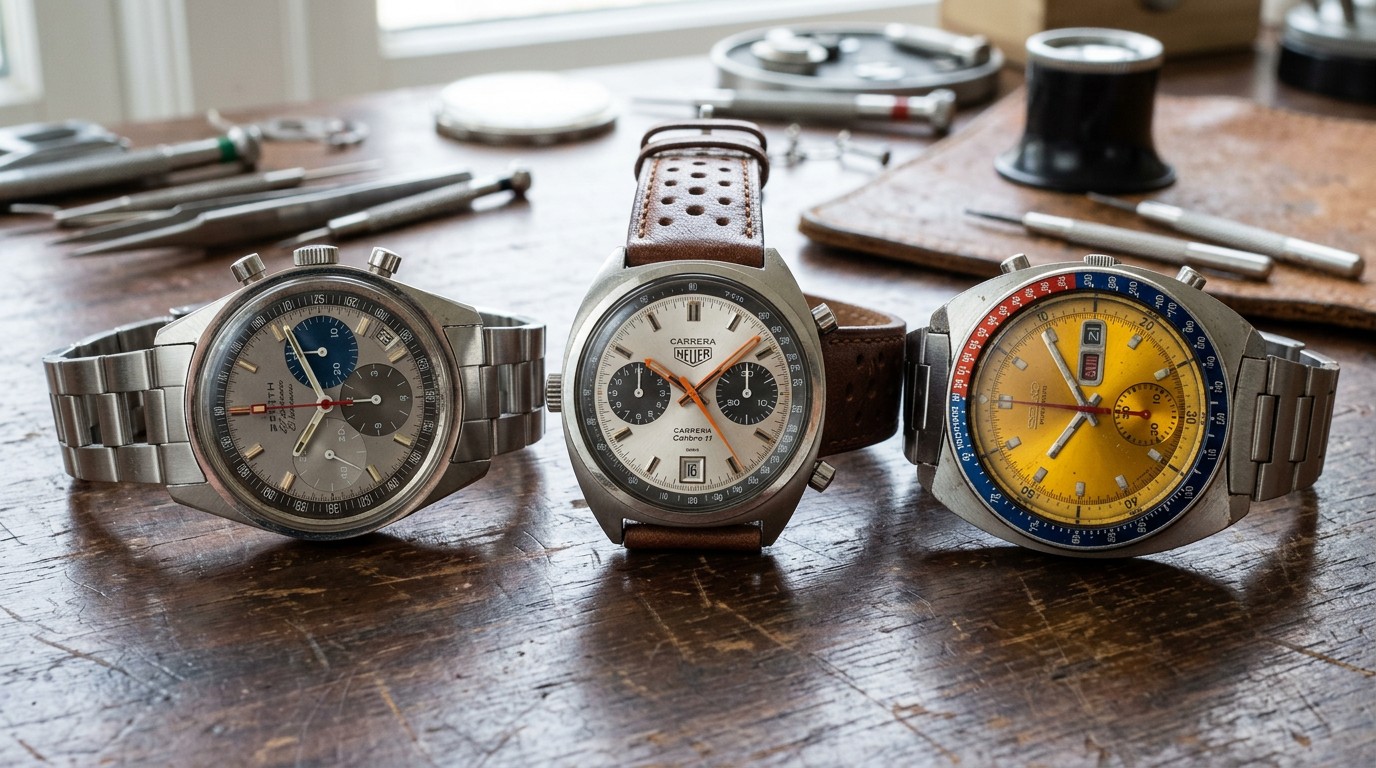
1969 is the year in which three competing groups, unaware of one another until the last moment, vied for the primacy of the automatic chronograph. On 10 January 1969 Zenith was the first to present calibre 3019 PHC, later renamed El Primero: it beats at 36,000 alternations/hour (5 Hz), a very high frequency for the time that makes it possible to read the chronograph to a tenth of a second, in only 6.5 mm of thickness. A few weeks later a consortium made up of Heuer, Breitling, Büren and Dubois-Dépraz presented Calibre 11 (also known as "Chronomatic"), a different design that places the automatic winding rotor on one side of the movement instead of superimposing it. Also in 1969 Seiko launched in Japan calibre 6139 (fitted to the "5 Sports Speed-Timer" model), with column wheel and vertical clutch: one of these watches, bought out of his own pocket by the American astronaut William Pogue, even ended up on board the Skylab 4 mission in 1973. Zenith is generally recognised as the first to have presented its design, but all three calibres remain milestones, each with original technical solutions.
🇨🇭 ETA 2824-2 (from 1971)
Introduced in 1971, the 2824 (in its most widespread version, the 2824-2) is the automatic calibre that more than any other made the Swiss industry standard: compact dimensions, robust construction, enough torque to drive additional modules (date, GMT...) and maintenance so simple that, if regularly serviced, it is guaranteed an almost unlimited life. It is precisely because of this unpretentious reliability that it has become the silent engine of thousands of mid-range watches all over the world, from the 1970s to today.
🇨🇭 Valjoux 7750 (1973-1974)
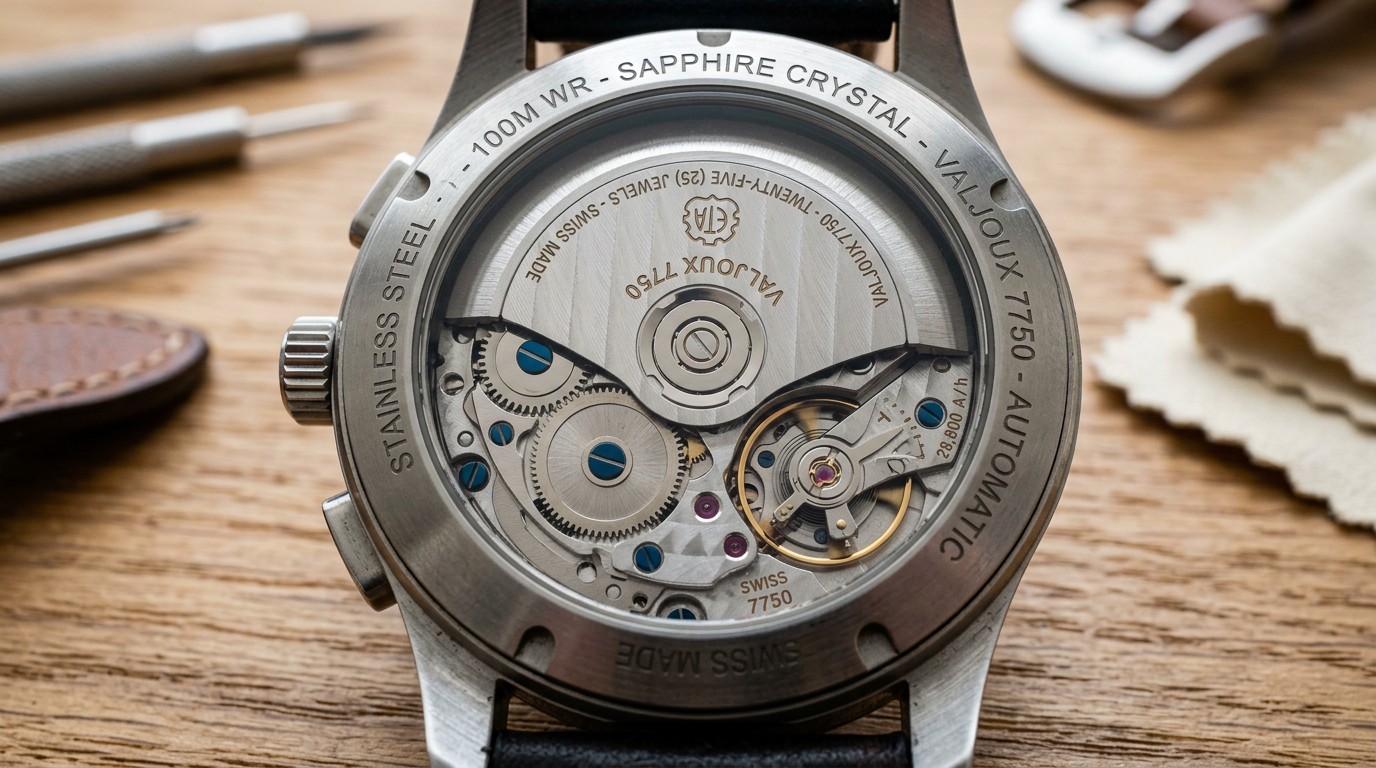
Developed in 1973-74 by the young watchmaker Edmond Capt — only twenty-four years old — to offer an automatic chronograph cheaper than the competitors of the time (including the very Seiko 6139 and Zenith El Primero), the 7750 risked disappearing before it was even born: in the midst of the quartz crisis, Valjoux's management ordered the destruction of tooling and drawings, convinced that mechanics had reached the end of the road. Capt secretly set aside whatever he managed to save, and when mechanical watchmaking came back into fashion in the 1980s the calibre was ready: cheap to produce (thanks to a cam-actuated construction in place of the more expensive column wheel), robust and easily modular, it became the most widespread chronograph engine in history — so much so that even today, half a century later, it is at the heart of automatic chronographs at every price level.
🇷🇺 Poljot 3133 (1970s-1980s)
Introduced in the 1970s but produced on a large scale only from 1983, the 3133 is the manual-winding chronograph calibre of the Moscow factory Poljot, at the heart of historic watches such as the Strela ("arrow" in Russian, tied to Soviet space flights — one example accompanied Alexei Leonov on the first spacewalk in 1965, at the time with the earlier calibre 3017). Although it arose from the adaptation of tooling and technical solutions of Swiss origin (the Venus 150/188 and Valjoux 7734 calibres), the 3133 is not a copy: it beats at a higher frequency (21,600 alternations/hour against the 18,000 of the originals) and fits a different regulating assortment (balance and escapement), with non-interchangeable parts. It is still produced, under the MakTime brand, for Soviet-style watches and reissues.
🇷🇺 Vostok 2414 and 2416B
Developed by the Čistopol' factory, the automatic calibres 2414 and its evolution 2416B are the mechanical soul of the celebrated Amphibia diver series: spartan but extremely robust construction, designed to be repaired in the field rather than for refinement — the same essential philosophy that has made Vostok an affordable reference for enthusiasts of vintage and modern dive watches.
🇯🇵 Miyota 8215 and 9015
Produced by Japan's Miyota (a subsidiary of Citizen, founded in 1959 as an assembly plant), the 8215 and the more recent 9015 are today among the most widespread automatic calibres in the world in the affordable range: the first, simple and inexpensive (21 jewels, power reserve of over 40 hours), has for decades powered watches from mainstream brands and independent micro-brands; the second, thinner and more refined (24 jewels, seconds stop for precise time setting), has become the de facto standard for emerging brands that want to offer a higher-quality automatic without the cost of a Swiss calibre.
🇯🇵 Grand Seiko, calibre 9S (from 1998)
Introduced in 1998 for the 35th anniversary of the first Grand Seiko of 1960, calibre 9S marks the line's return to pure mechanics after decades of ultra-high-accuracy quartz: robust construction, hand-polished "Zaratsu" finishing and, in the later "Hi-Beat" versions, a frequency of 36,000 alternations/hour — the same as the Zenith El Primero — for a smoother and more precise running. It is the calibre with which Japan chose to compete on equal terms with Swiss haute horlogerie, on its own ground.
🇩🇪 A. Lange & Söhne Datograph, calibre L951.1 (1999)
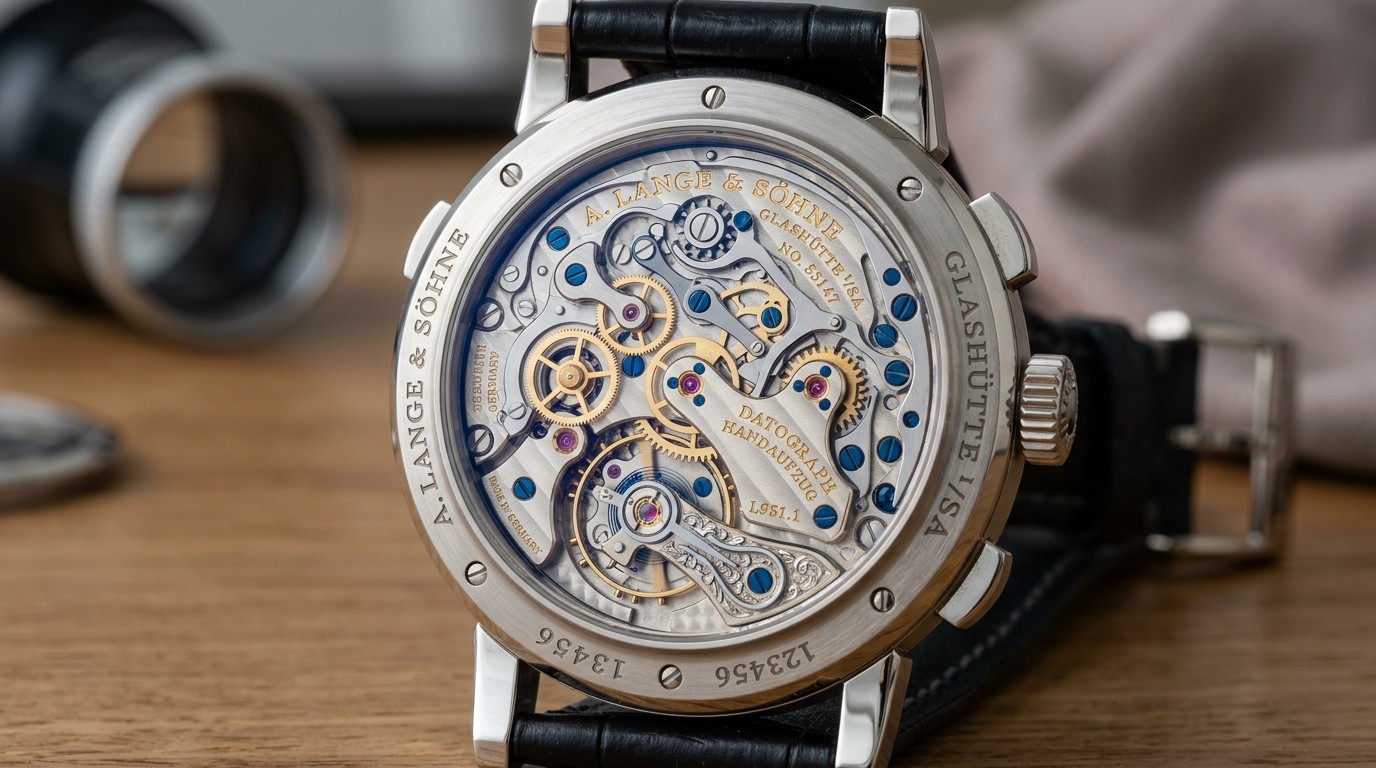
Presented in 1999 at the Basel Fair, barely nine years after the re-founding of A. Lange & Söhne in reunified Germany, calibre L951.1 is an integrated chronograph — designed from scratch as a chronograph, not derived from a base calibre with a module added on top — with column wheel, lateral clutch, flyback function and an instantaneous-jump minute counter of rare mechanical precision. It arrived at a time when even prestigious manufactures such as Patek Philippe did not yet have an entirely original chronograph calibre of their own: the Datograph demonstrates that a newly reborn manufacture could compete with — and in part surpass — the centuries-old Swiss tradition.
To complete the overview, Seagull's Chinese calibre ST19 — born in 2002 from the evolution of the ST3 military chronograph of the 1960s — tells the same ambition outside Switzerland: the full story is in the section dedicated to China, further up.