
Alain Silberstein
Brand History
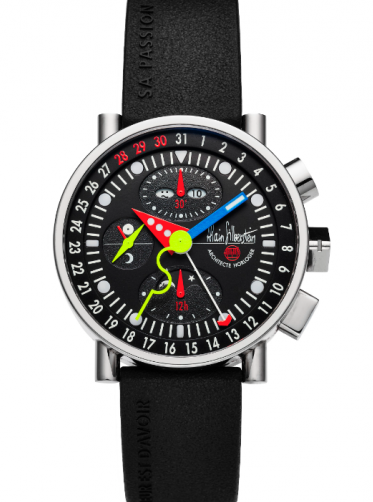
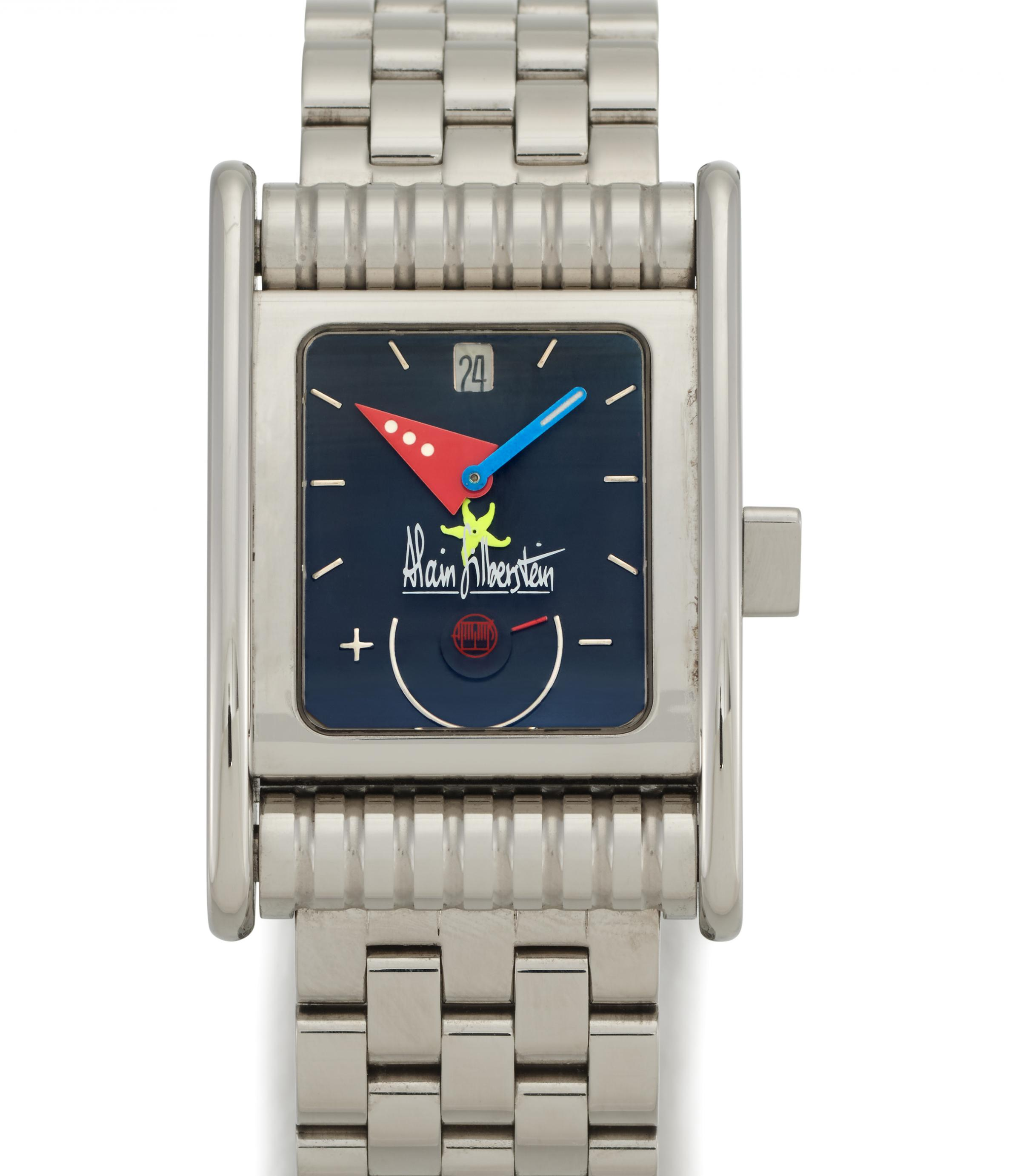
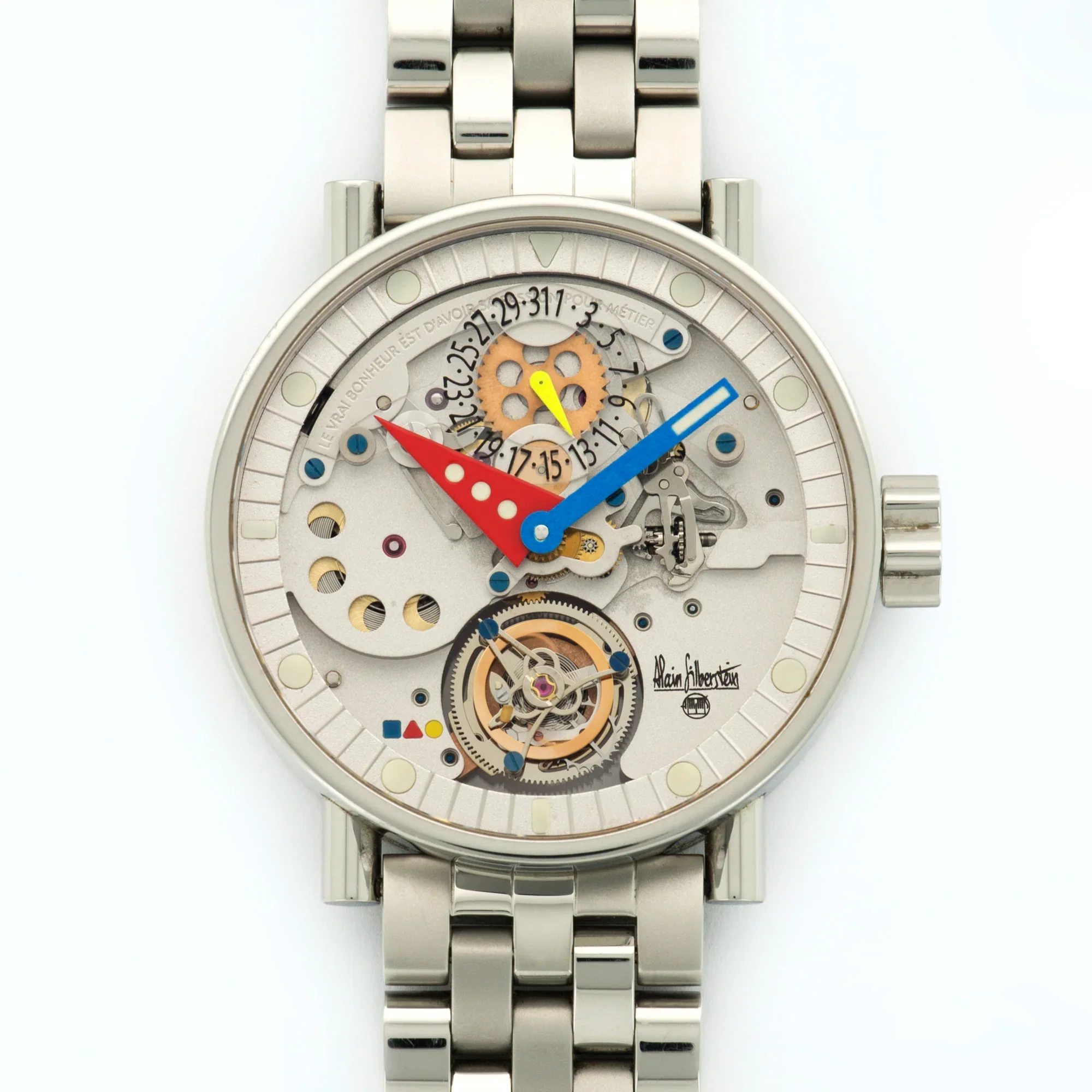
Alain Silberstein was born in Besançon in 1950, in the heart of France's ancient watchmaking tradition, but his path did not run through a watchmaking school: in the 1970s he studied interior design and architecture in Paris, at an institute that followed the Bauhaus curriculum. He himself has often described how that training shaped his outlook, going so far as to call himself not a watchmaker but an "Architecte Horloger" — an architect who applies to the wristwatch the principles of geometric functionalism and Wassily Kandinsky's color theory, which pairs primary shapes (circle, triangle, square) with primary colors (yellow, red, blue).
After roughly a decade as an interior designer, in 1987 — precisely during the years when the quartz crisis brought Swiss mechanical watchmaking to its knees — Silberstein founded his own brand and presented the Krono Bauhaus at the Basel fair, the first chronograph to carry his stylistic signature: cylindrical cases with straight lugs, pushers and a crown shaped like a colored triangle, square and circle, hands and indices that broke with every convention of classic Geneva watchmaking. It was a radical, almost playful-looking visual language, behind which lay serious pioneering work in materials and shapes previously foreign to haute horlogerie.
Through the 1990s and 2000s the brand built a coherent catalogue around that aesthetic, alternating chronographs, extremely limited-edition tourbillons and unusually shaped cases, and won over a following of collectors who consider him one of the fathers of independent designer watchmaking, alongside names such as Vianney Halter. Silberstein himself has described the following decade as a "baroque" period, one of perhaps too-ambitious growth: in 2012 the brand bearing his name filed for bankruptcy and ceased direct production.
Far from fading away, however, his legacy found new life through collaborations: first with independent watchmaker Max Büsser (MB&F, 2009 and 2016), then above all with the Swiss maison Louis Erard, which since 2021 has dedicated a long series of editions of its regulator watch to him — now the longest-running and most recognizable collaboration of the brand's recent history. It is precisely these collaborations, together with renewed interest in the vintage market for his historic pieces, that have brought Alain Silberstein back into the spotlight, cementing his standing as one of the most original and influential figures in independent watch design.