

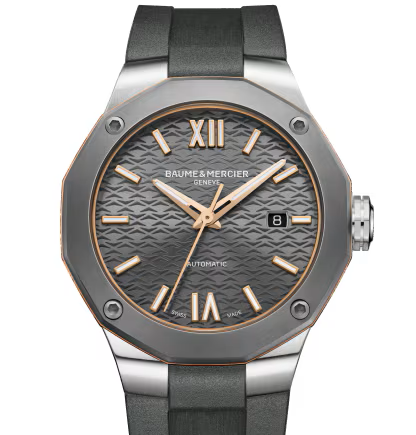
Riviera
Model History
The Riviera was born in 1973, designed by Jean-Claude Gueit at a turning point for Swiss watchmaking: steel, until then considered a lesser material compared to gold, begins to take center stage in high-end sports watches with integrated bracelets. The model reached the market just a year after Gérald Genta's Royal Oak for Audemars Piguet and three years before Patek Philippe's Nautilus, joining that same season of steel's rediscovery as a noble material.
The Riviera's distinctive trait is its twelve-sided, dodecagonal case, with four visible screws on the bezel that accentuate its sturdy, recognizable character; the first model paired this case with a flat H-link steel bracelet, for a result the brand has always described as "sport-chic," halfway between formal elegance and a sporting vocation.
Over the decades the collection has gone through five design generations, each updated in proportions and details but always faithful to the twelve-sided bezel; the model's fiftieth anniversary, celebrated in 2023, brought new reinterpretations that draw more closely on the aesthetic of the original 1973 Riviera, with automatic calibres and, in some versions, the in-house Baumatic movement.
Technical Specifications
Main Executions
The Riviera was born just a year after Audemars Piguet's Royal Oak and three years before Patek Philippe's Nautilus, effectively joining that same, very narrow generation of steel sports watches with integrated bracelets that would redefine the codes of luxury watchmaking — while remaining, over the decades, positioned at more accessible price points than those two illustrious contemporaries.