

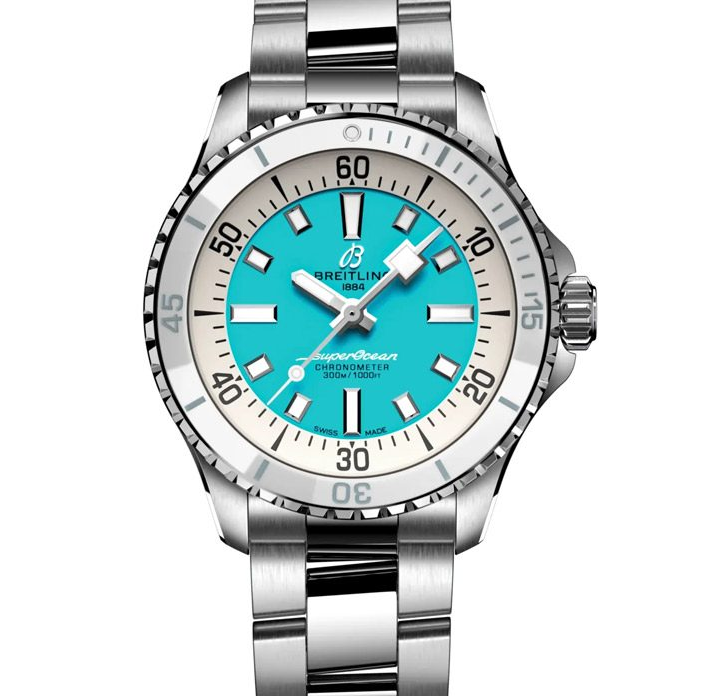
Model History
The Superocean debuts in 1957, at the height of the worldwide boom in recreational scuba diving triggered by the spread of Aqua-Lung regulators: Breitling, until then identified almost exclusively with aviation, responds to the growing demand for reliable underwater instruments with a watch fitted with a graduated rotating bezel for timing dives, a reinforced watertight case and, in the more advanced versions, a second safety gasket on the crown. From the very first references the model is conceived as a true professional instrument, not a simple sports accessory, in line with the "Instruments for Professionals" philosophy the brand already applied to its flight chronographs.
In the following decades the line establishes itself as Breitling's answer to the great competing Swiss dive watches, progressively expanding the declared water-resistance limits until reaching, in the most extreme versions of the range, a certified 1000 meters of depth — a value that places the Superocean among the most technically performant dive watches produced by the brand. Alongside the main line, in 2007 Breitling introduces the Superocean Heritage sub-family, which reinterprets the proportions of the first 1957 generation in a vintage key: a success with the public such that, over the years, it earns its own distinct collection identity within the catalogue.
Today the "modern" Superocean maintains a more strictly sporty and contemporary setup than its Heritage sibling, with robust-design cases, high-resistance ceramic bezels and chronometer-certified manufacture movements, positioning itself as an instrument designed for intensive underwater use rather than an aesthetic recovery of the past.
Technical Specifications
Main Executions
The Superocean and the Superocean Heritage share the same birth year, 1957, but today follow two opposite philosophies: the former keeps pushing the technical limits of water resistance, the latter instead aims to faithfully recreate the aesthetics and proportions of the original model, giving rise to two parallel collections born from the same historic root.