

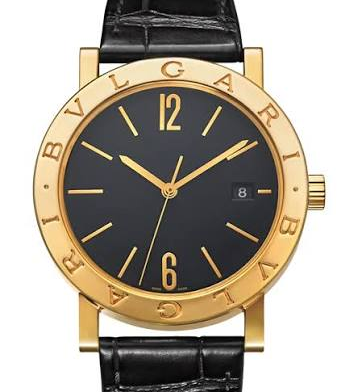
Bulgari Bulgari
Model History
The Bulgari Bulgari line is born in 1977, developing the intuition of the 1975 quartz Bulgari Roma, and is created with the collaboration of Geneva designer Gérald Genta — the same author, in those very years, of the Audemars Piguet Royal Oak and the Patek Philippe Nautilus. The element that makes the watch immediately recognizable is the engraving of the double name "BVLGARI BVLGARI" around the bezel's circumference: a choice that turns the brand's signature, usually discreet on the dial, into a true decorative motif in plain view, anticipating by years a trend toward "explicit branding" that would later become common in luxury watchmaking.
In the early 1980s the line expands to include the Serpenti aesthetic among its jewelry variants, while between the late 1980s and the mid-1990s semi-precious stone dials and new material combinations appear, confirming a catalogue designed to be continuously reinterpreted rather than fixed in a single form. The most significant qualitative leap, however, comes between 2001 and 2005, when Bulgari introduces high-watchmaking complications into the collection — perpetual calendar, tourbillon, minute repeater — demonstrating that the deliberately "jewelry" aesthetic of the Bulgari Bulgari could coexist with manufacture-grade mechanics.
Subsequent restylings in 2006 and 2013 update proportions and details to stay contemporary, while the most recent reissues — including 41 mm automatic steel variants and more compact 38 mm gold versions designed for a female audience — confirm the Bulgari Bulgari as one of the longest-lived and commercially most relevant lines in the brand's entire catalogue, nearly fifty years after its debut.
Technical Specifications
Main Executions
Gérald Genta, the same designer behind the Bulgari Bulgari, had signed just a few years earlier the Royal Oak by Audemars Piguet and the Nautilus by Patek Philippe: three of the most recognizable cases in contemporary watchmaking thus emerge, in a short span of time, from the same pencil.