

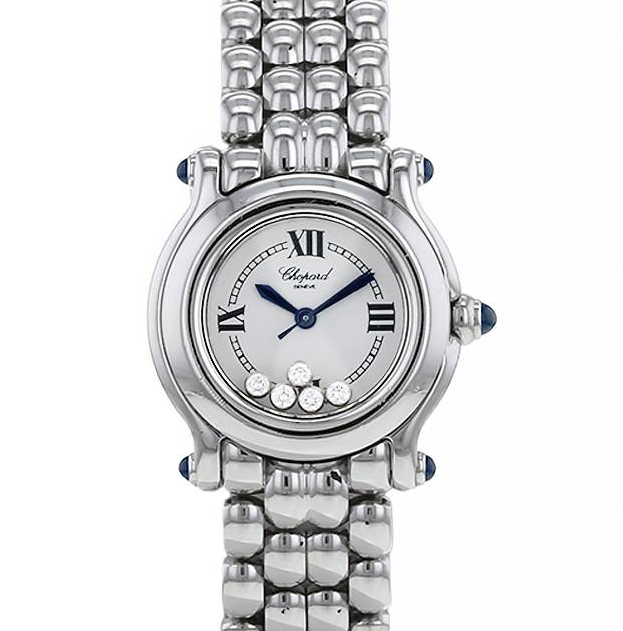
Happy Diamonds
Model History
The Happy Diamonds line was born in 1976 from an idea by in-house designer Ronald Kurowski, who according to the story handed down by the brand drew inspiration from a walk in the Black Forest, watching sunlight reflect on the water droplets of a waterfall: from there came the intuition of leaving some diamonds free to move between two overlapping sapphire crystals, instead of setting them fixed on the dial as tradition dictated.
The first model, with a tonneau-shaped gold case, features diamonds sliding over a black background inside a small transparent "capsule": an idea as simple as it was novel in the high watchmaking of the time, awarded the Golden Rose of Baden-Baden and rapidly becoming Chopard's most recognizable signature, extended in the 1980s to jewelry lines as well.
In 1993 the concept was reinterpreted in a sportier, more accessible key with the Happy Sport: a round steel case, often paired with gold, with five mobile diamonds in place of the indexes or around the dial. Designed for a younger audience and everyday use, the Happy Sport became in the 1990s and 2000s one of the brand's best-selling women's models, sitting alongside the original Happy Diamonds line in the Chopard catalogue.
Technical Specifications
Main Executions
In 2015 a vintage Happy Diamonds watch was sold by Christie's for about 1.67 million dollars, confirming how an idea born almost as a game — leaving diamonds free to "dance" instead of fixing them in place — became over the years one of the most collected and highly valued designs in all of women's watchmaking.