
Model History
The first Admiral's Cup was born in 1960 as a tribute to the international sailing regatta of the same name: an elegant wristwatch, meant not for those aboard the boat but for those watching the competitions from shore, with a square gold case and a sailing engraving on the dial. This first version stayed in the catalogue for about twenty years before being retired, without yet carrying the elements now immediately associated with the Admiral's Cup name.
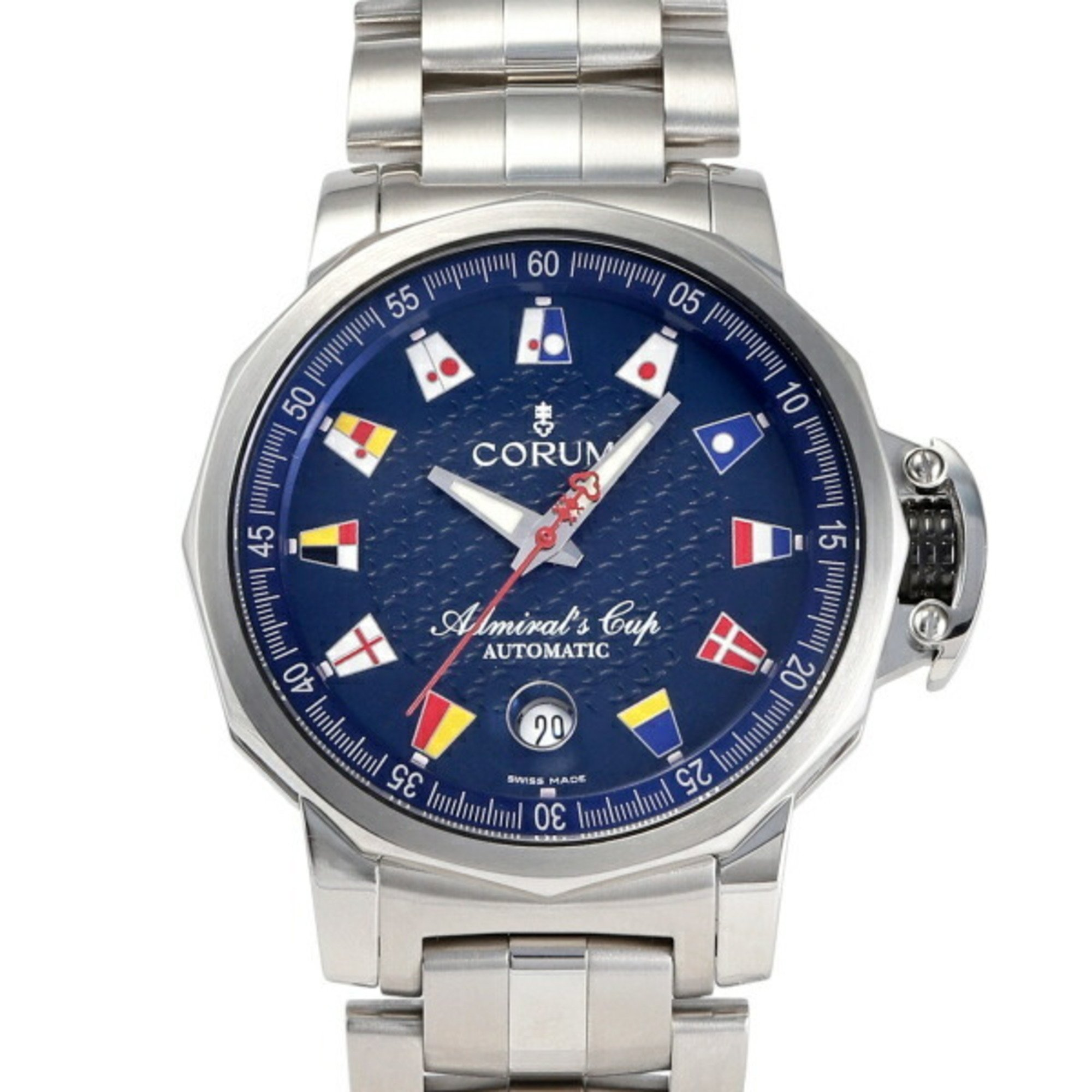
It was in 1983 that the model was completely reinvented: the square case gave way to a twelve-sided bezel and case, and — above all — the traditional hour markers were replaced by twelve nautical flags drawn from the international maritime signal code. An unusual graphic choice that no other watch brand has ever taken up, and which from that moment became Corum's signature above all else, far beyond the single model that introduced it.
Over the following decades the Admiral's Cup has appeared in countless variants: cases in steel, titanium, aged bronze and even carbon, sizes reaching up to 48 mm in the sportiest versions, complications such as chronographs, tourbillons and a second time zone, alongside the 1992 caliber CO 277 capable of indicating tides (Admiral's Cup Tides, 1993). A major restyling arrived in 2006, under then-CEO Antonio Calce, while in 2015, for the brand's 60th anniversary, the Admiral's Cup Legend Flying Tourbillon debuted. The Legend 42 versions in production today, with a 42 mm steel case and the CO395 manufacture automatic caliber, remain the line's reference point.
Technical Specifications
Main Executions
The nautical-flag dial remains a Corum exclusive: in over forty years no other watch brand has ever adopted it. The brand's bond with sailing, for that matter, has never broken — in 2011 Corum served as official timekeeper of the America's Cup, alongside French skipper Loïck Peyron.