

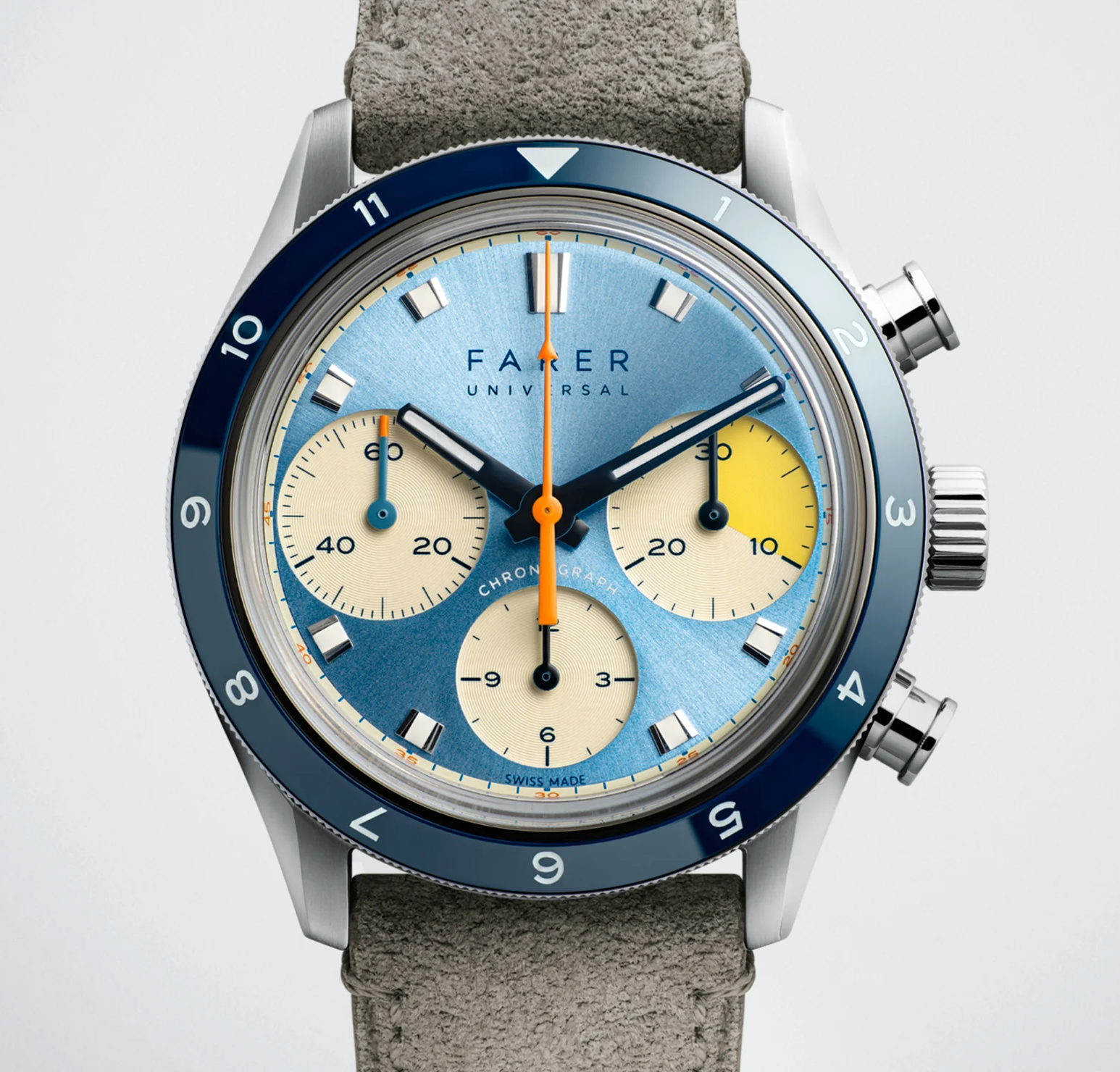
Racing Chronograph
Model History
Farer's chronograph line was born in 2018 with a series of three automatic watches — Cobb, Eldridge and Segrave — dedicated to three British land-speed record holders active between the two world wars: John Cobb, Ernest Eldridge and Henry Segrave. Produced in runs of 100 pieces each, they were fitted with the automatic ETA 2894-2 movement with a custom bronze rotor, in a 39 mm steel case with sapphire crystals on dial and caseback and 100 metres of water resistance.
Over time the line evolved into today's Racing Chronograph, with a manually wound Sellita SW510 M b Elaboré movement and a more compact 38.5 mm case, recognizable by its characteristic concave "ski-slope" lugs and bidirectional bezel with ceramic insert and twelve-hour scale. The reference point is no longer individual drivers but "bold team liveries": the vivid team colours of racing outfits from the late 1960s and early 1970s, reinterpreted in the dials' colour contrasts.
The current models, Libre, Gara and Volante, share the same technical base and are distinguished by their combinations of dial, counter and strap colours, with sunray and guilloché finishes designed for legibility. The sporting vocation has remained the same since launch: a chronograph meant to evoke the aesthetic of road and track racing, rather than to chase the complications of high horology.
Technical Specifications
Main Executions
The line's first chronographs, launched in 2018, bore the names of three famous land-speed record holders — John Cobb, Ernest Eldridge and Henry Segrave — active between the 1920s and 1930s. The more recent versions, Libre, Gara and Volante, have dropped the personal names but keep the same reference to racing, now expressed through the sporting liveries of motorsport's golden age.