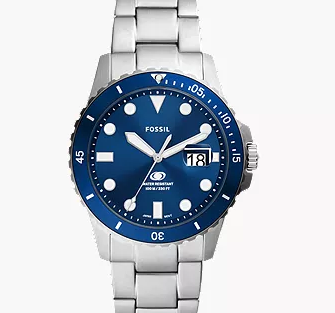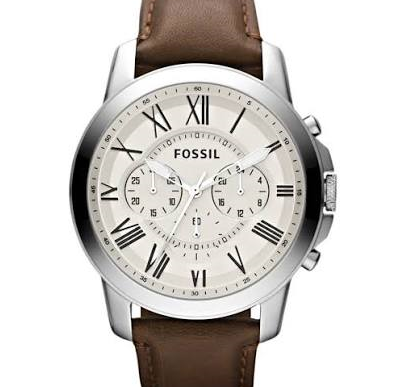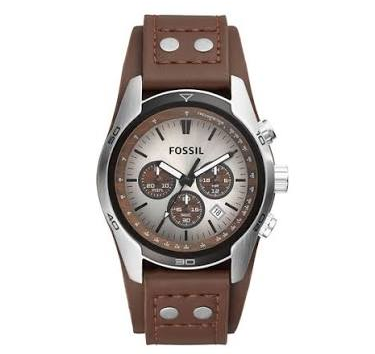

Fossil
Brand History
Fossil was founded in 1984 in Richardson, Texas, by Tom Kartsotis, at the time little more than a student, on the advice of his older brother Kosta, a sales executive with experience in the industry. The company, initially registered as Overseas Products International, imported affordable fashion watches from the Far East, aimed at a young audience more interested in style than in mechanics. The Fossil name soon became the brand under which the company presented itself to the public, and in 1989 it launched the tin packaging inspired by 1950s American graphics that would long remain a distinctive feature at points of sale. In 1990 the company took part in the Basel fair for the first time and expanded its catalog into leather accessories and sunglasses; in 1993 it went public.
Starting in the late 1990s, Fossil embarked on the path that would transform it into a true watch group: in 1997 it signed its first major licensing agreement with Emporio Armani, and the following year it launched the Big Tic, a hybrid watch combining an analog dial with a digital display. In the years that followed, its portfolio of licenses expanded to include brands such as Diesel, DKNY, Michael Kors, Burberry, Adidas and Marc Jacobs, while the company also acquired its own watch brands such as Zodiac Watches (2001), Michele Watch (2004) and, in 2012, Skagen Designs for roughly 237 million dollars. This gave rise to Fossil Group, a holding company that today produces and distributes, in addition to watches under its own name, those of numerous other fashion brands under license — Emporio Armani, Michael Kors, Diesel, DKNY and Skagen among others — each treated as a separate entry on Chronopedia.
In 2015 Fossil Group acquired the wearable technology company Misfit for roughly 260 million dollars, moving decisively into the smartwatch sector and offering touchscreen and hybrid models across most of its brands. In January 2024, however, the company announced its exit from the smartwatch segment to focus on traditional watches, jewelry and leather goods, amid growing financial difficulty: in 2024 it recorded operating losses of roughly 104 million dollars, culminating in a Chapter 15 filing in the United States in October 2025, as part of a broader restructuring of the group.