Hugo Boss
Brand History
Hugo Boss was founded in 1924 in Metzingen, in southern Germany, when Hugo Ferdinand Boss started a workwear, shirt, jacket and sportswear factory together with partners Albert and Theodor Bräuchle. The company faced difficulties from its earliest days: in 1931, hit hard by the financial crisis, it was forced into a restructuring agreement with its creditors. In the years that followed, as documented by an independent historical study commissioned by the company itself in the 1990s, the factory also produced uniforms for organizations of the Nazi regime, including through the use of forced labor: a dark chapter in the brand's history that Hugo Boss has publicly acknowledged. Hugo Ferdinand Boss died in 1948.
The postwar revival was the work of his son Siegfried Boss and son-in-law Eugen Holy, who converted production — first for the French occupying forces, then toward civilian clothing — steering it in the 1950s-60s toward ready-to-wear menswear. The BOSS brand as a high-end clothing line was born in 1970, the company went public in 1985, and in 1993 it adopted a multi-brand strategy (BOSS, HUGO and Baldessarini), later simplified in 2017 to just the BOSS and HUGO brands. In 2024 the group, today among the most widespread menswear fashion houses in the world and still headquartered in Metzingen, celebrated its centenary.
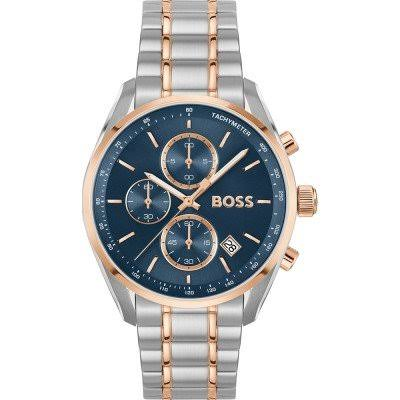
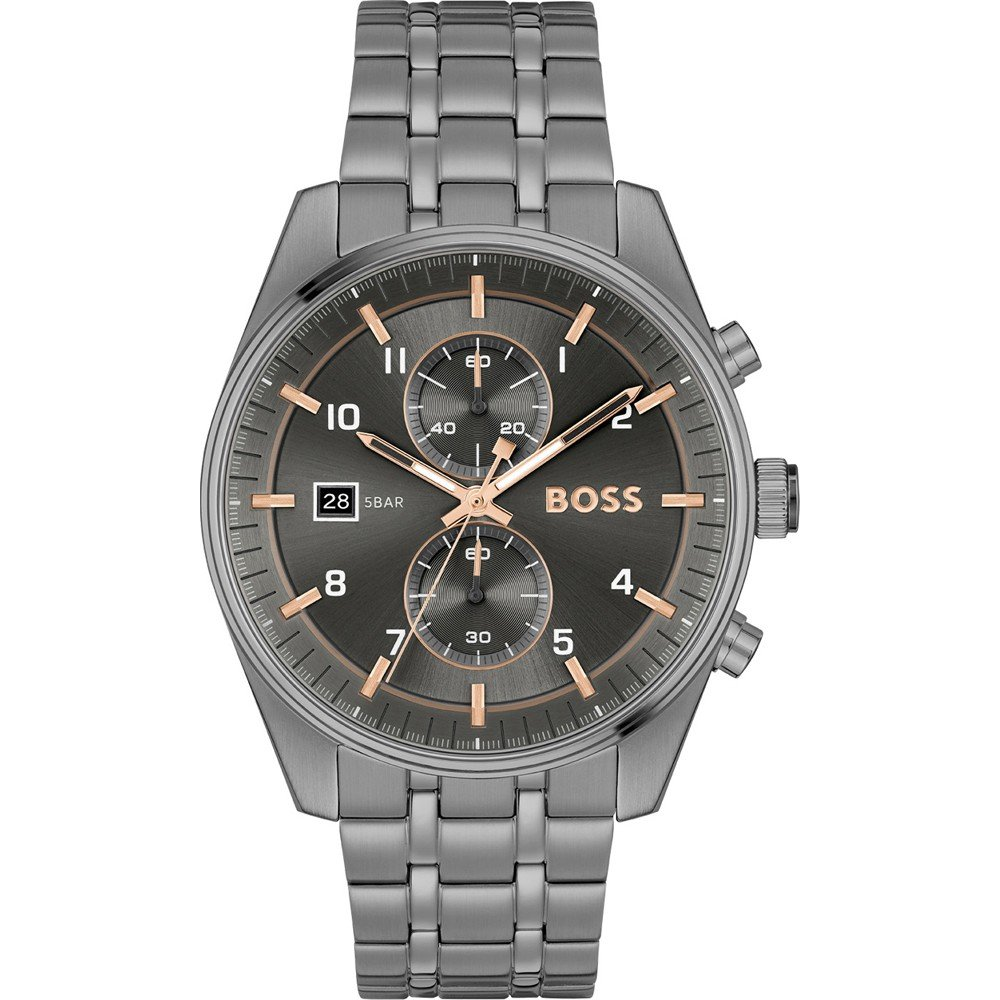
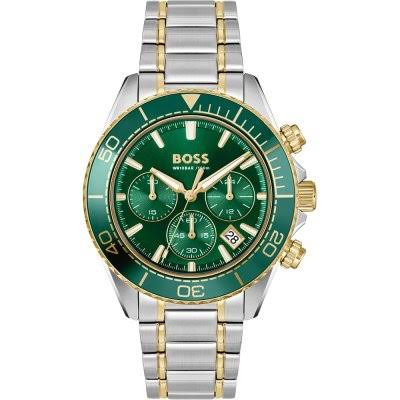
Watches have never been produced directly by Hugo Boss, but have always been licensed to third parties: the first collection was launched in 1996 under license from the Swiss company Tempus Concept of Neuchâtel. Since 2005 the watchmaking license has passed to the American Movado Group, which took over worldwide production and distribution, shifting manufacturing toward more accessible price segments; the agreement has been renewed several times, most recently in March 2022, valid through the end of 2026. Under Movado Group the watches are marketed under both the BOSS and HUGO brands, distributed in more than 110 countries.