
Jaquet Droz
Brand History
The Jaquet Droz name originates with Pierre Jaquet-Droz, a watchmaker born in 1721 in La Chaux-de-Fonds, who from 1738 devoted himself entirely to building ever more sophisticated table and pocket watches, capable of incorporating musical chimes and small automated mechanisms. In 1758 he travels to the Spanish court, where his creations win over King Ferdinand VI, who commissions the entire collection he brought with him: a success that opens the doors of Europe's royal courts to Pierre Jaquet-Droz.
Between 1768 and 1774, together with his son Henri-Louis Jaquet-Droz and collaborator Jean-Frédéric Leschot, he builds the three automatons that remain his most celebrated work to this day: the Writer, the Draughtsman and the Musician, presented in La Chaux-de-Fonds in 1774. These mechanical automatons — still functioning today and preserved at the Musée d'Art et d'Histoire in Neuchâtel — are exhibited in the major courts of Europe and, in the hundreds, exported as far as China, where they captivate Emperor Qianlong: some historians consider them among the oldest known examples of programmable devices in history.
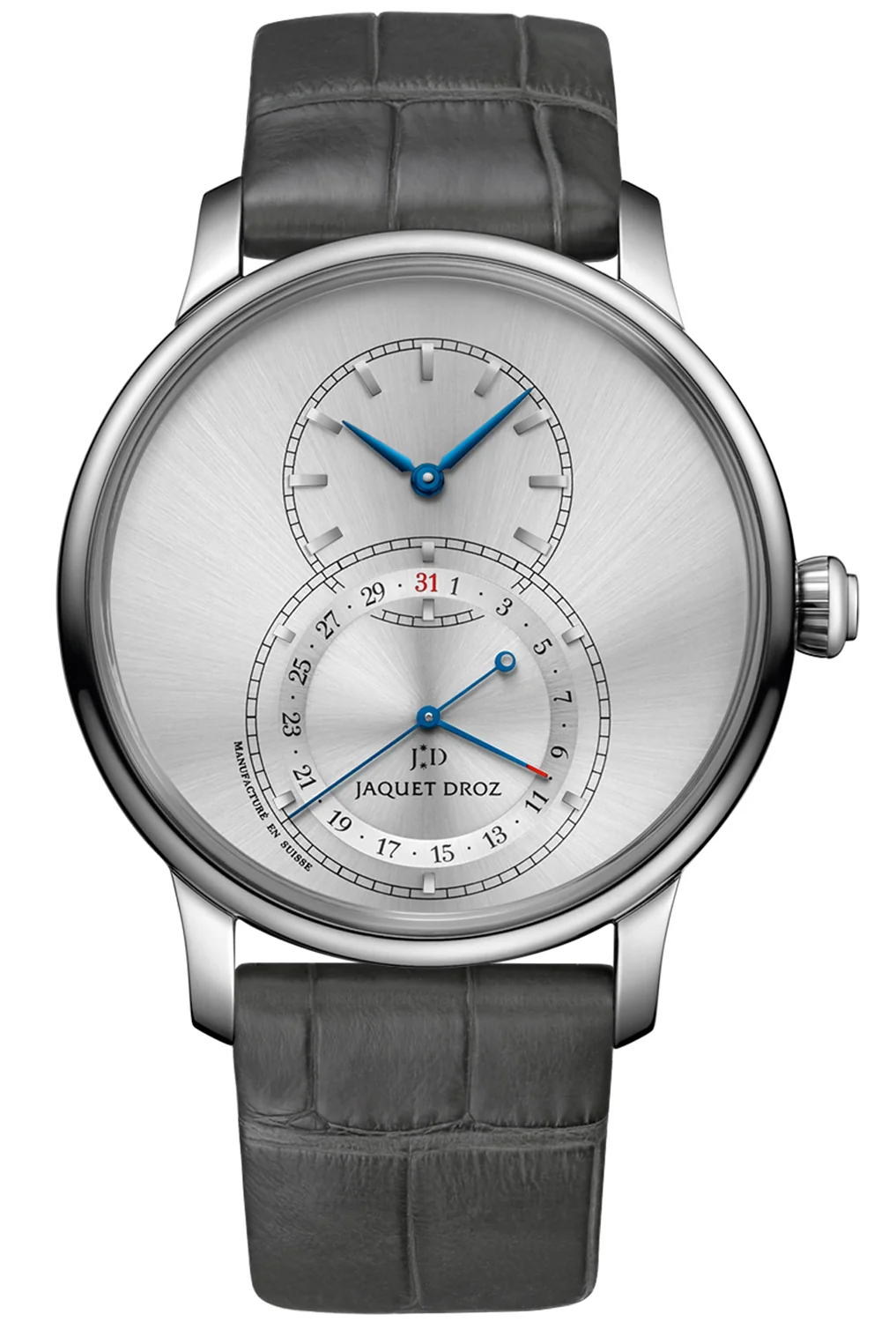
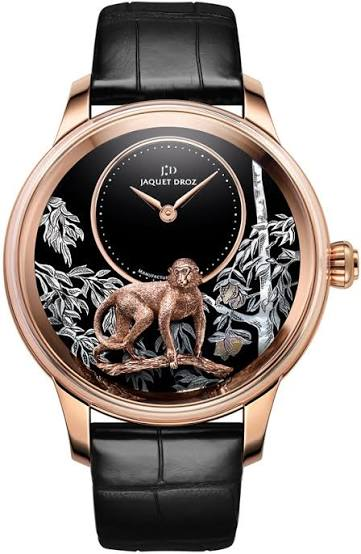
After a long period in which the Jaquet Droz name survives in a minor form, in 2000 the brand is acquired by the Swatch Group, which relaunches it as a fine watchmaking manufacture based in La Chaux-de-Fonds. The modern revival rests on a double track consistent with its historical heritage: on one side, precision watchmaking, with the 2002 launch of the Grande Seconde line; on the other, the direct recovery of the eighteenth-century automaton tradition, reintroduced in miniature on the wrist starting in the early 2010s.