
Manufacture Royale
Brand History
The name Manufacture Royale has roots going back to 1770, when the philosopher Voltaire — who had lived since 1758 on his estate in Ferney, just outside Geneva — encouraged the founding of watchmaking workshops in the area to give work to Huguenot artisans who had fled France, and to free the small village from poverty. Among the watchmakers active in that circle was also Jean-Antoine Lépine, who would go on to become court watchmaker and one of the most influential names in the history of French horology. With Voltaire's death in 1778 the enterprise lost its driving force and gradually faded over the following decades, remaining a forgotten chapter for more than two centuries.
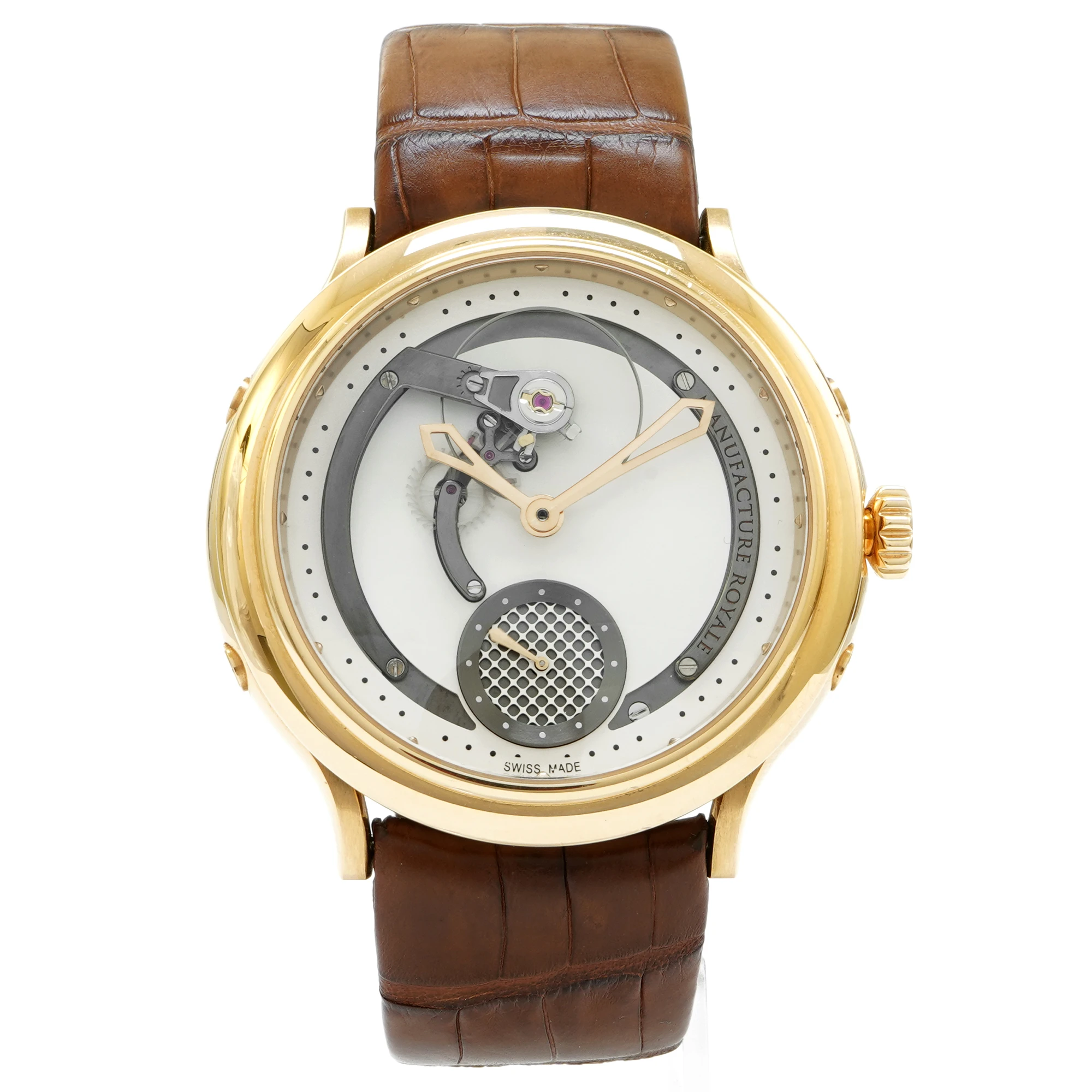
The name was revived in 2010 in Vallorbe, in the canton of Vaud, a few kilometers from the French border and not far from Ferney-Voltaire itself: a relaunch led by cousins David and Alexis Gouten, who chose to bring the eighteenth-century name back to life not as a mere nostalgic exercise, but as a manifesto for an independent, manufacture-based and deliberately unconventional watchmaking. From its earliest years the new Manufacture Royale developed calibers entirely in-house — today the manufacture has several, including tourbillons, minute repeaters and skeletonized complications — rejecting the simpler and less costly route of buying base movements common to much of the competition.
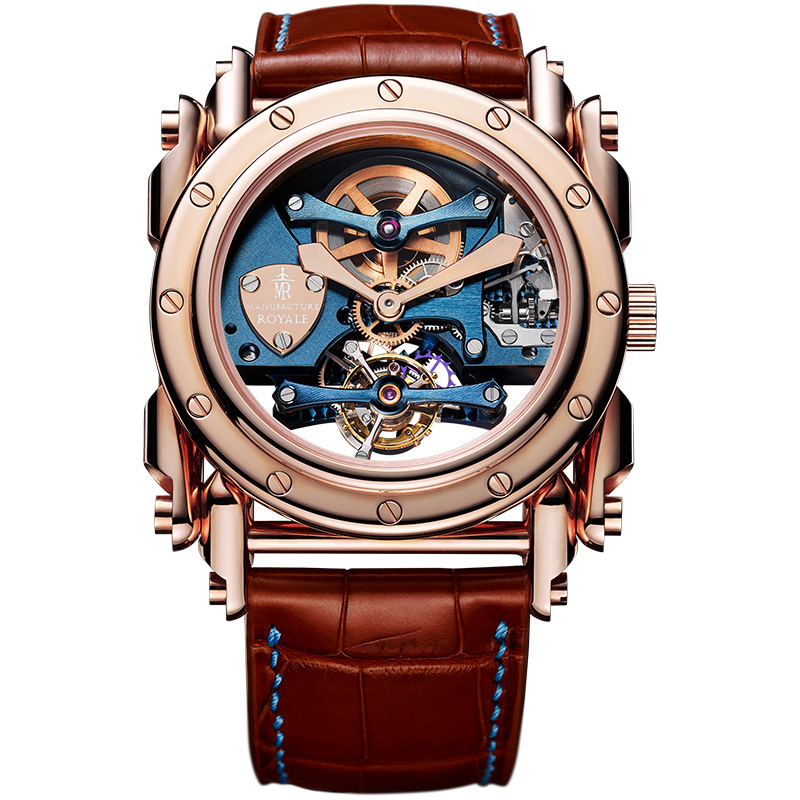
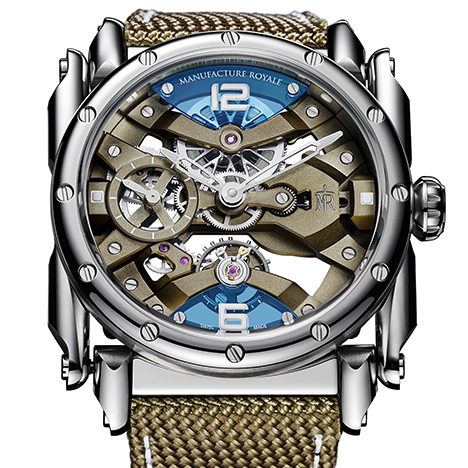
The trait that made the relaunched brand instantly recognizable is a sculptural, openly "steampunk" aesthetic: cases built like small mechanical architectures, with bridges, screws and gears arranged across multiple levels and deliberately left exposed, often in titanium, DLC-treated steel or forged carbon alongside gold versions. The official debut came in 2010 with the Androgyne, a flying tourbillon with an industrial design language that immediately established the brand's stylistic code, followed in subsequent years by collections such as 1770, Opera and ADN, each developed also in collaboration with outside designers such as Eric Giroud and Sébastien Perret, while maintaining a coherent and immediately identifiable visual identity.