

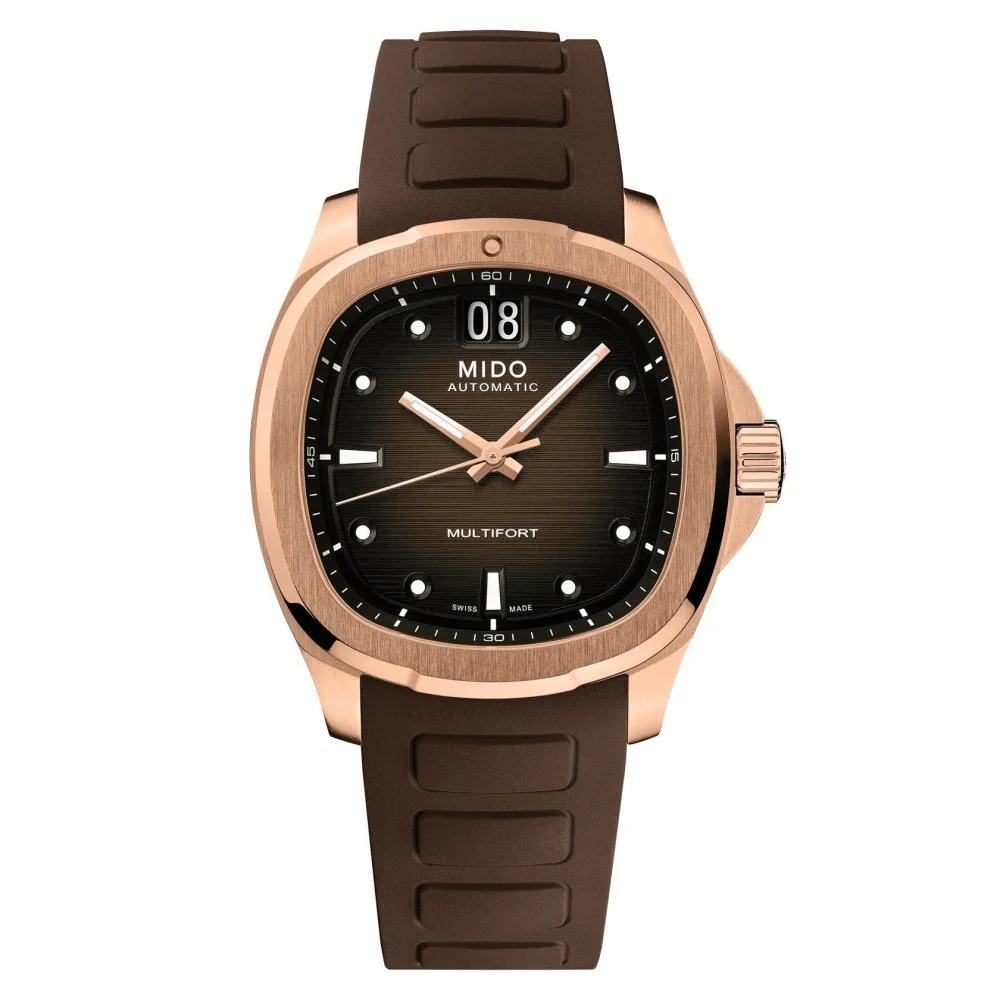
Model History
The Multifort debuted in 1934, in the depths of the Great Depression, as Mido's answer to a market that demanded solid, reliable watches more than objects of pure prestige. The name itself, "very strong", sums up the project: a watch that is automatic, antimagnetic, shock-resistant and water-resistant all at once, a combination of features rare for the time, which would make the Multifort one of Mido's best-selling models between the 1930s and the 1950s.
The brand says it drew inspiration, for the structural boldness of the project, from the Sydney Harbour Bridge, inaugurated in 1932: a reference that anticipates by decades the theme of architectural inspiration that would later become officially central to Mido's identity. An echo of this link can still be found today in the Geneva stripes that decorate the movement, whose geometric pattern deliberately evokes the girders of a bridge.
Contemporary versions of the Multifort keep the robust, versatile setup of the original, but entrust it to automatic Calibre 80 or Powermatic 80 movements with 80 hours of power reserve, enriched in some executions by a silicon balance spring for greater precision and by complications such as GMT and chronograph. The argument with which Mido presents the line remains unchanged: an instrument designed for everyday use, rather than a watch made for a display case.
Technical Specifications
Main Executions
The pattern of the Geneva stripes on the Multifort's movement is designed to recall the weave of a bridge's girders: a discreet detail, visible only by opening the caseback, that ties the caliber's finishing to the architectural inspiration declared ever since 1934.