

Collection History
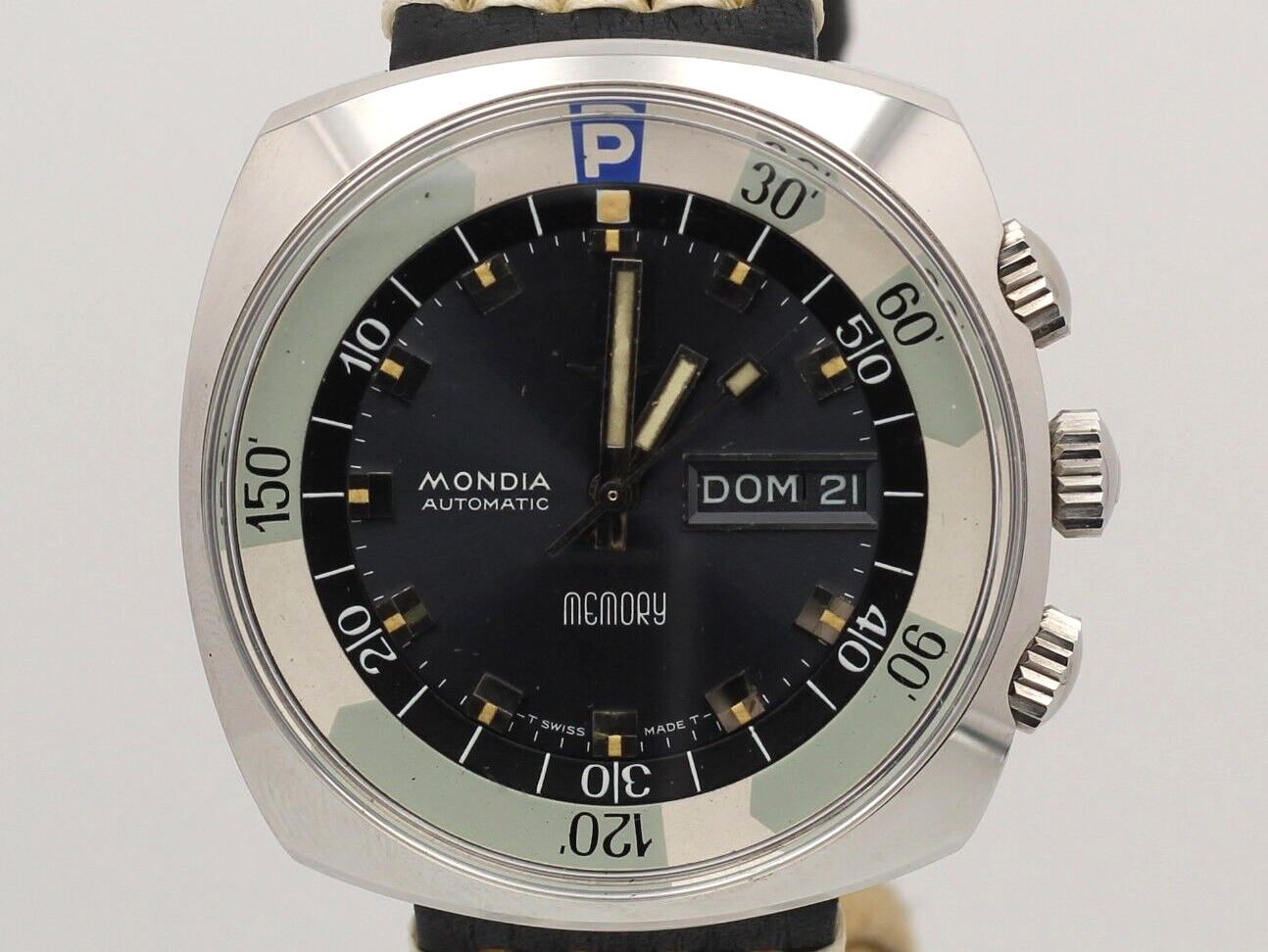
The Memory is probably the most eccentric model Mondia ever produced, and a direct product of the brand's most experimental period, the 1970s, when — riding the success of "useful" and quirky complications widespread across European watchmaking at the time — the Swiss manufacture sought to stand out with functions designed for everyday life rather than for timekeeping alone.
The idea behind the Memory is as simple as it is unusual for a wristwatch: a reminder, printed on the case back, designed to help the wearer remember the parking-meter deadline — a detail that sounds almost quaint today, but which at the time accurately captured the growing spread of private cars and paid parking in European cities. It is a fitting example of how, in those years, several mid-range brands (Mondia included) tried to add perceived value to their watches through "service" functions rather than through watchmaking quality alone.
Like many products of that era, the Memory did not survive the brand's progressive decline between the late 1970s and the 1980s, and it does not appear among the collections currently offered by Mondia Swiss. It remains, however, one of the most often-cited names when telling Mondia's story, precisely because of its originality.
Technical Specifications
Main Executions
The Memory is still remembered today mostly as an anecdote: the parking-meter reminder function makes it, among all Mondia models, the one that best captures the brand's wish, in the 1970s, to speak to its customers' everyday lives rather than to watch collecting alone.