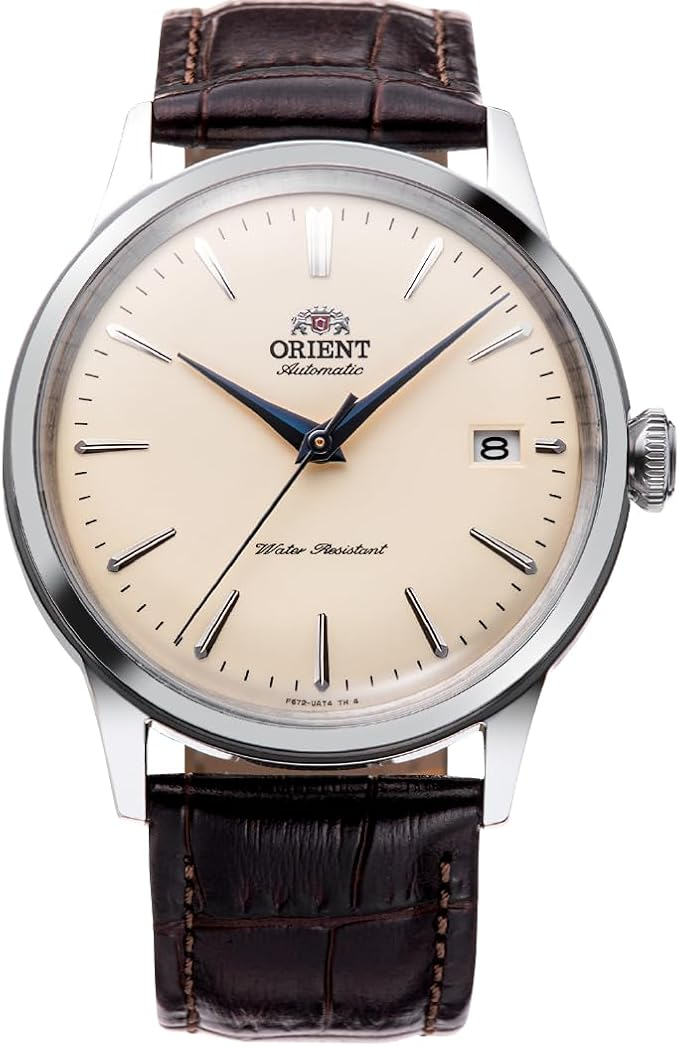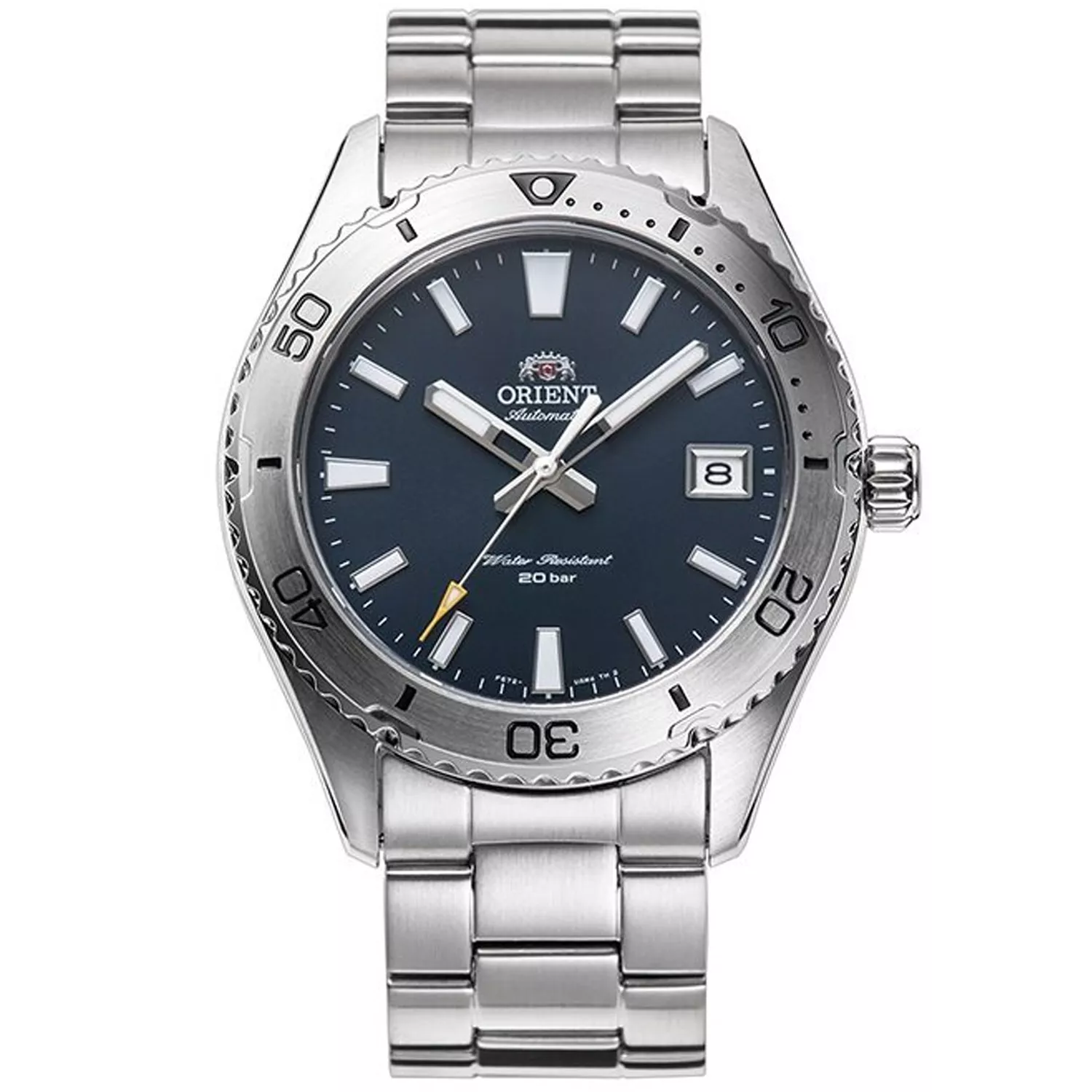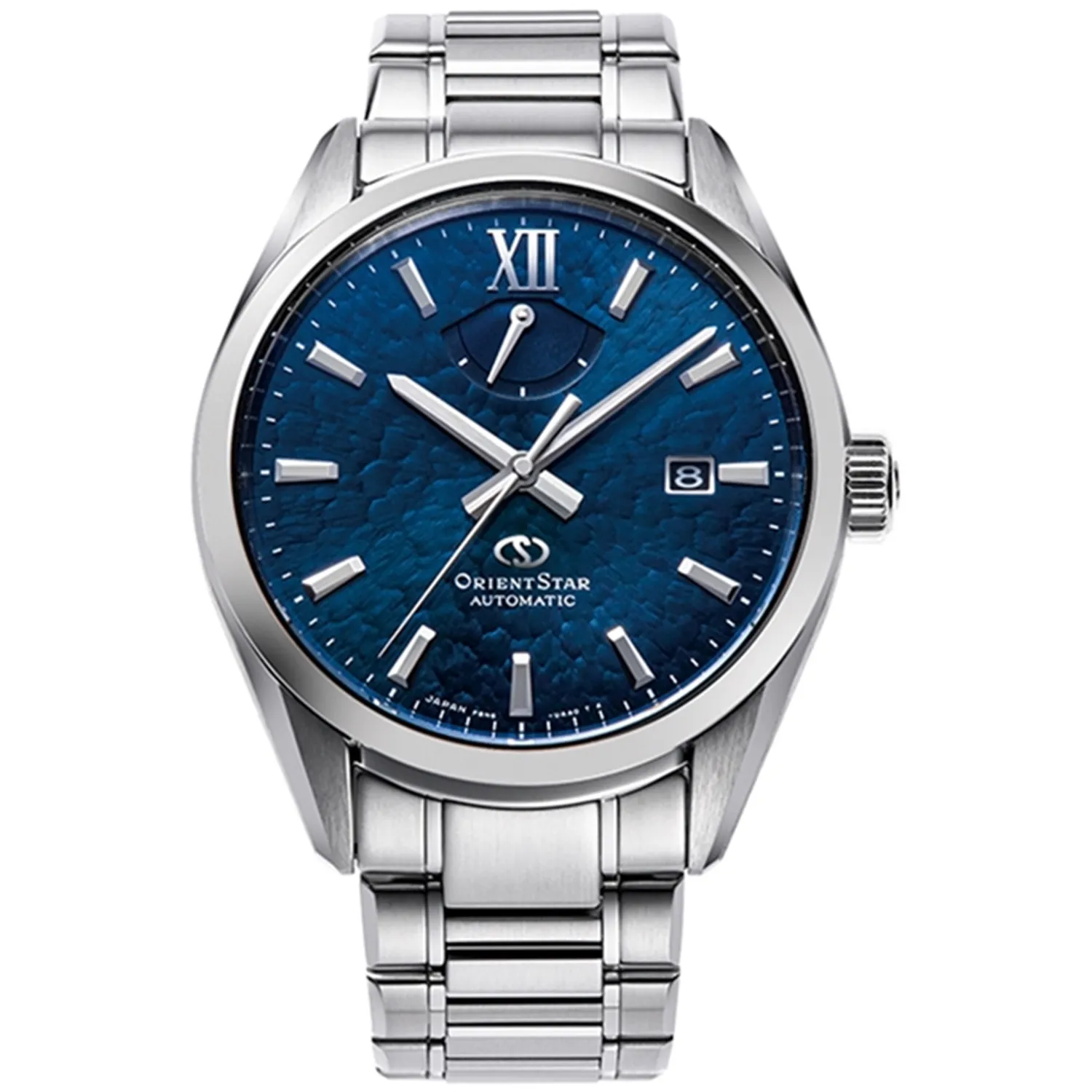

Orient
Brand History
Orient's story begins long before this name was even registered. In 1901, in Ueno, in the heart of Tokyo, watchmaker Shogoro Yoshida opens a small shop dedicated to selling imported pocket watches: a business that makes him one of the pioneers of the Japanese watch trade, at a time when Japan imported this technology almost entirely from Europe. Yoshida does not limit himself to selling: as early as 1912-1913 he starts producing watch cases himself, and in 1920 he founds Toyo Tokei Manufacturing Co., Ltd., initially focused on wall clocks. It is only in 1934 that the company begins producing wristwatches, going on in 1936 to open a modern four-story plant in Hino, on the outskirts of Tokyo.
World War II abruptly interrupts this path: the Hino plant is converted to producing components for the military aviation industry, and the watch company, like much of Japan's industrial fabric, emerges from the conflict devastated, eventually ceasing operations in 1949. The rebirth comes the following year: on July 13, 1950, a group of former employees refounds the business as Tama Keiki Company. It is this core group that, in 1951, is responsible for the name change to Orient Watch Company, Limited — the year in which the very first Orient Star is also born, a watch that immediately earns chronometer certification and that establishes from the outset the new company's ambition: to compete on mechanical quality, not just on price.
The following two decades are the most fertile period for the brand's technical innovation. In 1955 the Orient Star Dynamic debuts with the T-type caliber; in 1958-59 the Royal Orient arrives, fitted with the N-type caliber, designed explicitly to contend for the high end of the domestic competition, Seiko foremost among them. In 1964 Orient presents its first dive watch and, the same year, the Grand Prix 100: a caliber fitted with as many as 100 synthetic jewels, a number conspicuously higher than the era's standard (typically 17-21 jewels) and intended as a statement of technical prestige. These are followed by the slim Finesse line (1967, a case only 3.9 mm thick) and the high-frequency Tenbeat line (1970). It is during these years that Orient consolidates its presence in the Asian market, while also remaining a brand exported — albeit in limited volumes — to Canada, the United States and Brazil.
The 1990s bring two notable shifts: in 1991 the Mon Bijou launches the skeleton-watch trend in the Orient catalogue, while in 1997 the M-Force debuts, a sporty/diving line rated to 200 meters designed for a younger, more active audience. It is in this decade that the company, while remaining technically solid, begins to go through financial difficulties linked to the broader downsizing of the mid-range Japanese watch industry, squeezed between high-end Swiss watchmaking and the rise of cheap Asian quartz.
The solution comes from the Seiko Epson group, which in 2001 becomes the majority shareholder of Orient Watch Company. The transition is gradual, not sudden: only in 2009 does Orient become a wholly-owned subsidiary of Epson, and only in 2017 are its watchmaking operations fully integrated into the group's industrial structure. A detail that Marco asked to highlight is that, despite this corporate integration, Orient is deliberately kept separate from Seiko Watch Corporation: they are two distinct brands within the same group, with their own commercial channels, identity and — largely — production networks, not simply a Seiko sub-brand. Even today production takes place mainly in Japanese plants belonging to the Epson group, and the Orient brand continues to be marketed under its own historic identity.
It is precisely this identity that makes Orient a special case in the landscape of Japanese watchmaking: while most of the world's economy-tier production has shifted to quartz, Orient has chosen to remain almost stubbornly faithful to automatic mechanics even in its most accessible lines, developing its own automatic calibers in-house (without relying on outside suppliers). The result is a unique positioning: a brand capable of offering a "real" automatic watch, with an in-house movement, at a price close to that of a low-end quartz watch — a gateway into Japanese mechanics designed for those approaching mechanical watchmaking for the first time, before perhaps later moving up toward Seiko or Grand Seiko.