

Line History
The Artelier joins the Oris catalogue in 2003, conceived as an elegant counterpart to the lines more oriented toward sport and adventure that had made the brand's history, such as the Big Crown or the early dive watches. The name itself is a linguistic play recalling the French "atelier," meaning "laboratory" or "workshop": a direct reference to watchmaking craftsmanship rather than to a decorative theme, consistent with Oris's choice to direct much of its manufacture complications to this line.
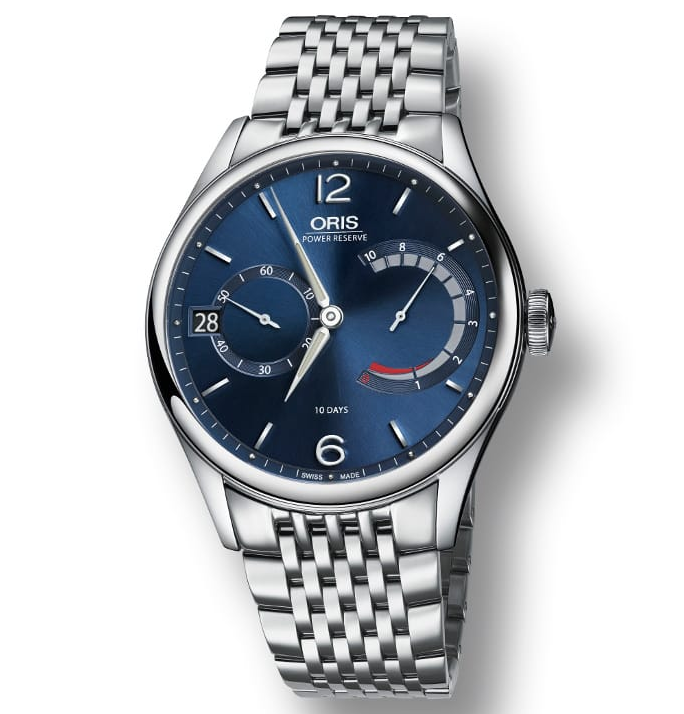
Over the years the collection has hosted an increasingly sophisticated range of complications: from the simplest models with just time and date display, up to executions with pointer date, moon phases and, from 2004, a worldtimer able to read the time in every time zone on the planet via a city disc on the dial. The line's technical pinnacle is represented by the Calibre 111, a manual-winding movement entirely developed by Oris with 10 days of power reserve, joined by skeletonized versions that display the movement's architecture through openworked dials.
While remaining a line with a more discreet profile than Aquis or Big Crown ProPilot in the brand's communication, the Artelier continues to be the main testing ground for Oris's most elaborate complications: in 2026, on the occasion of Watches & Wonders, the brand presented the new Artelier Complication, which combines moon phase, second time zone, day and date in a single execution — a demonstration of how the line still remains the laboratory (in every sense) of Oris's highest technical ambitions.
Technical Specifications
Main Executions
"Artelier" does not correspond to an actual French word: the name deliberately echoes the term "atelier" (laboratory/workshop), with a spelling that also seems to blend in the root "art" — a small linguistic play consistent with the line's dual nature, half watchmaking craft and half aesthetic research.