
Oris
Brand History
Oris is born on June 1, 1904 in Hölstein, a small village in the Waldenburg Valley in the canton of Basel-Landschaft, when Paul Cattin and Georges Christian take over a disused watch factory, Lohner & Co, and rename it after a small local stream, the Orisbach, which flows right through that valley. A modest beginning — just 67 employees in the first year — that rapidly turns into explosive growth: by 1911 Oris is already the village's leading employer with over 300 watchmakers, even builds housing for its own craftsmen, and in 1914 surpasses one million watches produced, with plants also opened in Holderbank, Como, Courgenay, Herbetswil and Ziefen.
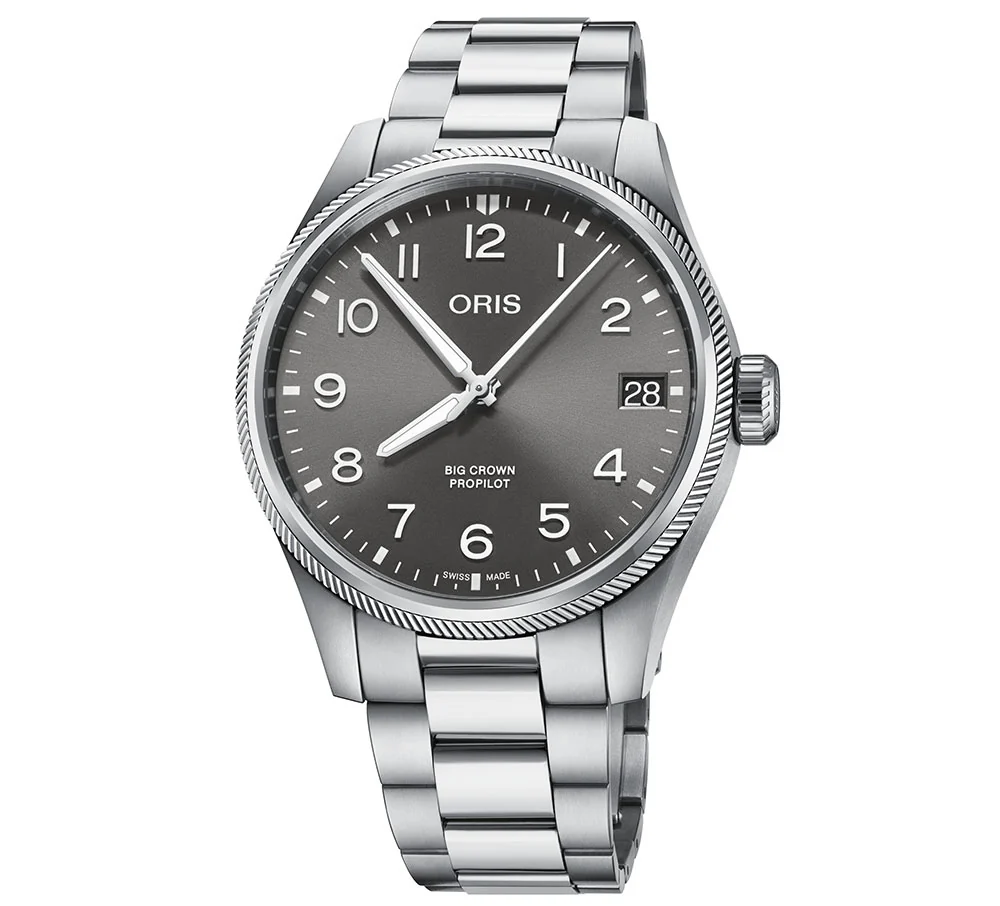
The bond with aviation, which would become one of the brand's distinctive traits, has its roots as early as the 1910s: a pocket watch designed for aviators appears in 1911, followed in 1917 by one of the first true wristwatches for pilots. It is in 1938, however, that Oris presents the model that would become legendary, the Big Crown: a deliberately oversized crown, designed to be operated even while wearing flight gloves, paired with a pointer-date calendar readable at a glance in the cockpit. In the postwar years the brand continues to innovate on the mechanical front, with the 1952 caliber 601 (one of the first automatics of its own production) and with an alarm function introduced in 1956; in 1965 the dive watch is then born that, decades later, would return to new life as one of the brand's most beloved collections.
1970 marks a less happy turning point: Oris becomes part of ASUAG (Allgemeine Schweizer Uhrenindustrie AG, one of the two large consortia that would later give rise to the Swatch Group), and the new ownership imposes a forced conversion toward quartz production. The crisis that sweeps through the entire Swiss watch industry in those years hits Oris hard as well, which by the early 1980s finds itself with just a few dozen employees and in-house production virtually at a standstill. It is at this point that the most important episode in the brand's recent history occurs: in 1982 general manager Rolf Portmann and marketing director Ulrich W. Herzog buy the company back from ASUAG in a management buyout, restoring its independence. The decision that follows is even more radical: Oris decides to abandon quartz entirely and return to producing exclusively mechanical watches, positioning itself in the accessible-luxury segment — a decision that ran against the grain of the rest of the industry in those very years, and one the brand has never changed since.
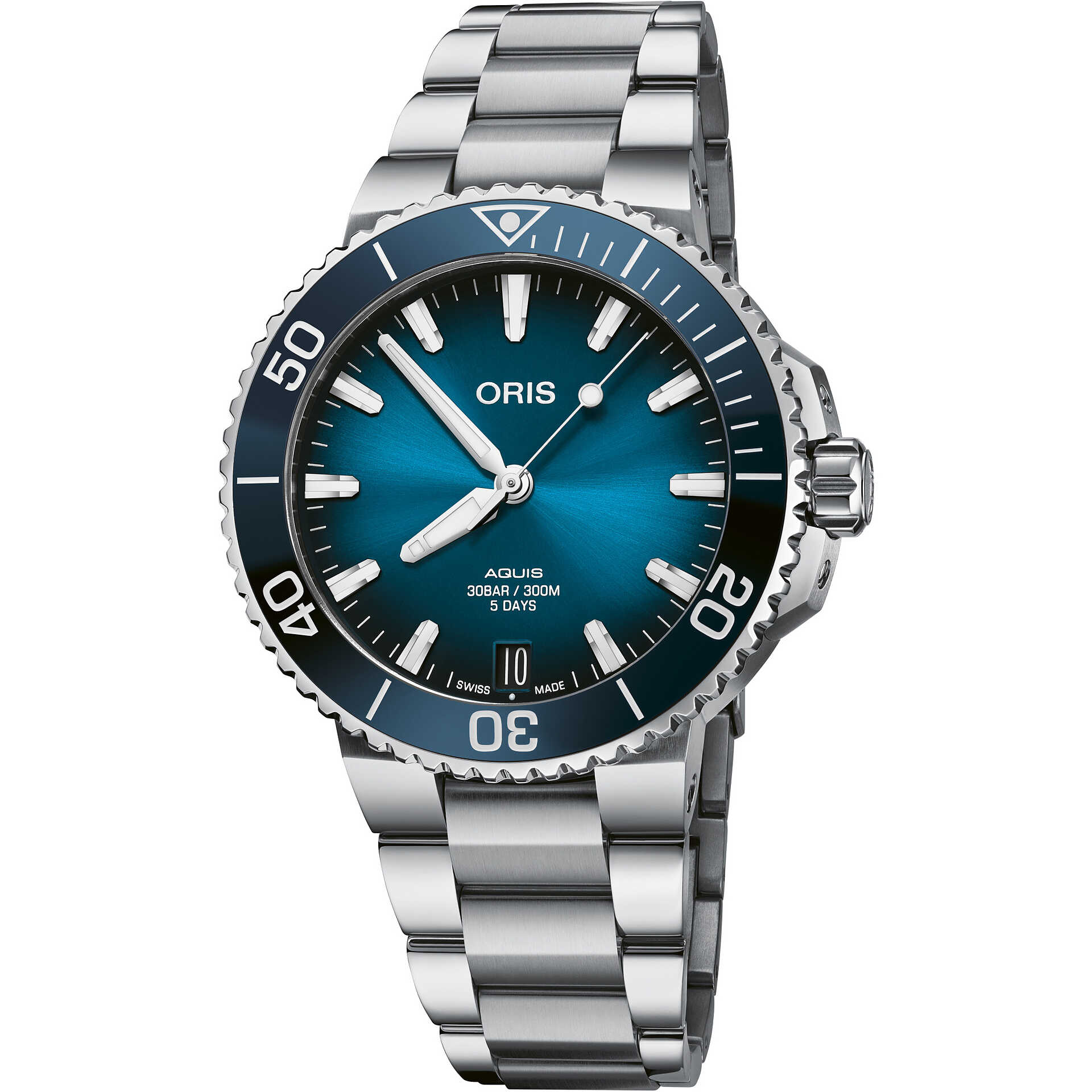
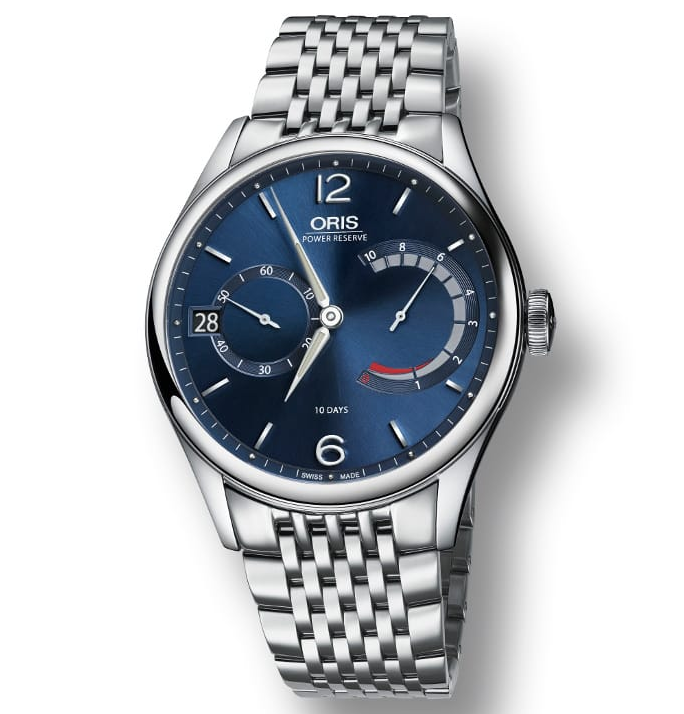
Since then Oris has remained one of the very few significant Swiss manufactures never to have (again) become part of a large watch group, remaining under the control of its own historic management — today chaired by Ulrich W. Herzog, with Rolf Studer and Claudine Gertiser-Herzog as co-CEOs. This independence has allowed constant investment in its own manufacture mechanics: from 2014 the family of manual calibers 110-115 (10 days of power reserve), up to the Calibre 400 presented in 2020, an antimagnetic movement with 5 days of power reserve and a ten-year warranty, among the longest in the entire industry. In 2018 Oris also ended its sponsorship of the Williams Formula 1 team in order to redirect resources and communication toward environmental commitment, culminating in the "Change for the Better" campaign, launched in 2010 with the first watch dedicated to the Great Barrier Reef in collaboration with the Australian Marine Conservation Society. Partnerships followed with the Coral Restoration Foundation (from 2017, with editions such as the Staghorn Restoration and two GMT models for the restoration of the Carysfort Reef in Florida), with Pacific Garbage Screening (from 2019, to fight plastic in the oceans) and, more recently, with the Korean organization Seoul KFEM for the cleanup of the Hangang River — a commitment the brand describes as an integral part of its own identity, not simply a marketing initiative.