

King Seiko
Line History
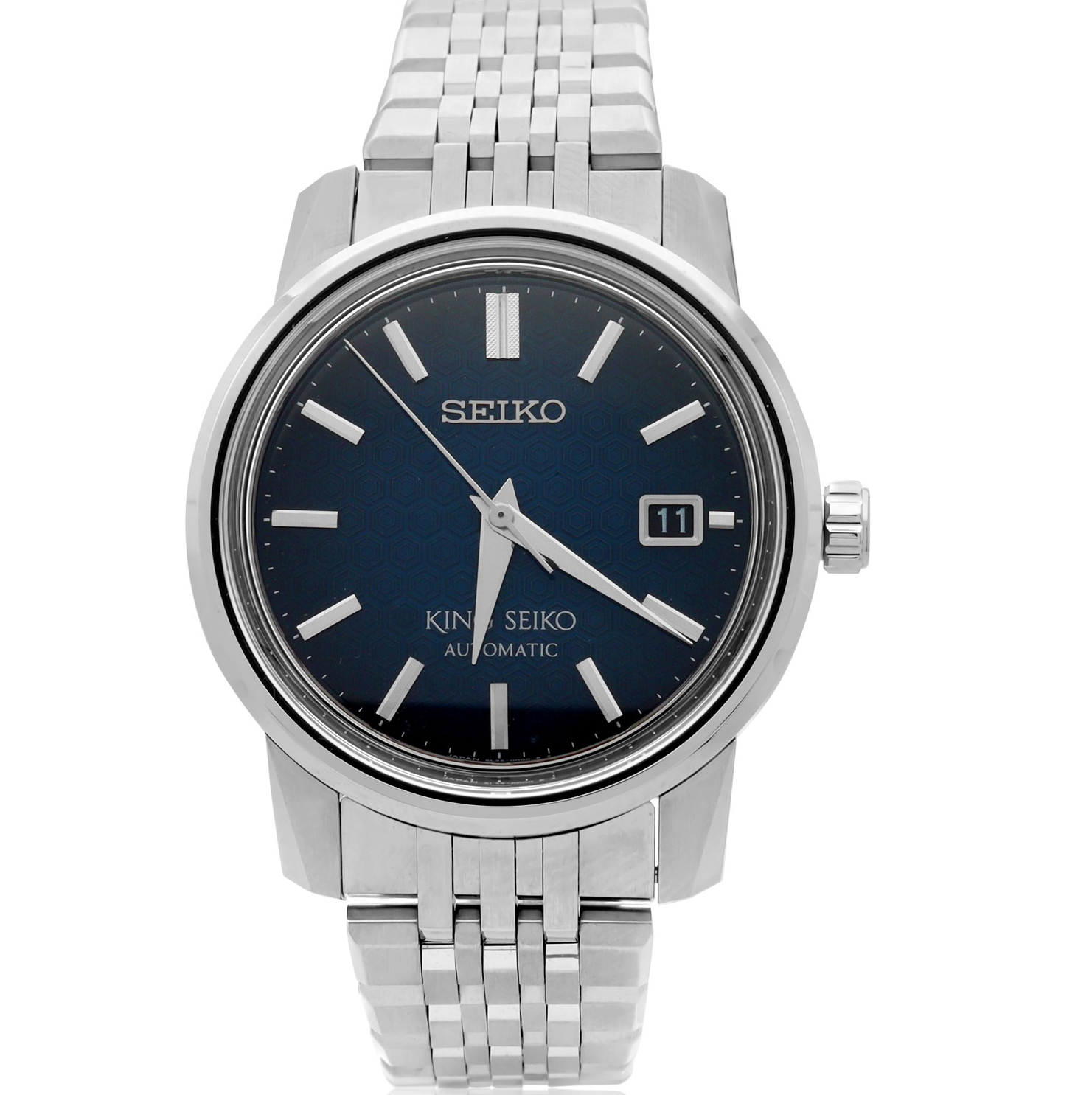
King Seiko debuted in 1961, in the years of Japan's rapid postwar economic growth, as the response of Daini Seikosha — the Kameido watch plant in Tokyo, made independent from Seikosha in 1937 — to the challenge of making the most precise and best-finished watch possible with a manual-wind movement. The first King Seiko presents itself with squared, well-defined hands and indices, a case with a thin profile for its time and a manual 25-jewel caliber: a more angular, "urban" aesthetic language, which the brand's official accounts associate with the character of Tokyo in the early 1960s.
King Seiko grows in parallel with, and in a degree of internal competition with, Grand Seiko: while the latter — born the previous year, in 1960, at the rival Suwa Seikosha plant — focuses above all on chronometric precision as an absolute value, King Seiko develops a more distinctive and recognizable design identity, while still remaining firmly anchored to the same build-quality standards that Seiko reserved at the time for its most prestigious lines. During the 1960s production is spread across the two Daini and Suwa Seikosha plants, with references that are now highly sought after by collectors, such as the KSK of 1965 and the 45KCM of 1969.
The arrival of quartz, and in particular the launch of the Astron in December 1969, marks the beginning of the end for the group's entire high-end mechanical range: King Seiko production stops during the 1970s, closing a chapter that lasted less than two decades but managed to leave a lasting stylistic mark on the history of Seiko design, so much so — according to the brand's own account — that it influenced the aesthetics of other later lines.
On January 25, 2022 Seiko brings the King Seiko name back to life with a collection of five new models, presented as a faithful revival of the original stylistic legacy combined with contemporary watchmaking technology: cases and dials that take up the squared traits of the historic models, modern automatic movements and, in some later variants such as the KSK, explicit references to specific references from the 1960s. A return welcomed with interest by enthusiasts, confirming how much the original 1961 design had managed to establish itself as a recognizable identity over time.
Technical Specifications (King Seiko, 1961)
Main Line Milestones
Grand Seiko and King Seiko were born just one year apart (1960 and 1961) from two different plants of the same group, almost in competition with each other to assert two distinct ideas of Japanese high-end watch: absolute precision on one side, recognizable design on the other. Only the first, however, would become an independent brand in 2017; the second has remained, even after its 2022 return, part of the Seiko-branded catalogue.