

Piccadilly
Line History
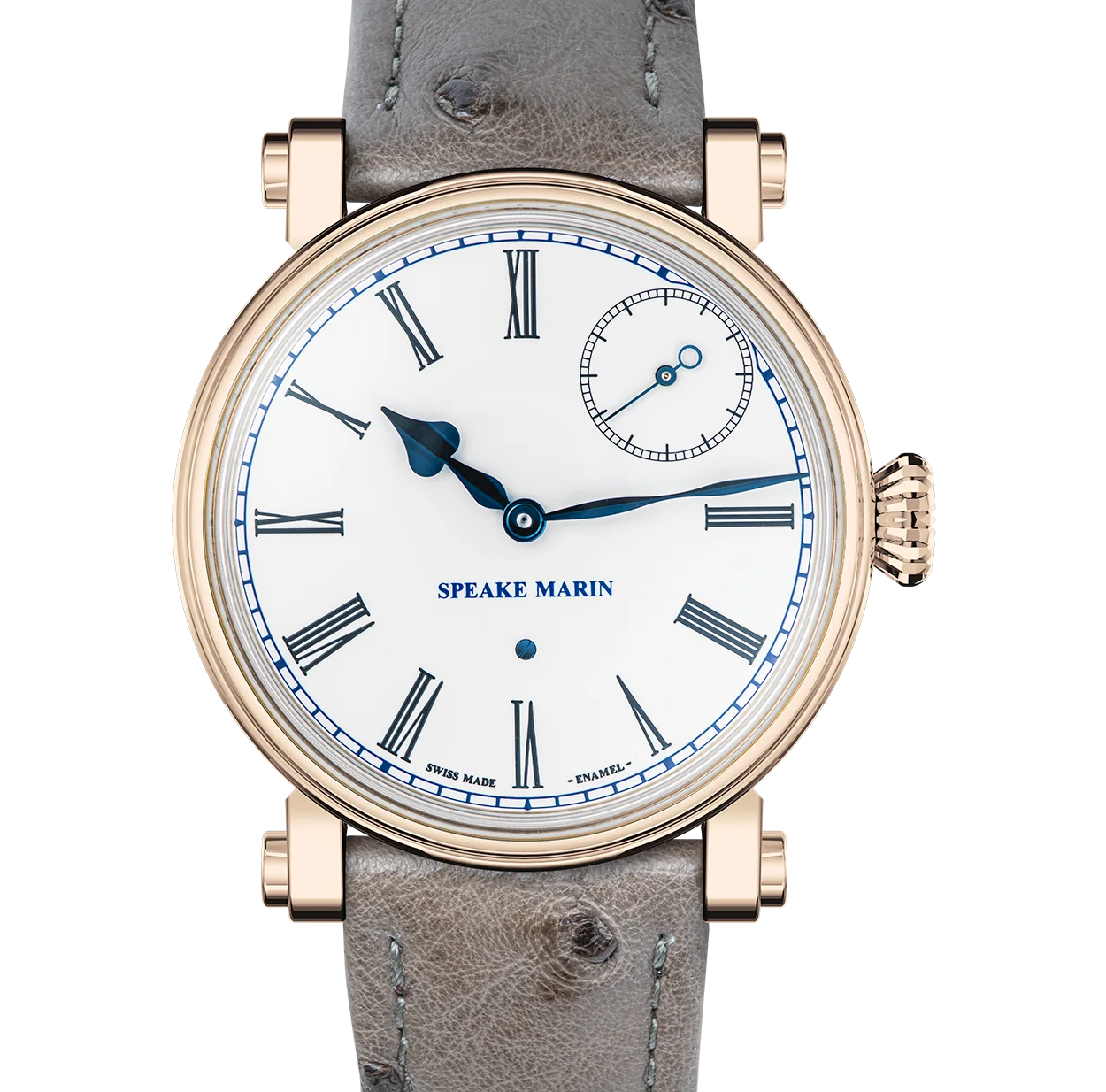
The Piccadilly is the first wristwatch made by Peter Speake-Marin, completed during 2003, a year after the official founding of the maison in 2002. The name evokes the famous London street/square, an explicit tribute to the English roots of its creator in a sector dominated by Swiss tradition. The shape of the case — cylindrical, almost "drum-like" — comes from the meeting of two very different experiences: the years Speake-Marin spent restoring antique pocket watches at Somlo Antiques in London, and his later work as a complications technician at the atelier Renaud et Papi, where he was also inspired by the holders used to keep movements steady during work.
The most recognizable trait of the Piccadilly is the "pleated" crown, flanked by screwed lugs that reinforce the sturdy, handcrafted look of the case, initially available in steel or in gold, in diameters of 38 and 42 mm. The dials of the early executions are in fired enamel, made through several firing cycles at temperatures above 800 °C, with black Roman numerals: a craft process that once again recalls Speake-Marin's training in antique watch restoration.
Over time the Piccadilly case has become the brand's "family case", reused as the base for numerous other lines and complications — from the snake-hand calendar of the Serpent Calendar line to the Resilience executions — and it remains central to the catalog even after the change of ownership to the Rosnoblet family in 2017, remaining the stylistic trait most immediately associated with the brand.
Technical Specifications
Main Executions
The name chosen for the brand's first watch does not evoke a technical term but a symbolic place of London: a signature of British identity for a watchmaker who built his training between England and Switzerland.