

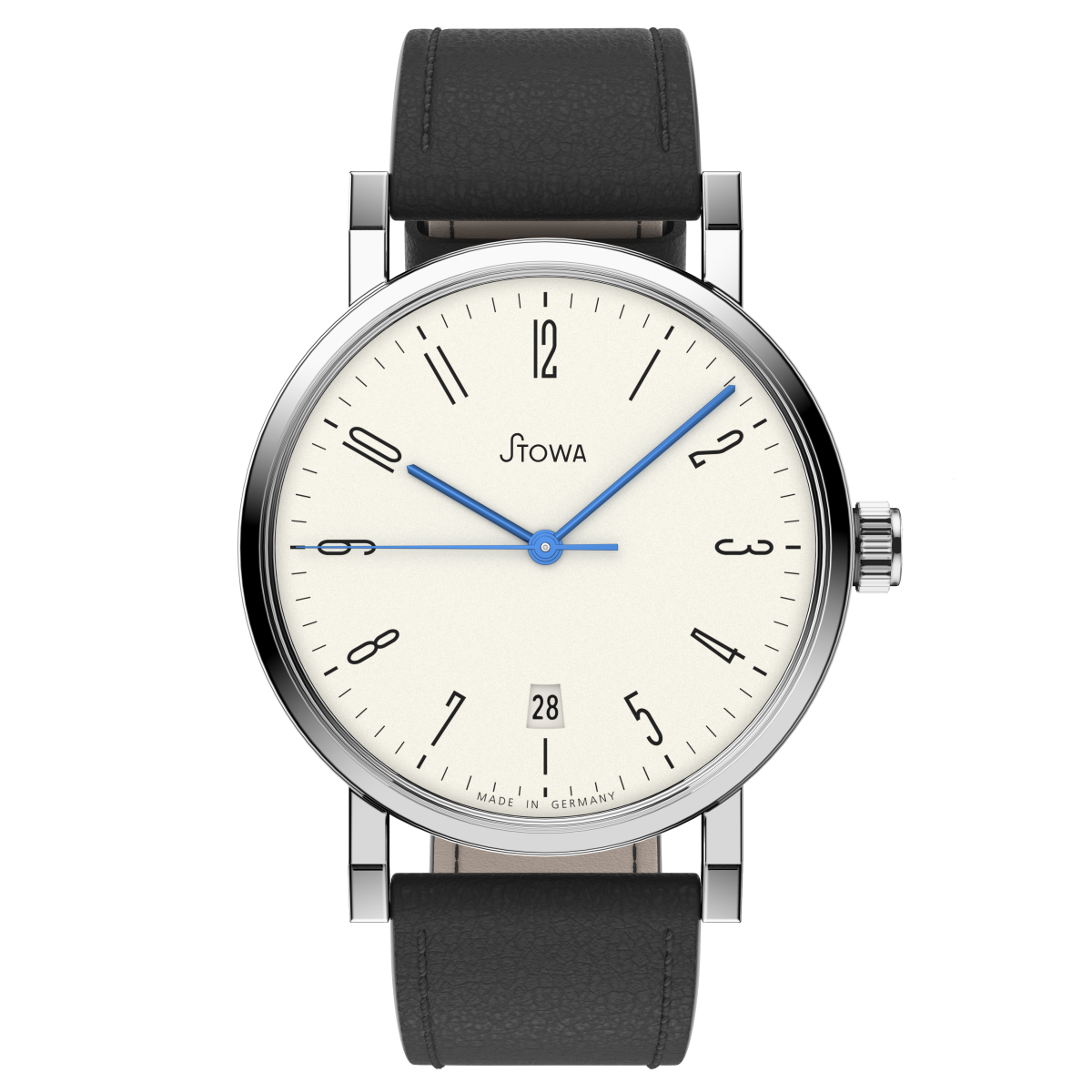
History of the line
The roots of the Antea go back to the second half of the 1930s, when Stowa — already moved to Pforzheim — made its first watches inspired by the aesthetics of the Bauhaus movement (active between 1919 and 1933): clean dials, essential typography and great legibility, with the dials themselves supplied by the Weber & Baral dial factory, also in Pforzheim. Sources differ slightly on the exact date: the brand's official website places it in 1937, other historical sources in 1938; it has not been possible to resolve this discrepancy with certainty.
As with the rest of the catalogue, production stopped with the war. It was only in 2004, under Jörg Schauer, that this design was revived and put into production as the "Antea Classic" collection: polished steel case, silvered dial, flame-blued hands, available hand-wound or automatic. In 2005 the "Antea Creme" variant received the Golden Balance award from the German magazine Watch.
A second chapter opened in 2014-2015, when industrial designer Hartmut Esslinger — known for his historic collaboration with Apple through Frog Design — worked with Stowa on a restyling of the line, which gave rise to the "Back to Bauhaus" series: typography directly recalling Bauhaus-era typefaces and colour palettes the brand describes as a tribute to Josef Albers and Johannes Itten.
Technical specifications
Main versions
The dials of Stowa's original Bauhaus watches were not made in-house, but commissioned from the Weber & Baral dial factory in Pforzheim, whose founder Arthur Weber, according to the sources consulted, also drew inspiration from textile motifs and the carpet and upholstery designs of the time.