

Ironman
History of the line
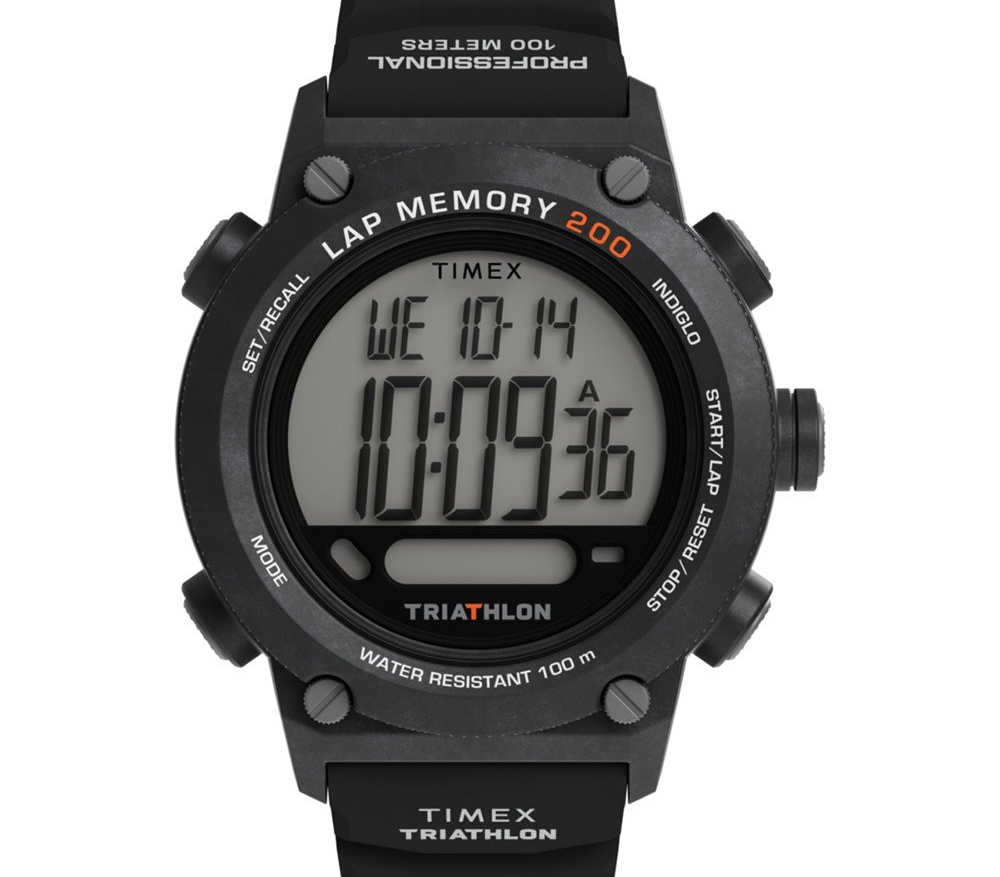
The project that would give rise to the Ironman began in 1984 with the Timex Triathlon, a digital watch developed together with the organisers of the Ironman Triathlon race. In 1986 Timex acquired the right to use the Ironman name and launched the first official model: a digital watch with time, chronograph, timer, hourly chime and three alarms, housed in a pewter case coated with an automotive paint chosen after spotting a car near Timex's Cupertino offices, and water-resistant to 100 metres. The model became the best-selling watch in the United States in its first year on sale.
After a first cosmetic redesign in 1991, the breakthrough came in 1992 with the introduction of Indiglo technology, the electroluminescent backlighting system that lights up the entire digital display at the press of a button, replacing the old conventional backlight. The technology was also extended to the women's version of the line in 1994, establishing Indiglo as a hallmark of the Ironman and, more broadly, of much of Timex's production.
In the following decades the line evolved along with sports digital watches in general, with increasingly legible displays, more sophisticated timing functions and ever more shock-resistant resin cases. Still true to its original concept of a multifunction digital watch for sport and fitness, the Ironman is described by Timex as its best-selling line of all time.
Technical specifications
Main versions
The case colour of the first 1986 Ironman was inspired by a DuPont automotive paint seen on a car parked outside Timex's offices in Cupertino, California: a curious detail behind the unmistakable black-orange-grey colour scheme of the original model.