

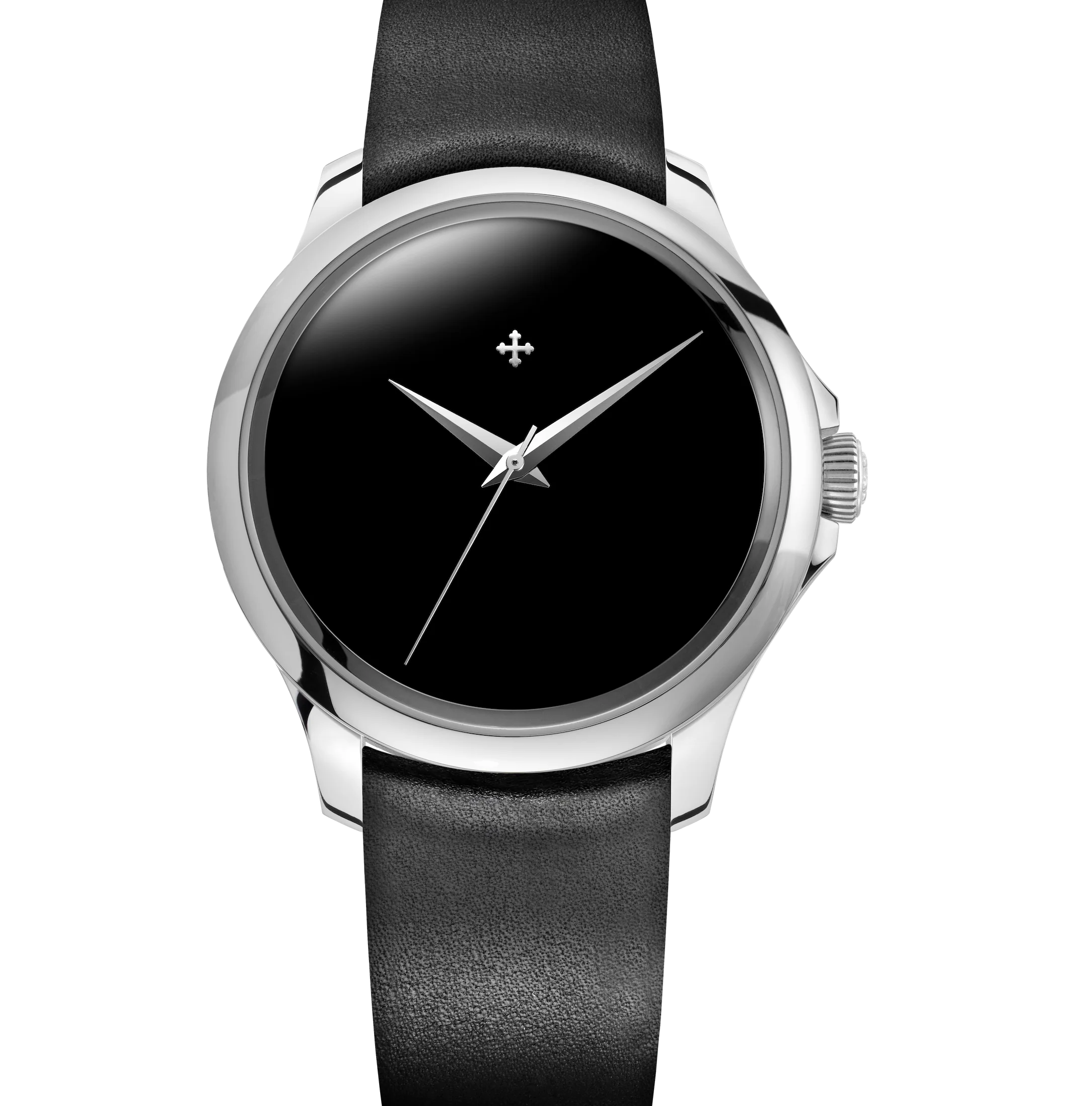
Redentore
History of the collection
If the Nereide represents the sporty, diving soul through which Venezianico made its name, the Redentore embodies its opposite and complementary side: the dressy, elegant one. The collection's name and design are an openly declared tribute to the Basilica del Redentore, the church that Andrea Palladio — the acknowledged father of the neoclassical style — designed in Venice on the island of Giudecca at the end of the 16th century. As the brand itself explains, the watch's design stems from an attempt to translate into a dial and case "the harmony of forms and proportions" that characterises Palladian architecture, in a line the brand describes as halfway between classic and contemporary.
Over time the Redentore has become one of the broadest and most experimental collections in the Venezianico catalogue, offered in 36 and 40 millimetre cases and in numerous dial variants: from aventurine finishes to all-black Ultrablack versions, up to more refined editions with bronze cases or set with diamonds. It is on this very line that the brand chose to graft its most ambitious experiments, including less common complications such as the first regulator in its history, the Redentore Enigma.
The collection's most recent chapter is also the most important for the whole company: 2025 saw the debut of the Redentore Utopia, the first Venezianico model fitted with the V5000, a mechanical calibre entirely designed and made in Italy together with the OISA manufacture. A milestone that establishes the Redentore as the showcase of the brand's highest ambitions, without losing its original link with the restrained elegance of the Venetian basilica from which it takes its name.
Technical specifications
Main versions
The Basilica del Redentore, which gives the collection its name, was commissioned by the Republic of Venice as a vow for the end of the terrible plague epidemic of 1575-1577: ever since, on the third Sunday of July, the city celebrates the Festa del Redentore with a bridge of boats linking the banks of the Giudecca to the basilica, in one of the most heartfelt traditions of the Venetian calendar.