
Rallygraf
History of the line
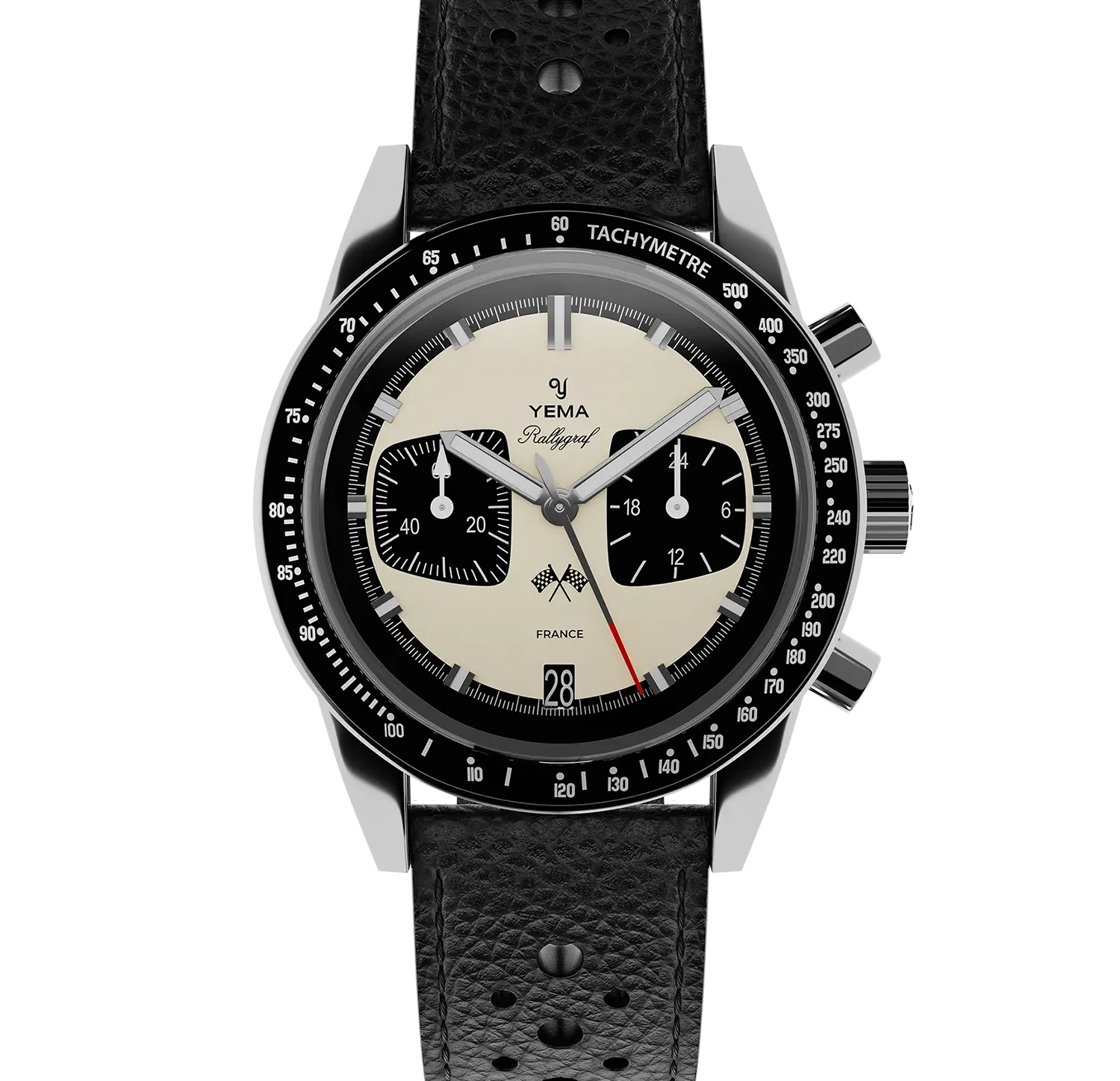
First presented under the name Rallye and later renamed Rallygraf, this chronograph was born at the end of the 1960s to meet the growing demand for timing instruments dedicated to motorsport. The first versions used manual Valjoux movements, from calibre 92 to the rarer 72, up to the two-pusher, four-function Valjoux 7730, which became the line's most famous and widespread version, followed over time by variants such as the 7733, the 7734 with date and the 7736 of the "Super" version.
The link with the racing world was strengthened by its adoption by professional drivers: among them Italian-American driver Mario Andretti, who wore a Yema Rallye during his racing career, helping to make the model a recognised reference among racing watches of the time. For the export market some versions were also sold under the name "Wesley's Rallye".
Over the decades the line evolved from manual movements to automatics and, in the 1980s, also to quartz, with variants that in collectors' jargon have taken names such as "Formica" or "Brown Sugar" depending on the colour and finish of the dial. Today the Rallygraf collection is back in production with Classic and Mark II versions, meca-quartz or automatic movements, and motorsport-themed special editions such as the Alpine Cup, keeping intact the link with the sporty, strongly contrasting look of its origins.
Line features
Key milestones of the line
Among collectors some Rallygraf variants are known by informal nicknames linked to the colour or finish of the dial, such as "Formica" or "Brown Sugar": unofficial names born from use, showing how much the line has remained a cult object for vintage racing watch enthusiasts.