

Astrographic
History of the line
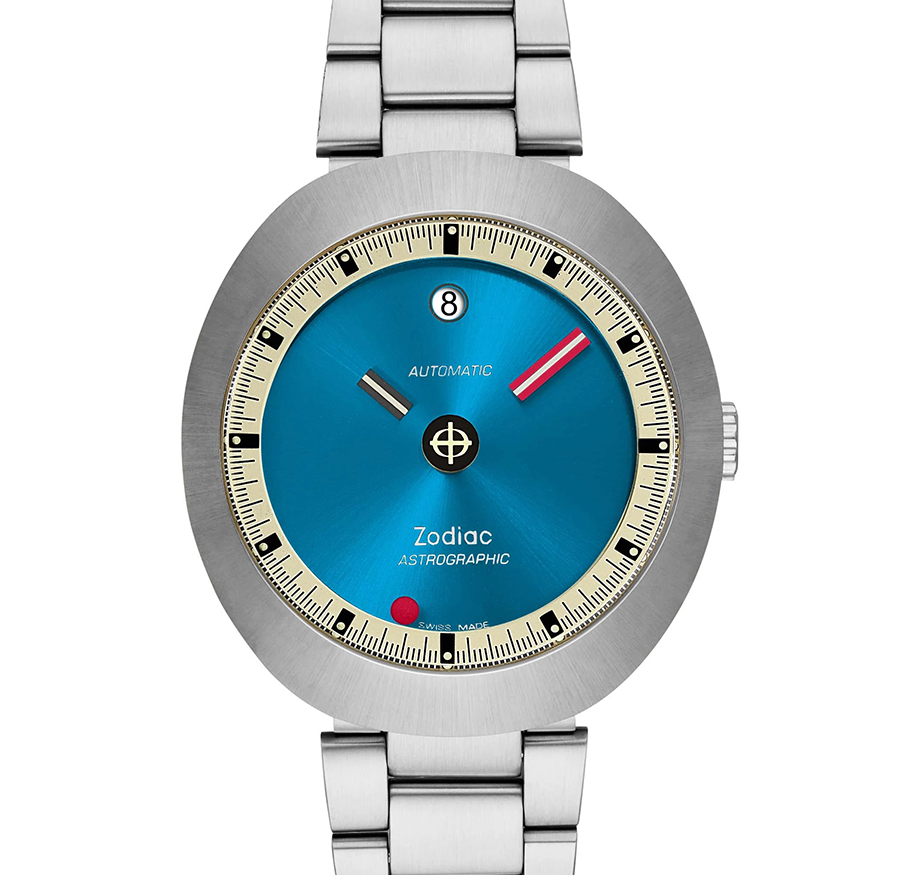
Presented in 1969 as the Astrographic SST, this model is probably the most radical design Zodiac ever produced: instead of traditional hands, the dial conceals superimposed transparent discs, driven by external gear trains and printed with a thin rectangle for the minutes and a wider one for the hours, which in real life seem literally to float above the dial.
Completing the theatrical effect, a red peripheral disc marks the seconds along the edge of the dial, while the rectangular case with "hooded" lugs and the blue and white colour scheme of the original pieces place the Astrographic firmly in the "space age" aesthetic typical of the turn of the 1960s and '70s — the same cultural climate that a few years earlier had also inspired the Aerospace GMT.
The "mystery" dial, a technique normally reserved for elegant, formal watches, applied here to a decidedly sportier and more futuristic design, made the Astrographic an unusual object from its debut — so much so that, according to several historical sources in the industry, it was a rather modest commercial success at the time. It is precisely this rarity that has made it a cult piece over the years, celebrated by more than one limited reissue faithful to the original 1969 proportions and colours.
Technical specifications
Main versions
Applying a "mystery" dial — a technique born for elegant drawing-room watches — to a sporty watch with a design openly inspired by space-age imagery was an unusual choice for 1969: the Astrographic sold relatively few pieces at the time, but it is precisely this rarity that has turned it into one of the most sought-after and imitated models in the entire historic Zodiac catalogue.