Angelus
Brand History
Angelus was founded in 1891 in Le Locle by brothers Albert and Gustav Stolz, joined in 1898 by their brother Charles, a newly qualified watchmaker. From its earliest years the manufacture stood out for its intense patenting activity: in 1894 it filed a patent for an improved chronograph counting mechanism, in 1896 one for a silent striking regulator, and in 1902 it received the gold medal at the Paris International Exposition.
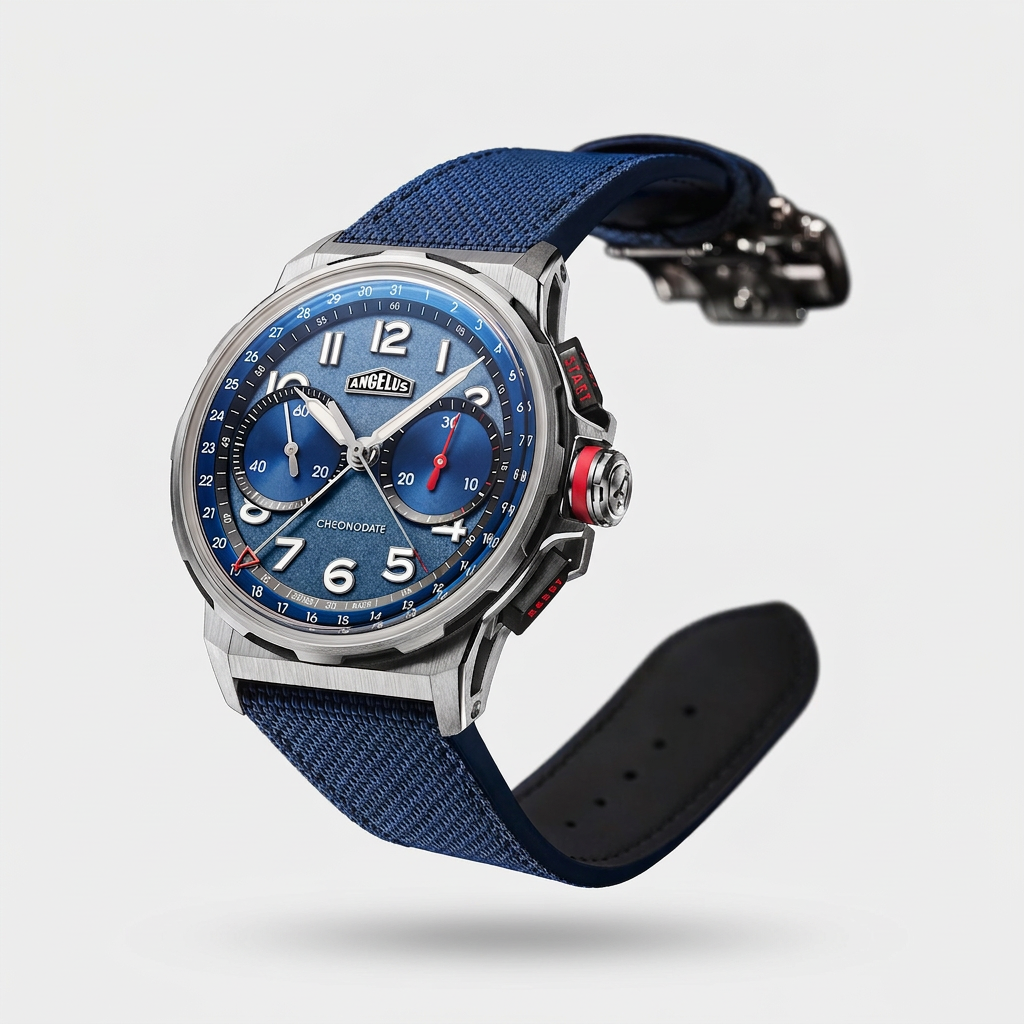
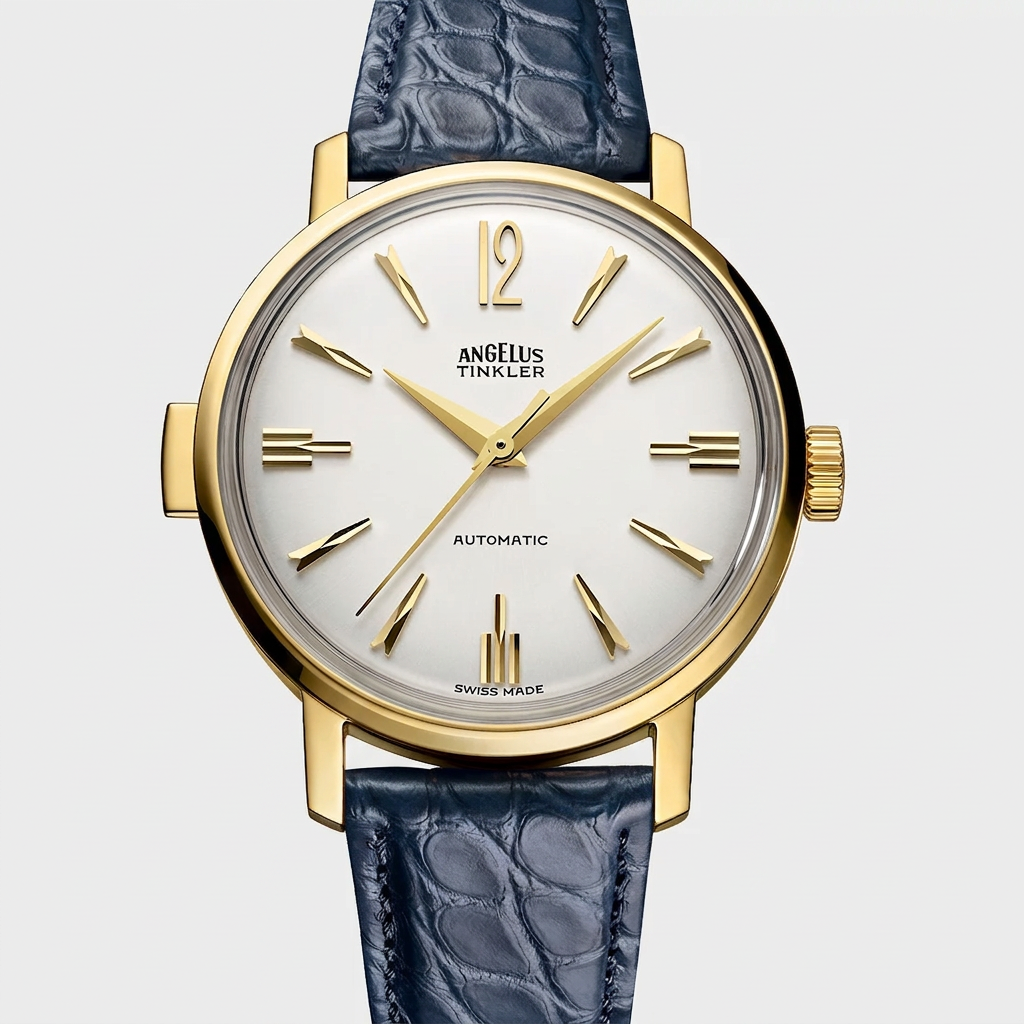
In 1925 Angelus presented its first wristwatch chronographs with the SF15 calibre, and in 1942 it launched the Chronodato — the world's first serially produced chronograph fitted with a date indication, with a 45-minute counter and a full calendar — which became the house's most celebrated model. The Tinkler followed in 1957, among the first automatic and water-resistant quarter-repeater wristwatches. During the same period the manufacture supplied movements to prestigious brands such as Panerai (the SF215 calibre powers the legendary Radiomir Mare Nostrum) and Tiffany & Co.
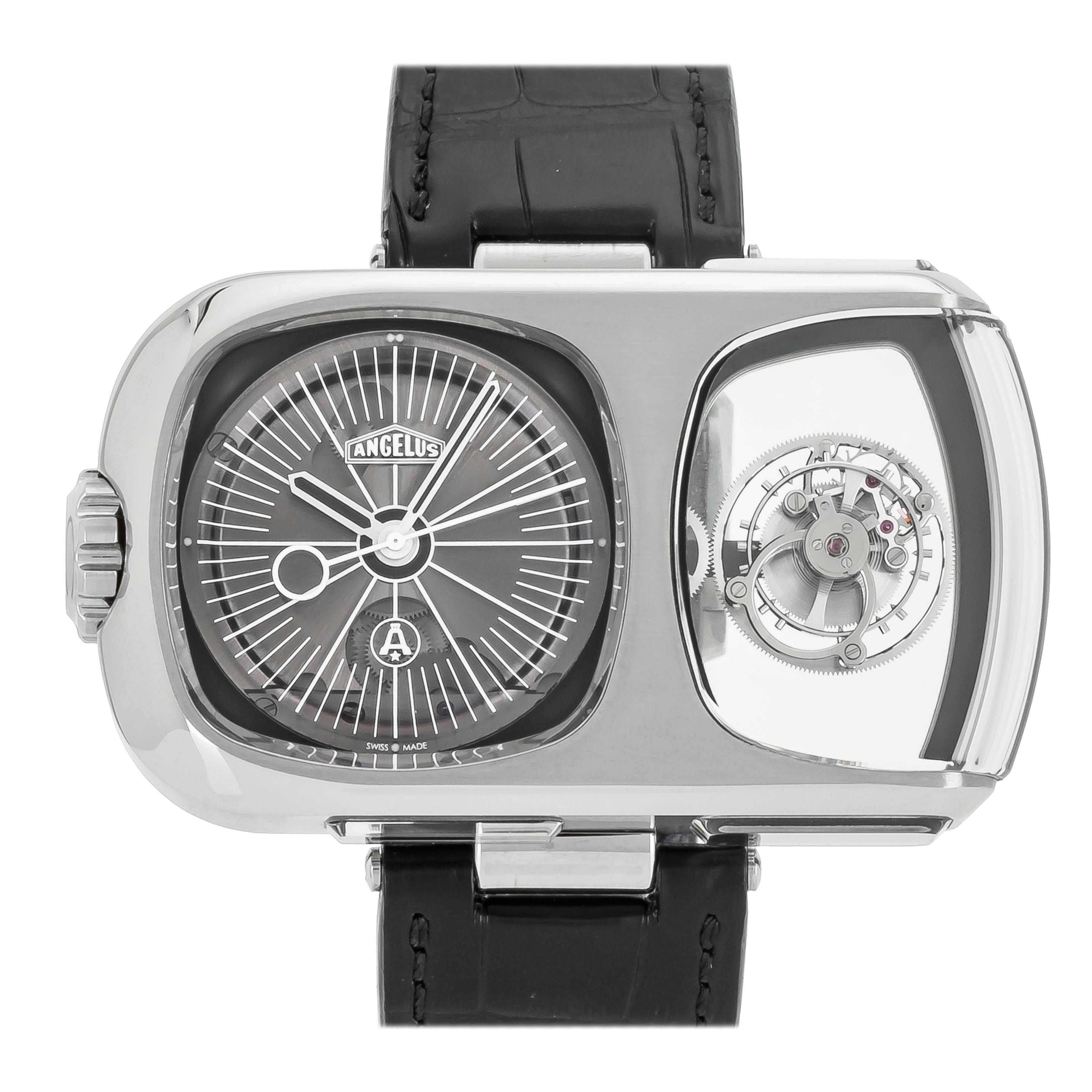
The quartz crisis of the 1970s hit Angelus hard: it ceased production around 1979 and vanished from the market for more than thirty years. In 2011 the brand was acquired by the Manufacture La Joux-Perret group (the same team behind Arnold & Son), which relaunched it, moving the headquarters to La Chaux-de-Fonds with contemporary collections of skeletonized tourbillons in titanium and carbon. Since 2023 the catalogue has been organized into two lines, L.A.B. (modern interpretations) and La Fabrique (vintage-inspired), a path that in 2025 was rewarded with the Chronograph Watch Prize at the Grand Prix d'Horlogerie de Genève.