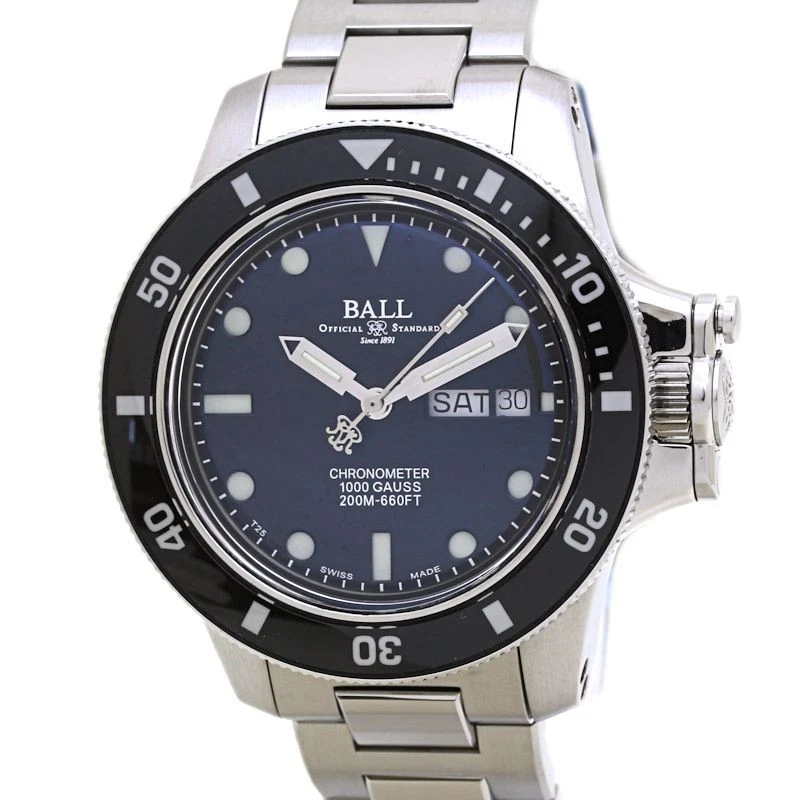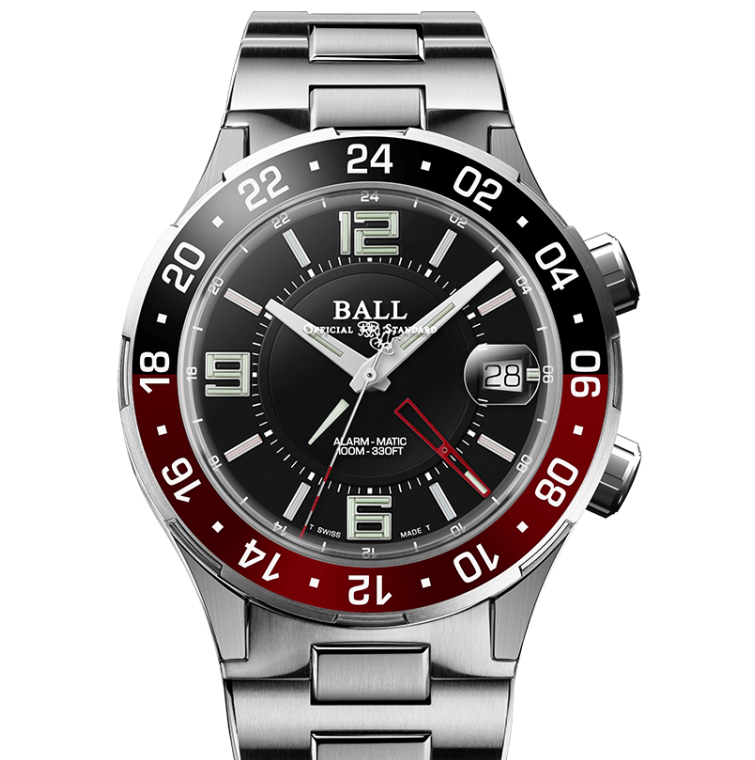

Ball Watch Company
Brand History
The story of Ball Watch Company begins with a tragedy. On 19 April 1891, at the Kipton station in Ohio, a mail train collided head-on with the Toledo Express because an engineer's watch was running four minutes slow: the accident, the fifth in the United States attributed to an inaccurate watch, claimed eight lives. The Lake Shore railways then commissioned Cleveland jeweler Webb C. Ball, already experienced in using the Naval Observatory's time signals, to establish a precision standard for the pocket watches carried by railroad personnel.
The "Ball Railroad Approved" standards developed in 1891 — precision requirements comparable to those of marine chronometers of the era, but applied to a pocket watch — proved immediately effective: after their adoption, only one more railroad accident would ever be attributed to an inaccurate watch, in 1893. Those same criteria would directly inspire, decades later, modern chronometric certifications such as the Swiss COSC.
The modern brand, today a Swiss manufacture that has preserved Webb C. Ball's name and legacy, has in recent decades shifted its focus away from classic railroad watches toward instruments designed for extreme conditions — diving, military, aviation — while always keeping as its identifying trait tritium gas-tube illumination with self-powered microtubes, which require no exposure to light to remain visible in the dark for years.