

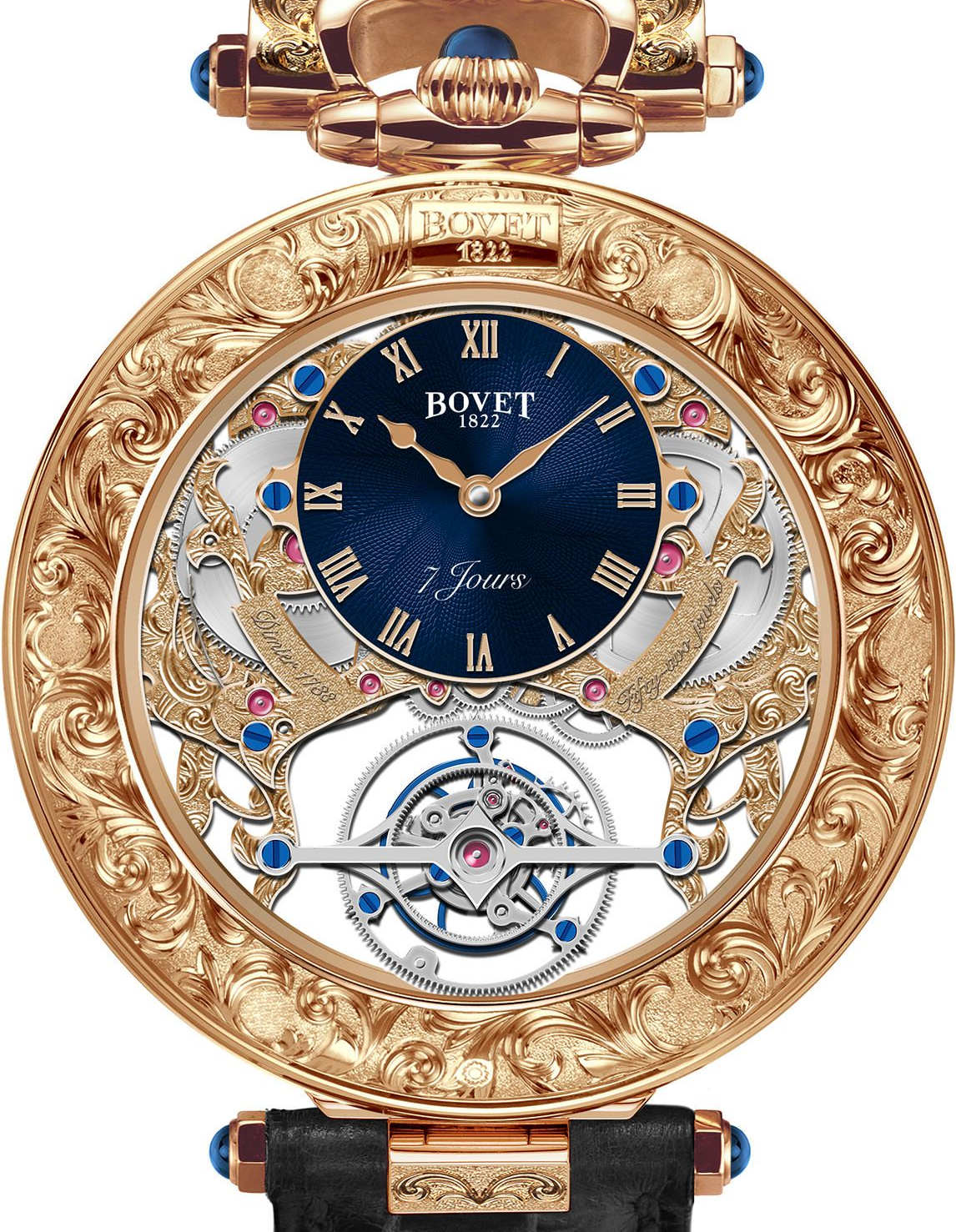
Amadeo Fleurier
Model History
In 2010 Bovet presented the Amadeo system, a patented convertible case mechanism that turns the same watch into a pocket watch, a pendant watch or a small table clock, simply by rotating the bezel and releasing the lug, with no tools required. Pascal Raffy, the brand's owner since 2001, chose to make the launch memorable by immediately equipping the entire Fleurier collection — the line that revives the aesthetic of period pocket watches, with the crown and lug at 12 o'clock — with this new case architecture, giving rise to what is today known as the Amadeo Fleurier collection.
The idea was born from the desire to move past the rigidity typical of the modern wristwatch, restoring to the owner the freedom of choice that characterized nineteenth-century watchmaking, when the same piece could be worn on the wrist, carried in a pocket or displayed on a small desk stand. The name Amadeo, from the Latin "amare Deum" but also an echo of the given name Amedeo, evokes the idea of an object loved and lived in multiple forms, not confined to a single daily use.
In the years following the launch, the Amadeo system has been applied to dozens of different references, from the simplest to grand complications with tourbillons, perpetual calendars and hand-painted double-sided dials, becoming Bovet's most recognizable distinctive trait alongside the bow and the crown positioned at 12 o'clock. The Monsieur Bovet model, which combines the Amadeo system with a hand-reversal mechanism and a coaxial dual seconds counter, remains one of the most complete examples of this constructive philosophy.
Technical Specifications
Main Executions
Some of the more elaborate Amadeo Fleurier executions come with a small base or "watch stand" designed specifically for use as a table clock: a rare accessory in contemporary watchmaking, which brings the piece back to the desk-clock function typical of the nineteenth century, the era in which Bovet built its reputation in the Chinese market.