
Bovet Fleurier
Brand History
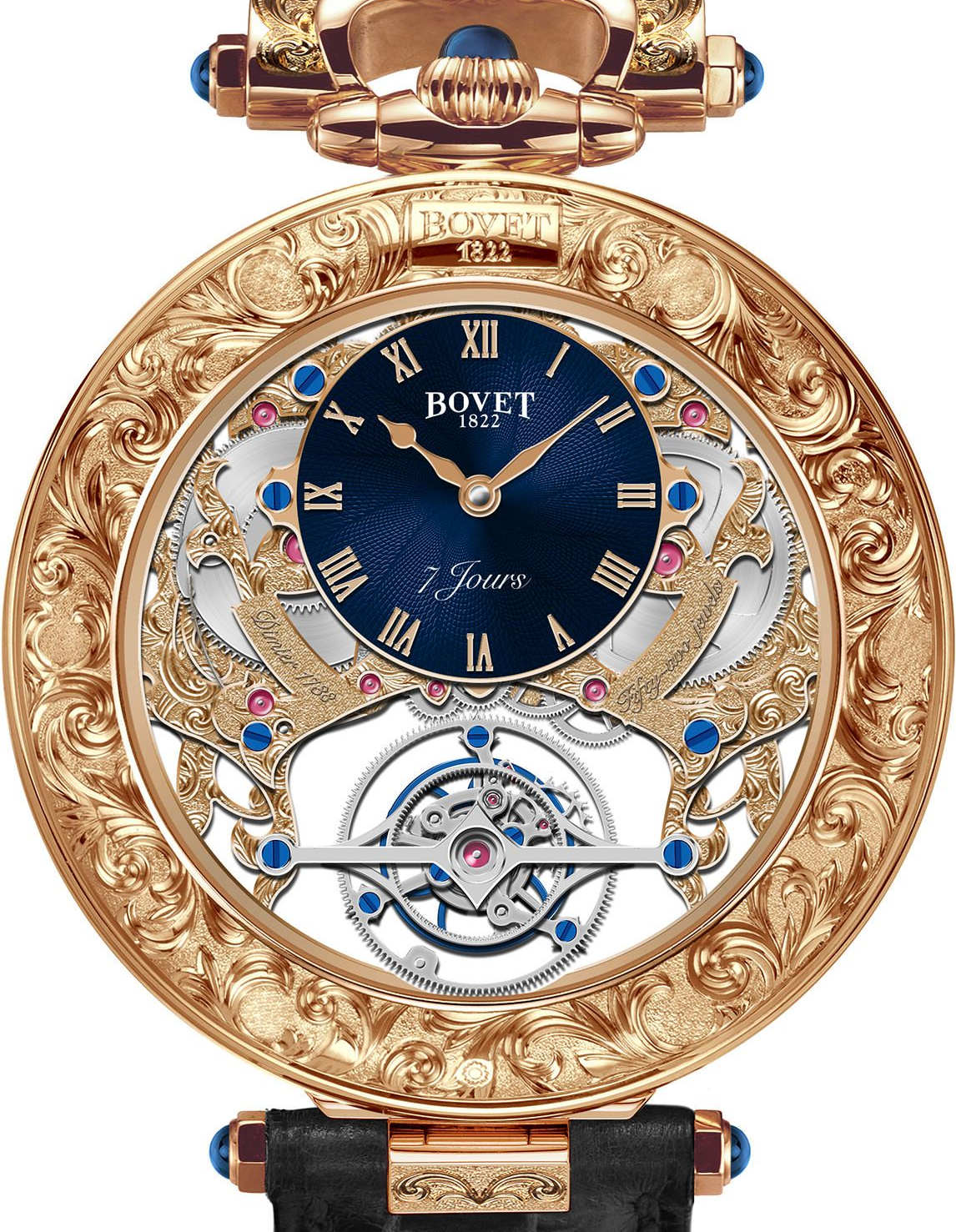
Bovet was born on May 1, 1822 in London, where Édouard Bovet, trained as a watchmaker in the Swiss town of Fleurier alongside his father Jean-Frédéric, opened a house dedicated to producing pocket watches for the Chinese market. Together with his brothers Alphonse, Frédéric and Léopold, Édouard built a dominant position in southern China within a few years: enameled and finely decorated Bovet watches were sold in pairs inside mahogany cases, following a local custom that regarded them as good-luck charms. The brand thus became synonymous with watchmaking excellence in the Far East, to the point that the term "Bo Wei" entered common Chinese usage as a synonym for a fine watch.
The collapse of the Chinese market starting in 1855, due to foreign competition and the spread of imitations, forced the house to rethink its business model. Over the following decades, ownership changed hands several times — among others Jequier and Bobillier, then Landry Frères, then Jacques Ullmann and the Bovet family itself — leading to a long period of reduced or suspended production during the twentieth century, including a stretch under the Favre-Leuba orbit. The name nevertheless remained alive in Swiss watchmaking memory, indissolubly tied to the town of Fleurier, in the Val-de-Travers, where the Bovet family had its roots.
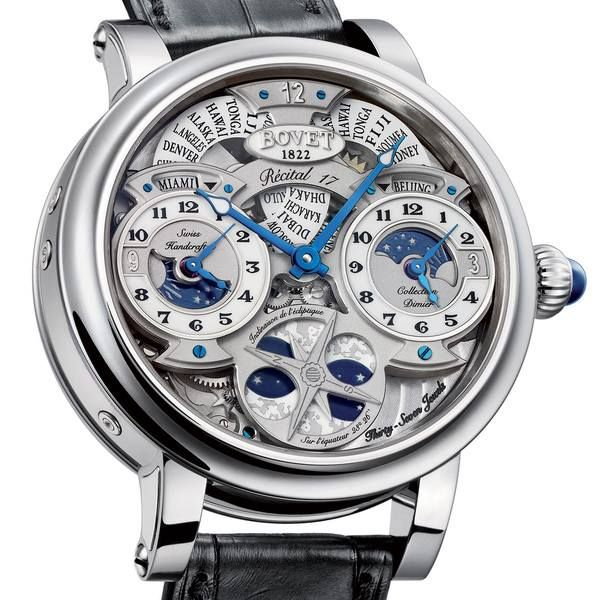
The brand's modern rebirth began in 2001, when entrepreneur Pascal Raffy took over control and launched a radical transformation: in 2006 he acquired the production facilities to govern every stage of the work in-house — cases, dials, movements, decorations — and in 2006 established the manufacture's headquarters in the Château de Môtiers, a fourteenth-century building in the Val-de-Travers, a few kilometers from Fleurier. Under Raffy's leadership, joined in 2020 by his daughter Audrey, Bovet 1822 today produces fewer than two thousand watches a year, about a third of which are unique pieces made to commission, maintaining an extremely high-end positioning between haute horlogerie and decorative arts.