

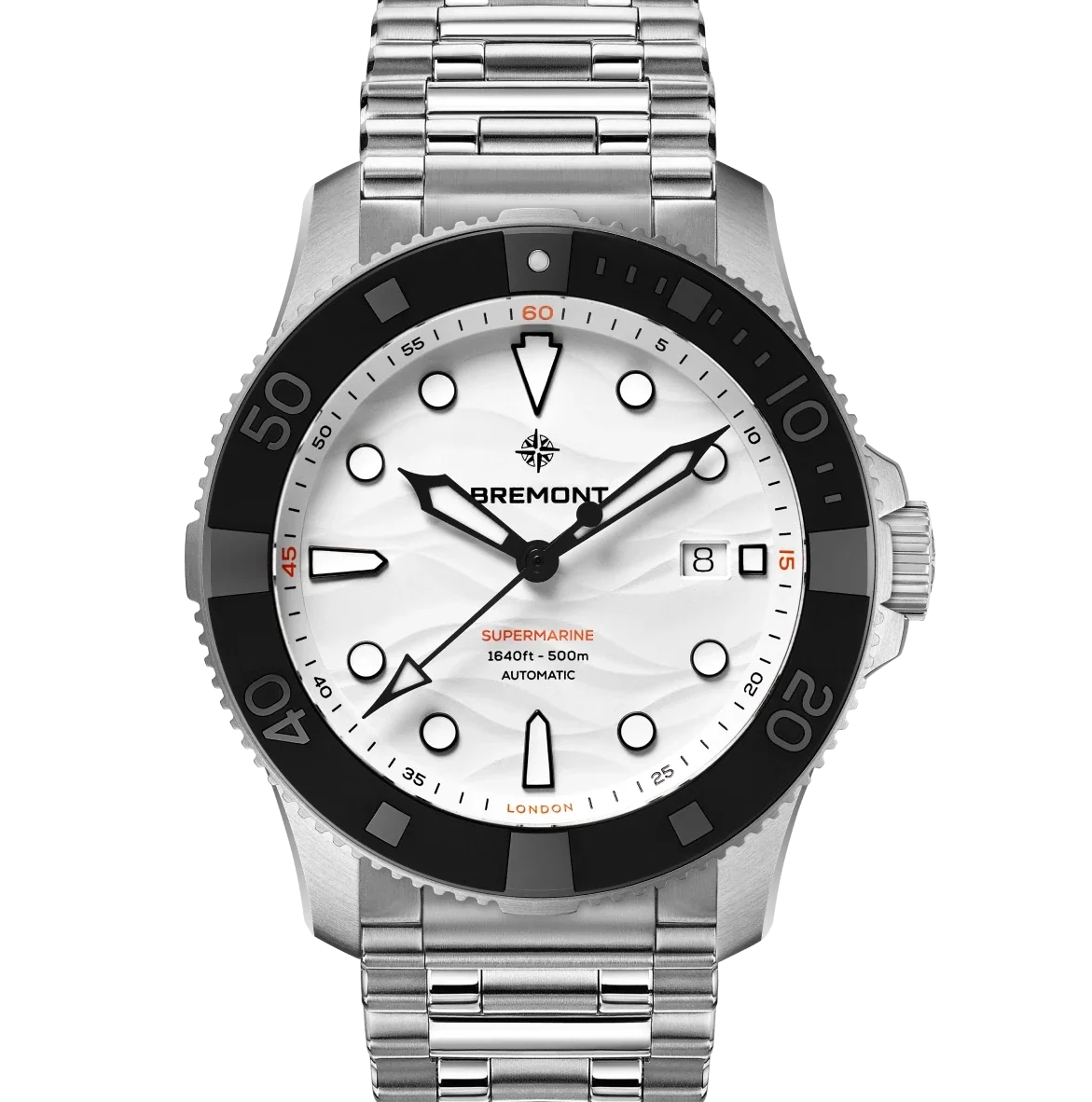
Model History
If the MB and ALT1 collections tell the story of Bremont's bond with the sky, the Supermarine line brings the same engineering approach underwater. The name is an explicit tribute to Supermarine Aviation Works, the historic British aircraft manufacturer famous above all for designing the Spitfire, the fighter symbol of the Battle of Britain: a way for Bremont to keep the aeronautical thread even in a watch born for the professional diver rather than the pilot.
From its earliest versions, the collection is developed in close contact with operators who actually work underwater in extreme conditions — Royal Navy Clearance Diving divers, British special forces units, professional saturation divers working on North Sea platforms and Royal Marines raiders — with the goal of building a dive watch that met the same reliability standards demanded of professional instrumentation, well beyond the minimums set by the ISO 6425 standard for diving watches.
Over time the range has been structured around two distinct setups by size and vocation: on one side the S500, the more robust and professional version able to comfortably exceed its declared 500-meter depth rating in testing; on the other the S300, more compact and versatile in its 40 mm diameter, designed for everyday use as well as diving. Both share the same Bremont construction philosophy, including a robust steel case, unidirectional bezel and COSC chronometer certification.
Technical Specifications
Main Executions
Despite being the brand's diving collection, the Supermarine name has nothing to do with the sea in a literal sense: it instead recalls the eponymous British aircraft manufacturer that, between the two world wars, designed the Spitfire — the same aircraft the founders' father flew for the RAF, confirming just how deeply the English family's aviation legacy permeates even the lines furthest removed from flight in the strict sense.