Bulgari
Brand History
Bulgari is born in Rome in 1884 at the hands of Sotirios Voulgaris, a Greek silversmith who arrived in Italy after a period in Naples, who opens the first shop on Via Sistina and, ten years later, the Via dei Condotti boutique that will become the maison's symbolic address; he then Italianizes his name to Sotirio Bulgari. It is his sons Giorgio and Costantino, leading the company in the early decades of the twentieth century, who decisively steer it toward high jewelry, with the first wristwatches — Art Déco in taste, in platinum and diamonds — already appearing in the 1920s as a natural extension of that craft.
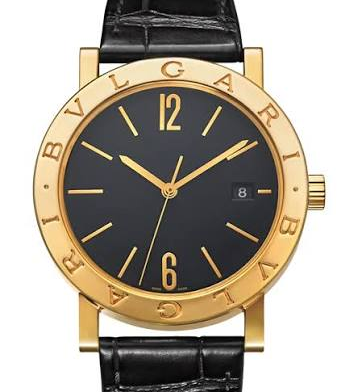
The brand's true watchmaking identity, however, takes shape much later, in the 1970s: in 1975 the Bulgari Roma is born, a quartz watch with a disc dial, and in 1977 the Bulgari Bulgari line debuts, developed with the collaboration of Geneva designer Gérald Genta, who engraves the brand's double name around the bezel's circumference, turning the logo itself into a decorative element — a bold move for the time, later imitated by half the watch industry. From that moment Bulgari progressively builds a true manufacture, with its own production sites in Switzerland, including Neuchâtel (home of Bulgari Horlogerie SA), Le Sentier and Saignelégier, eventually controlling the case, movement and bracelet supply chain in-house.
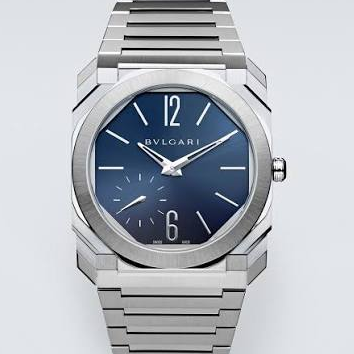
In 2011 the LVMH group acquires the majority of Bulgari for around 3.7 billion euros, in a deal that makes the Bulgari family the second-largest private shareholder of the French group: an operation that consolidates the Roman brand's resources and visibility without affecting its Swiss production autonomy. It is in this context that, from 2014, the Octo Finissimo collection takes shape, with which Bulgari achieves an uninterrupted series of world records in mechanical thinness, adding to its jewelry heritage a positioning also recognized in high technical watchmaking.