
Enicar
Brand History
Enicar was born in 1913 as a small family manufacture founded by Ariste Racine together with his wife Emma Blatt in La Chaux-de-Fonds, in the heart of the Swiss Jura. The brand's name is actually the surname "Racine" spelled backward: the family could not register it directly, since a namesake — Jules Racine Sr. — had already filed it as a watch brand, and it was Emma herself who suggested reversing the letters. The "Enicar" mark was thus registered in 1914, while production moved in 1919 to the Lengnau plant in the canton of Bern, where it would remain for the rest of its history.
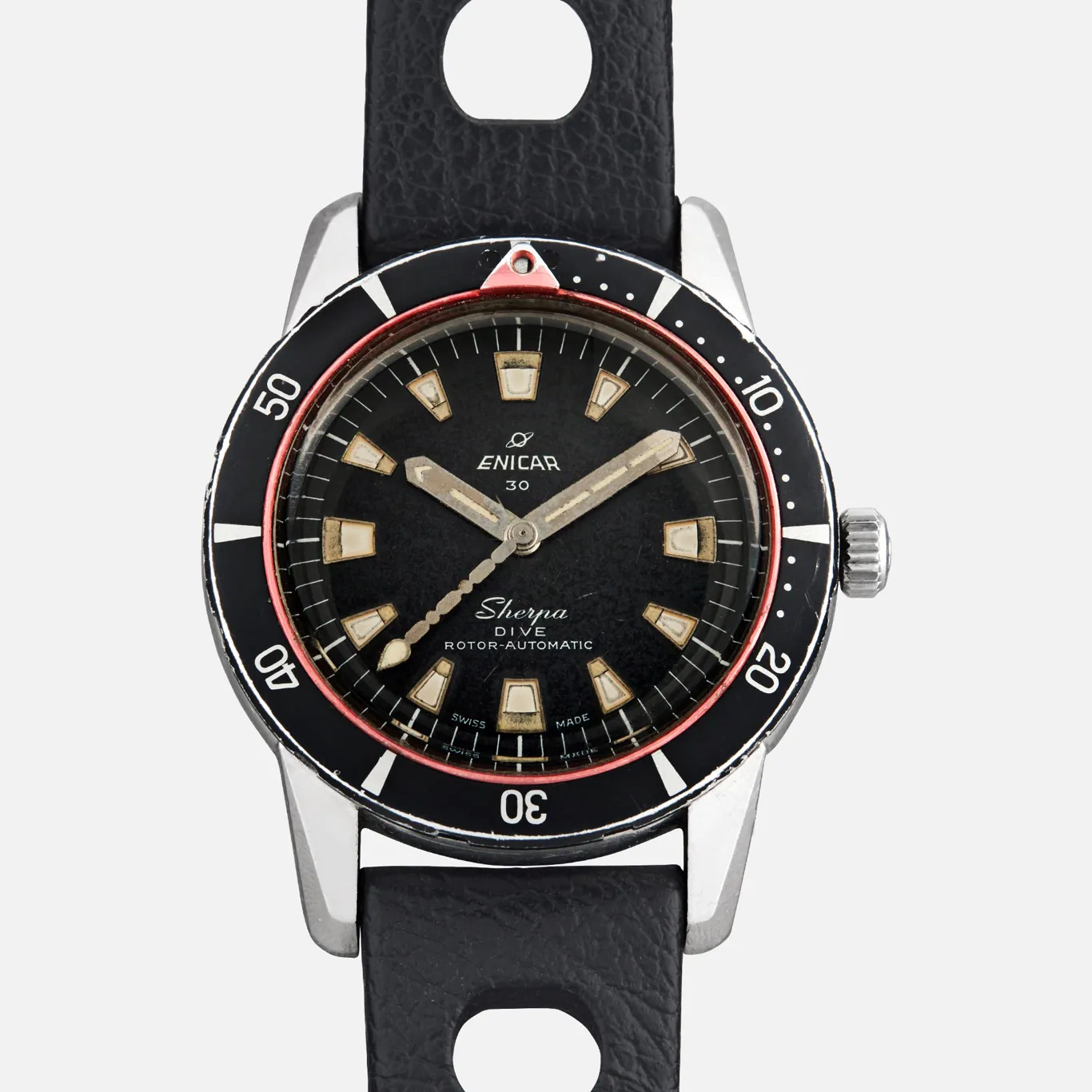
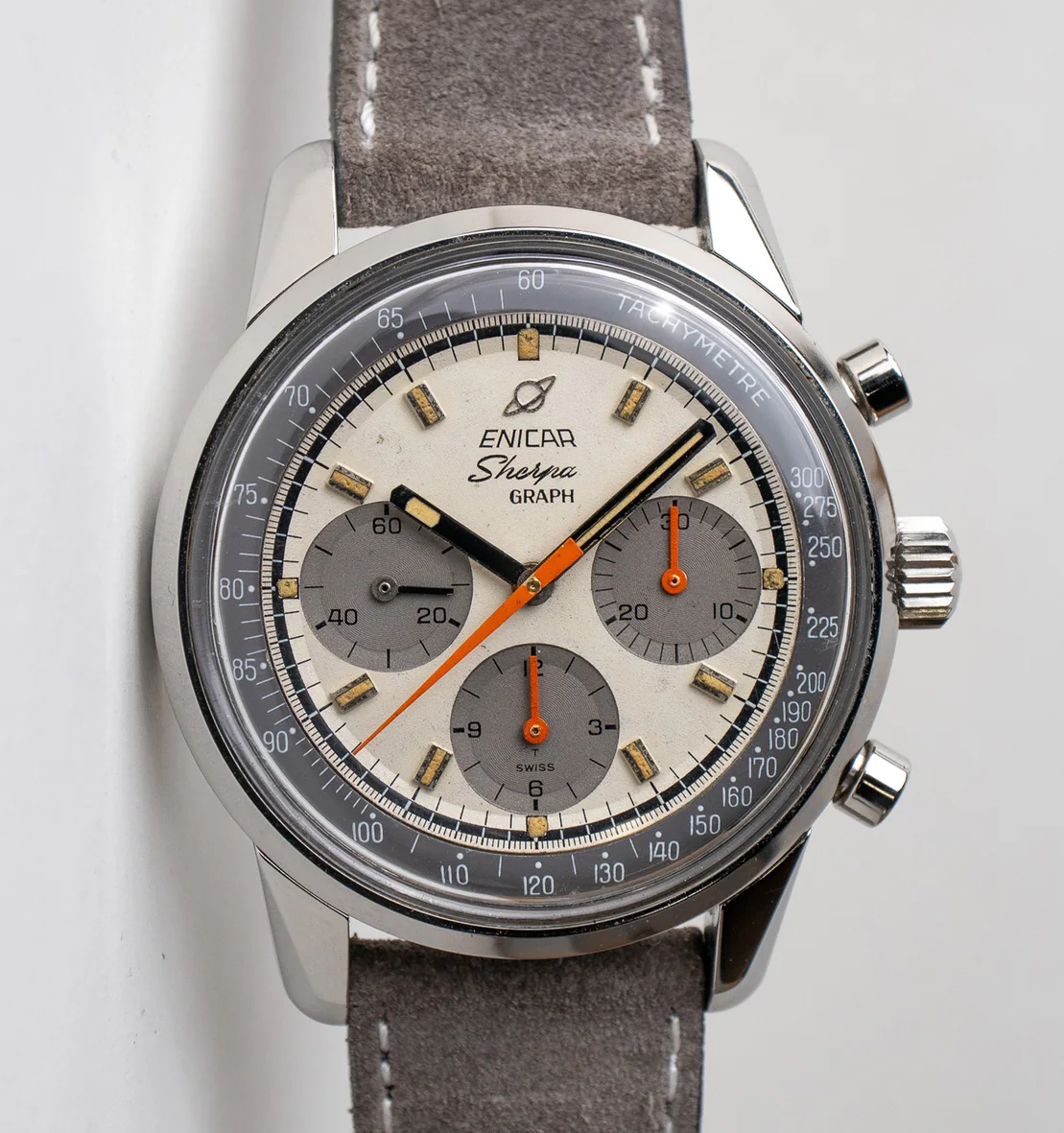
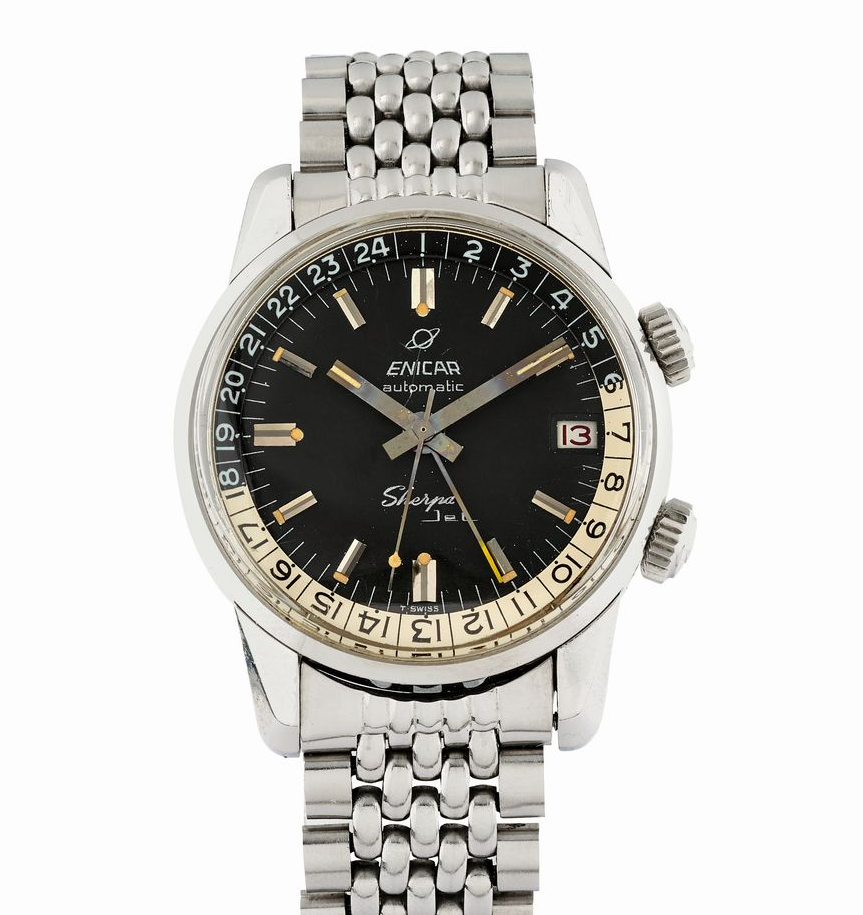
Under the leadership of Ariste Racine Jr., who joined the company in the 1930s, Enicar saw significant growth in the postwar years: it developed its own calibers — such as the 1010, certified as a chronometer by the Neuchâtel Observatory in 1954 — and collections such as the Seapearl (1955), pairing its own movements with third-party supplies from Valjoux and AS. It was during this period that the brand built a strong commercial presence in Asia, particularly in China, through the Hong Kong distributor Wah Ming Hong. In 1956, after some Swiss mountaineers had worn Enicar watches during expeditions on Everest and Lhotse, the company registered the name "Sherpa" in honor of the Himalayan guides, giving rise to a vast family of sports models that would become the brand's defining trait.
Like much of mid-tier Swiss watchmaking, Enicar was hit hard by the quartz crisis: financial difficulties worsened through the 1980s until insolvency was declared in 1987. The remaining stock passed into the hands of Gerd-Rüdiger Lang, founder of Chronoswiss, while in 1988 the brand name was bought at auction by Wah Ming Hong, the historic Chinese distributor, which still holds the rights today and directs production almost exclusively toward the Asian market. The original Lengnau manufacture, however, ceased to exist with the 1987 insolvency: for this reason Chronopedia treats Enicar as a historic brand, focusing on its golden age, that of the Sherpa models produced between the 1950s and 1970s.