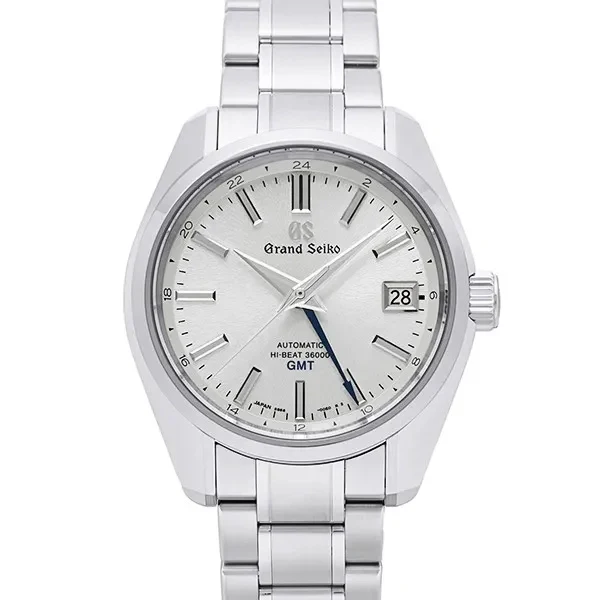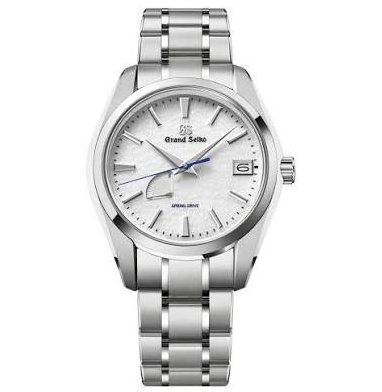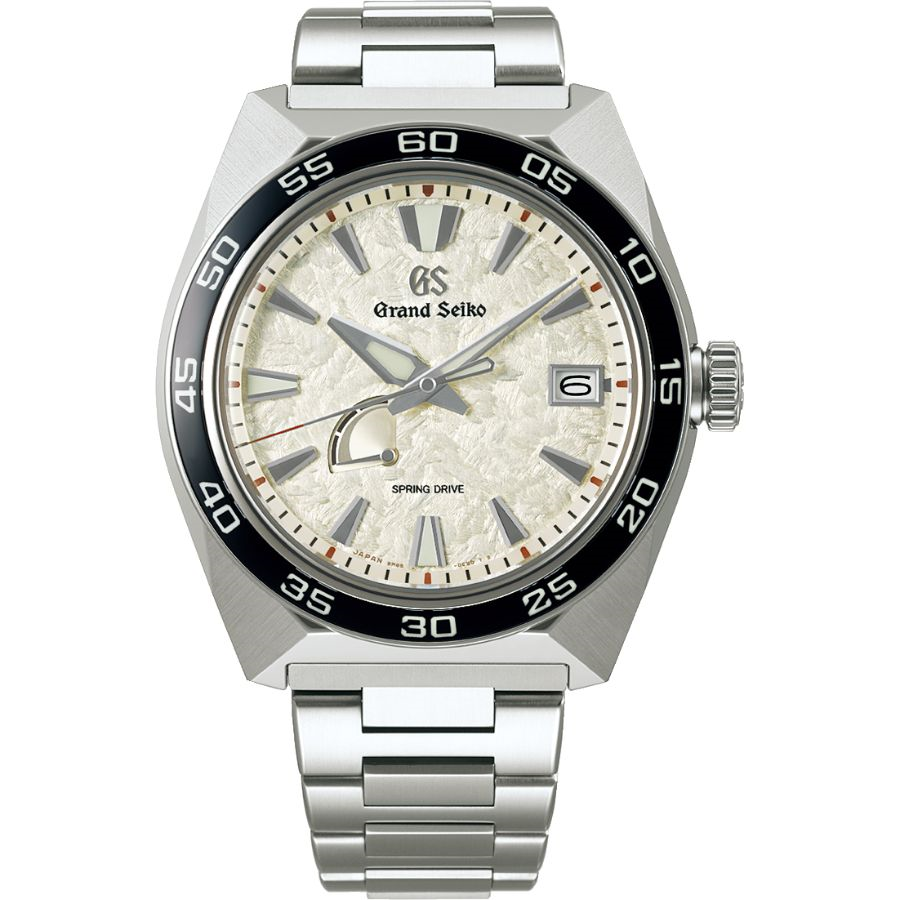

Grand Seiko
Brand History
Grand Seiko was born in December 1960, created by Suwa Seikosha, one of the two historic manufacturing plants of the Seiko group (the other being Daini Seikosha), with a goal stated from day one: to build the most precise, reliable and finely finished mechanical watch ever produced in Japan, capable of standing up to Swiss high horology on its own ground. The first Grand Seiko housed the manual caliber 3180 and was positioned, in both price and ambition, above every other Seiko line of the era, including the already prestigious Lord Marvel and Crown. This was no isolated event: it was the start of a decades-long project that the brand would later, retrospectively, call the "Grand Seiko Style."
In 1966 Seiko introduced an in-house precision standard for Grand Seiko stricter than that of its other collections: a tolerance of +6/-3 seconds a day, tightened again in 1969 to +5/-3 seconds — figures that at the time often exceeded the internationally recognized Swiss chronometer standards themselves. It was in this climate of obsession with precision that, in 1967, Daini Seikosha presented the 44GS: a faceted case with perfectly flat surfaces, crisp edges, and mirror-like reflections free of distortion, achieved through the hand-polishing technique known as "Zaratsu" (derived from the name of the German Sallaz grinding wheel from which the Japanese term comes). Designer Taro Tanaka, who had spent a long time observing customers' habits at the Wako boutique in Ginza, codified for the occasion a true rulebook — the "nine enduring elements of Grand Seiko style" — governing case geometry, facet angles and hand treatment: this was the birth of the so-called "Grammar of Design," an aesthetic language the company still applies today with remarkable consistency more than half a century later.
Grand Seiko's story, however, is not a straight line. The quartz crisis, paradoxically triggered by Seiko itself with the launch of the Astron in December 1969, hit even its most prestigious line hard: the last entirely new mechanical movement for Grand Seiko debuted in 1972, and in 1975 production of the remaining automatic calibers was halted. For more than a decade the Grand Seiko name survived almost solely in enthusiasts' memories, until 1988, when the brand was reborn around top-tier quartz with the caliber 95GS. The return to mechanical watchmaking came only in 1998, with the new automatic caliber 9S55: from that moment on, the three great movement families that still define the catalog today — 9S automatic mechanical, 9F high-precision quartz, and the distinctive hybrid Spring Drive 9R technology — have coexisted and reinforced one another.
It is Spring Drive, perhaps, that tells the brand's most singular chapter: the idea, conceived in 1977 by the young engineer Yoshikazu Akahane at Suwa Seikosha, was an "ideal" watch combining the energy of a mechanical mainspring with the electronic regulation typical of quartz, eliminating the friction of a traditional escapement. After roughly twenty years of research, the project resulted in a motor governed by the "Tri-synchro Regulator," capable of simultaneously controlling mechanical energy, electricity generation and a magnetic brake on the glide wheel, producing the signature seconds hand that glides continuously instead of ticking. Presented in experimental form in 1997-1999, Spring Drive entered the Grand Seiko catalog for good in 2004 with the caliber 9R65.
The most recent chapter opened on March 21, 2017: Seiko formally separated Grand Seiko into an independent brand, with its own boutiques, an independent distribution organization and, above all, a dial that for the first time no longer bore the word "Seiko" but only the "GS" logo. Today production is split between two manufacturing facilities in Nagano and Iwate prefectures: the Shinshu Watch Studio in Shiojiri, dedicated to the 9F quartz and 9R Spring Drive calibers, and the Grand Seiko Studio Shizukuishi, dedicated to the high-frequency 9S mechanical calibers. Five values, stated since the 1960s and still repeated by the brand today, sum up the whole project: legibility, precision, durability, beauty and availability.