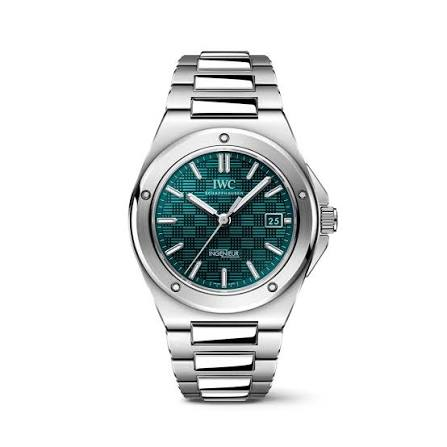

IWC Schaffhausen
Brand History
IWC (International Watch Company) was founded in 1868 on the initiative of American engineer and watchmaker Florentine Ariosto Jones, who had previously worked at the Boston manufacture E. Howard & Co. Jones's idea was ambitious: to make use of Swiss watchmaking labor, among the most skilled in the world, to assemble high-precision movements for export to the United States, thereby combining Swiss craftsmanship with the more industrial production methods typical of America. The choice of Schaffhausen was not accidental: the city, crossed by the Rhine, offered the hydroelectric power needed to run machinery, and thanks to a meeting with the industrialist Heinrich Moser — who had built one of the area's first hydroelectric power plants there — Jones was given his first production premises along the Rheinstrasse.
The early years were anything but easy: difficulties placing the products on the American market, compounded by customs duties and financing problems, brought the company to the brink of bankruptcy. In 1880 the Swiss businessman Johann Rauschenbach-Vogel took over the company, beginning a period of control by the Rauschenbach family that lasted four generations. It was a descendant of that family, director Johannes Rauschenbach-Schenk, who in 1903 coined the Latin motto "Probus Scafusia" — "sound craftsmanship of Schaffhausen" — which has since appeared engraved on the crown or rotor of every watch made by the brand as a mark of quality.
The twentieth century consolidated IWC's identity around two pillars: pilot's watches, born in the 1930s and refined during the Second World War, and high-end complications developed from the 1980s onward under director Günter Blümlein, who in 1991 brought IWC, Jaeger-LeCoultre and A. Lange & Söhne together under the LMH group. In July 2000 Richemont acquired LMH for 2.8 billion Swiss francs, becoming IWC's current parent company and retaining its historic management.