
Louis Erard
Brand History
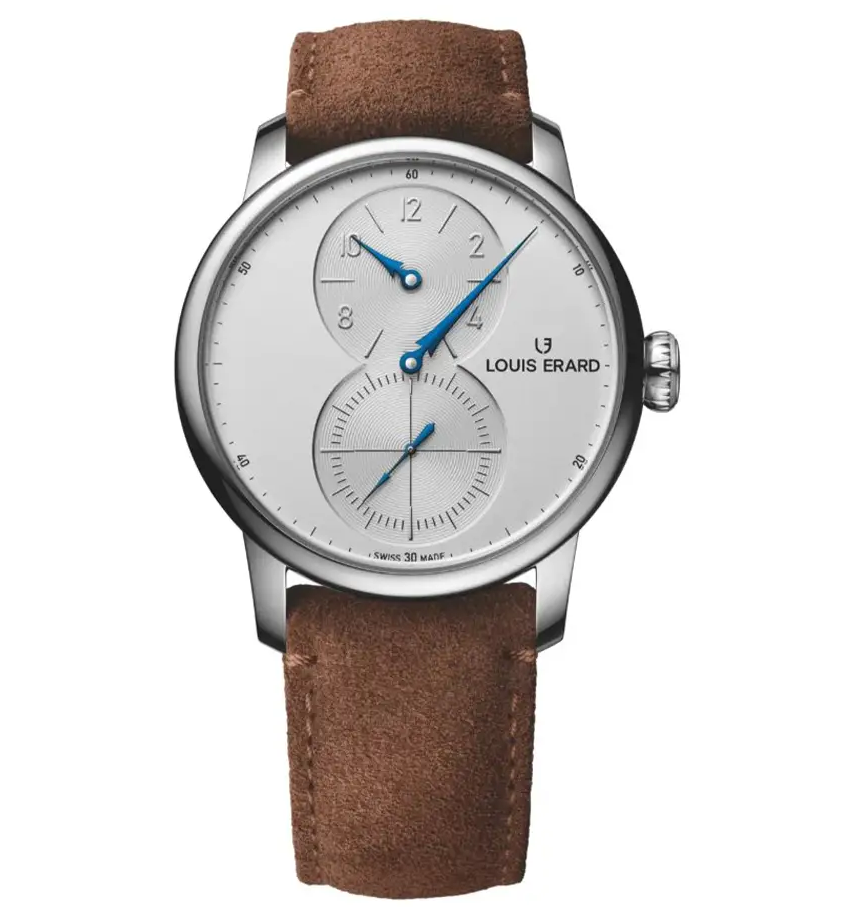
Louis Erard founded a watchmaking school in La Chaux-de-Fonds, in the heart of the Swiss Jura Arc, in 1929, and began producing and selling watches under its own name from 1931. The company remained family-run for three generations: sons René and Jean-Louis joined the business in 1945, contributing to the development of the Valjoux 72 chronograph caliber, while from 1956 the manufacture began producing its own movements. In 1969 the third generation arrived, grandson Paul Erard, who led the brand through the quartz crisis; it was precisely in those years, in the 1980s, that Louis Erard modified the Peseux 7001 caliber by adding a power-reserve indication and a regulator dial — with hours, minutes and seconds on separate counters — a detail that would become the brand's distinctive trait.
In 1992 the brand changed ownership and moved to Le Noirmont, in the canton of Jura, where it is still based today. In 2003 a group of investors led by Alain Spinedi acquired the company and repositioned it in the affordable-quality segment of Swiss watchmaking. From 2018, strategic director Manuel Emch brought a decisive shift: he made the regulator dial the brand's recognizable stylistic signature and opened Louis Erard up to collaborations with independent watchmakers and designers, a strategy that in the following years led the brand to be described by the trade press as a genuine point of reference — an accessible "gateway" into the world of independent watchmaking.
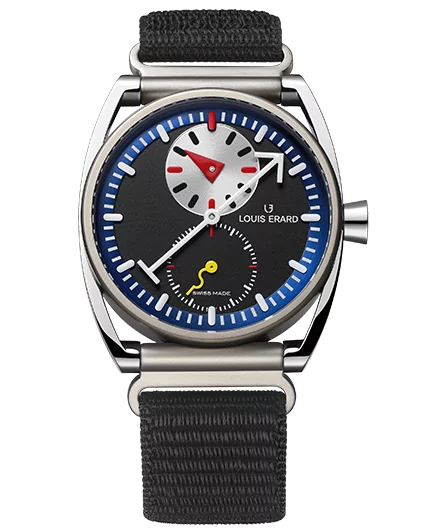
Today Louis Erard is known above all for this: not so much (or not only) for its own collections, but for the long series of editions created together with prominent names in independent watchmaking and design, starting with the French designer Alain Silberstein — the most famous and long-lasting collaboration — but also with watchmaker Vianney Halter, Russian watchmaker Konstantin Chaykin, William Massena (Massena LAB), Geneva designer Cédric Johner, the customization studio Label Noir, artist Olivier Mosset and others. Almost all of these collaborations are born on the same technical and aesthetic base: the Le Régulateur regulator, the true hallmark of the maison.