MB&F
Brand History
MB&F — short for Maximilian Büsser & Friends — was born in July 2005 in Geneva from a move that went against the grain for its time: a senior haute horlogerie executive at the peak of his career who left everything to found a brand with no classic collections, no traditional catalog, with the sole declared goal of turning the mechanical watch into a form of three-dimensional kinetic art. Before that leap, Maximilian Büsser — a graduate in microtechnical engineering from Lausanne — had spent seven years in senior positions at Jaeger-LeCoultre during a period of strong growth for the manufacture, before being appointed in 1998, at just 31, as general manager of Harry Winston Rare Timepieces, a role in which for another seven years he helped build the maison's reputation in haute horlogerie through the Opus collection. In 2005 he decided to leave that position to gain, as he has recounted many times himself, "complete creative freedom" to work with the most talented independent professionals in watchmaking.
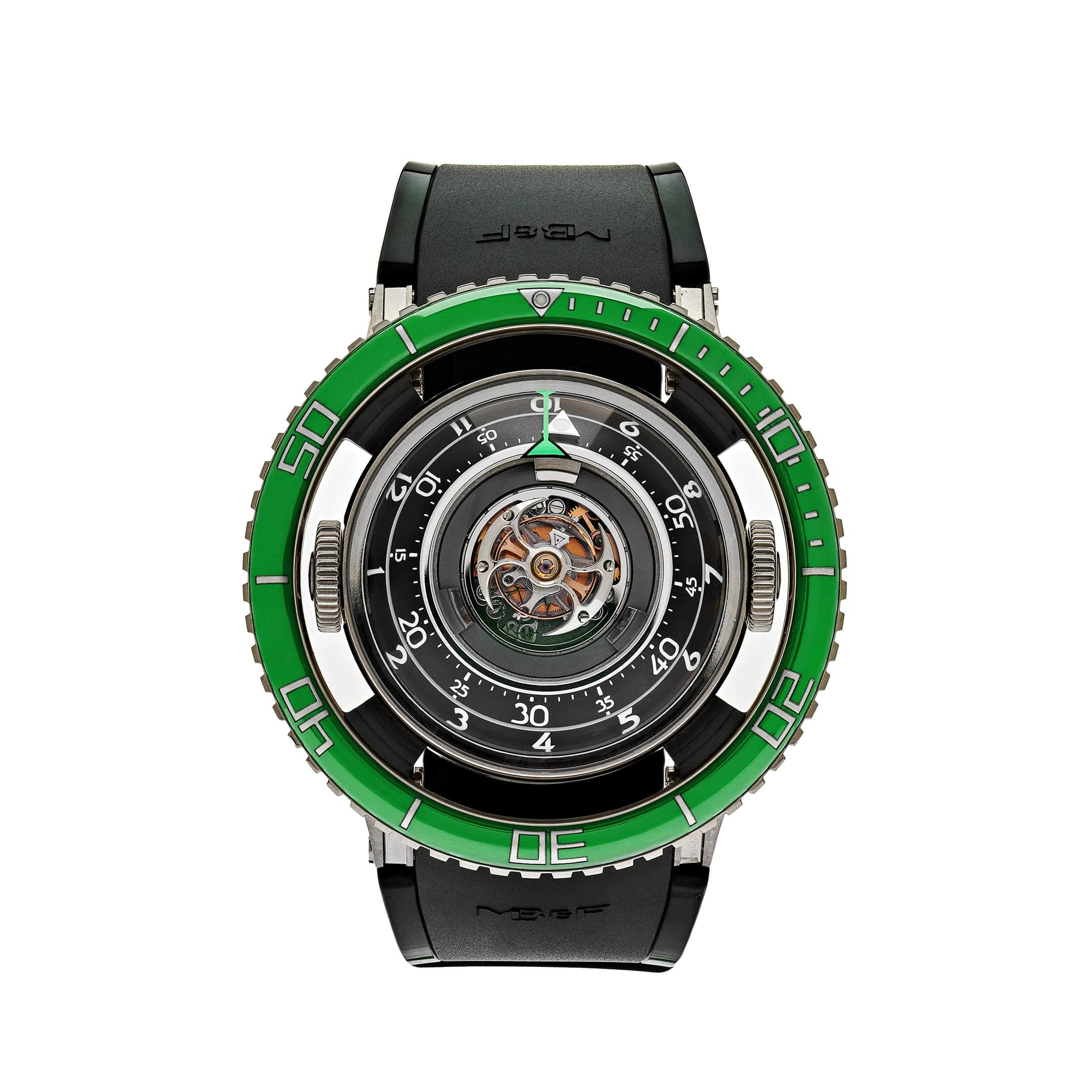
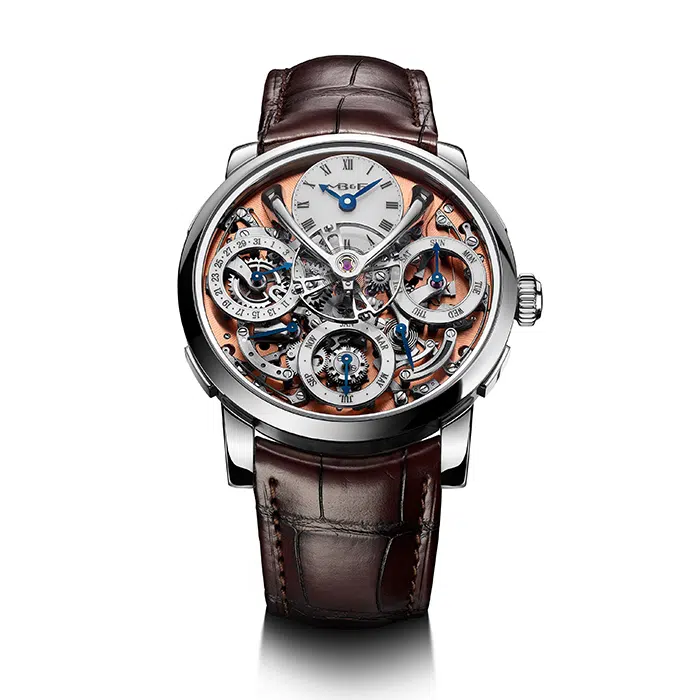
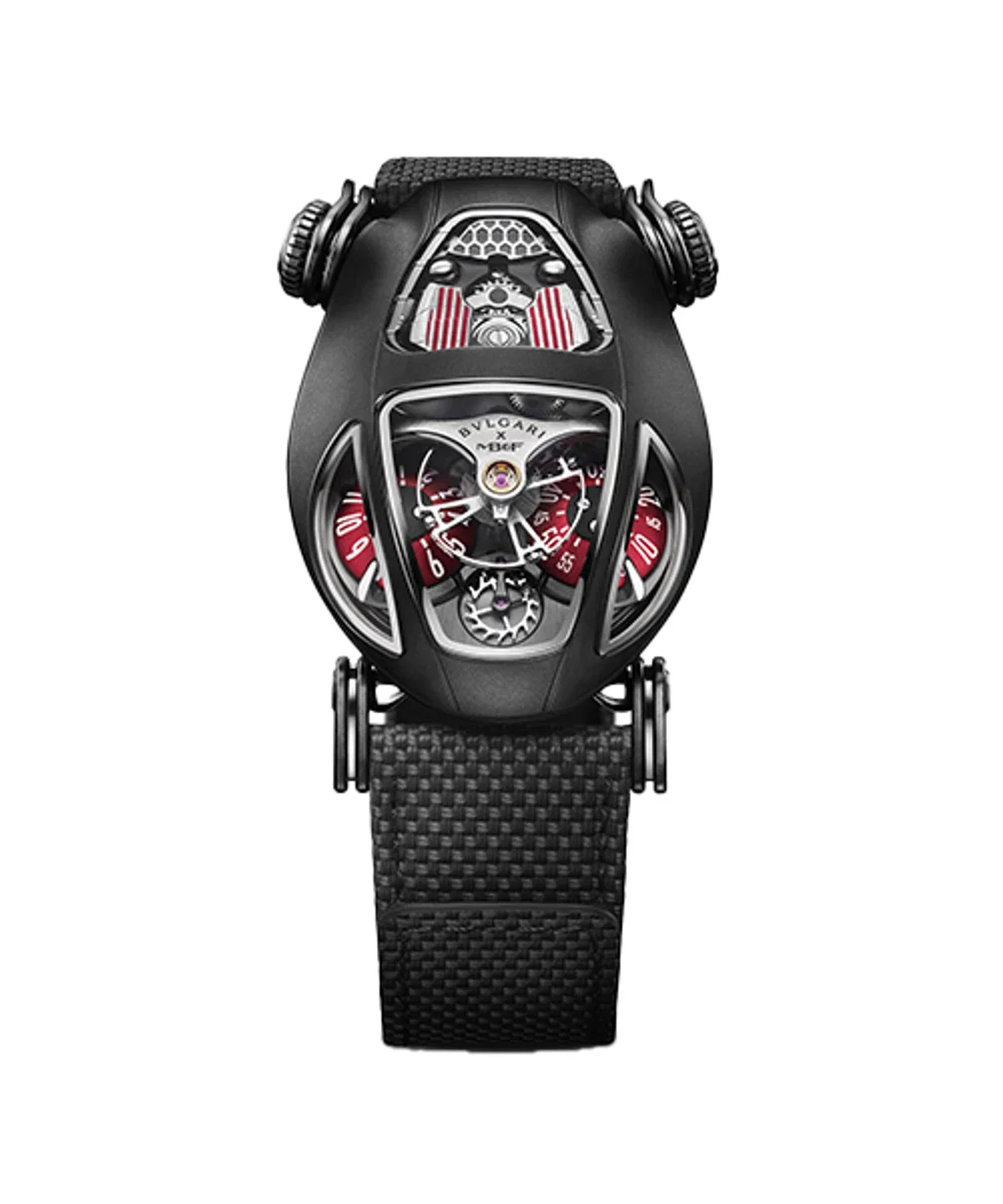
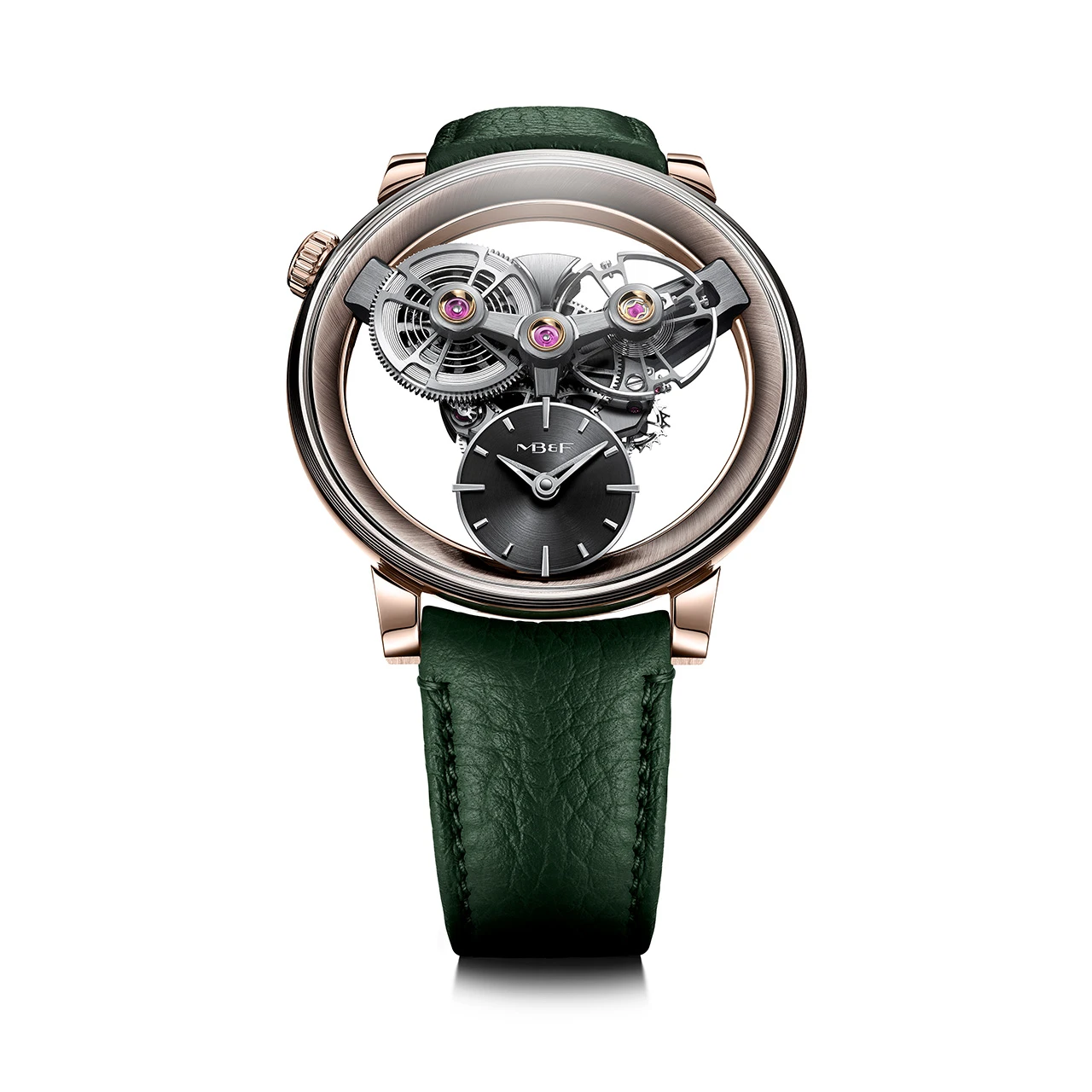
From this choice comes the concept of the "concept lab": MB&F does not produce collections in the classic sense of the term, but "Machines" — time machines conceived as small kinetic sculptures, each born from the dialogue between Büsser (who defines the aesthetic and conceptual vision) and a network of independent watchmakers, designers and craftsmen outside the company, the "Friends" who give the brand its name. The debut comes in 2007 with the Horological Machine N°1 (HM1), which immediately introduces the brand's stylistic signature: sculptural cases, often not round, that deconstruct traditional watchmaking into futuristic and deliberately unconventional forms. In 2011 comes the second great family, the Legacy Machines, with the LM1: a return to the classic round case, but still with the brand's three-dimensional signature, in this case a large "flying" balance wheel suspended above the dial, in homage to the great watchmaking innovators of the 19th century.
Critical recognition comes early and builds up over the years at the Grand Prix d'Horlogerie de Genève (GPHG), the industry's most prestigious award: from the HM4 Thunderbolt (best concept and design in 2010) to the LM1 (best men's watch and public prize in 2012), from the LM Perpetual (best calendar watch in 2016) to the LM FlyingT (best ladies' complication in 2019), up to the highest recognition of all — the Aiguille d'Or, the GPHG's top prize — won in 2022 by the LM Sequential EVO. Alongside its wrist Machines, MB&F has since 2011 also developed a network of M.A.D.Gallery spaces (in Geneva, Dubai and Taipei, with smaller "MB&F Lab" locations in Singapore and Paris) dedicated to a broader independent watch and object design, and collaborates on clocks and tabletop automatons with partners such as L'Épée 1839, Reuge and Caran d'Ache. On the corporate side, Büsser has kept control of the maison (60% of the shares), alongside longtime partner Serge Kriknoff (15%); in 2024 the house of Chanel entered the capital with a 25% stake, a move presented as a guarantee of long-term independence rather than as an industrial acquisition.