
Movado
Brand History
Movado's story begins in 1881 in La Chaux-de-Fonds, in the heart of the Swiss Jura arc, when the young watchmaker Achille Ditesheim opens his own workshop. In 1892 he joins forces with his brothers Léopold and Isidore, giving rise to "L.A. & I. Ditesheim, Fabricants": one of the first firms to organize production in a modern, centralized form, at a time when the Swiss watch industry was still recovering from the severe commercial crisis of the 1870s. It is only in 1905, however, that the company adopts the name by which we know it today: Movado, which in Esperanto literally means "always in motion" — a programmatic choice for a brand that, even then, counted over 150 employees and an international reputation for both pocket watches and wristwatches, still a market novelty at the time. In the early decades of the twentieth century Movado builds its reputation precisely on technical innovation: in 1912 it launches the Polyplan, a rectangular caliber mounted on three inclined planes to follow the curve of the wrist; in the mid-1920s it introduces the Ermeto, an original pocket-purse watch with a sliding case that, upon opening, automatically winds the movement's spring; shortly after comes the Curviplan, a further evolution of the curved calibers. These are years in which the brand files, according to industry archives, no fewer than 98 Swiss patents between 1900 and 1969: proof that Movado, well before becoming a name known to the general public, was a true manufacture in the most technical sense of the term.
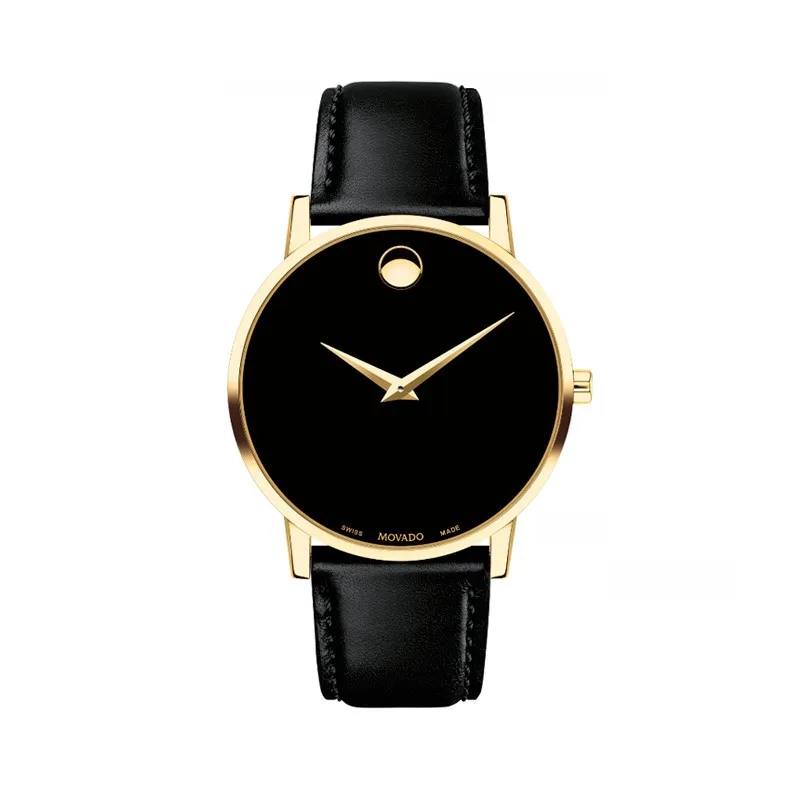
The most famous chapter in Movado's history opens in 1947, when the New York modernist designer Nathan George Horwitt proposes a dial radically different from anything watchmaking had produced until then: a completely black surface, free of numerals, animated by a single golden dot placed exactly at 12 o'clock, symbolizing the sun reaching its zenith at noon — a reference, as Horwitt himself declared, to timekeeping's most remote ancestor, the sundial. His design credo, "Without use, there is no beauty — without beauty, what is the use?", sums up a philosophy aimed at eliminating every superfluous element from the dial, letting essentiality itself communicate the time. The design, produced by Movado from the following years on, achieves in 1960 a recognition more unique than rare in the history of industrial watchmaking: it becomes the first watch dial to enter the permanent collection of the Museum of Modern Art in New York, earning from then on the name by which it is still known today, "Museum Watch" or "Museum Dial." The story also has a less well-known but significant side: Horwitt, who had registered his design as an original work, had to wage a long legal battle for recognition of the rights to an aesthetic that other brands had meanwhile copied; the dispute with Movado is settled only in 1975, with a payment to the artist of around 29,000 dollars.
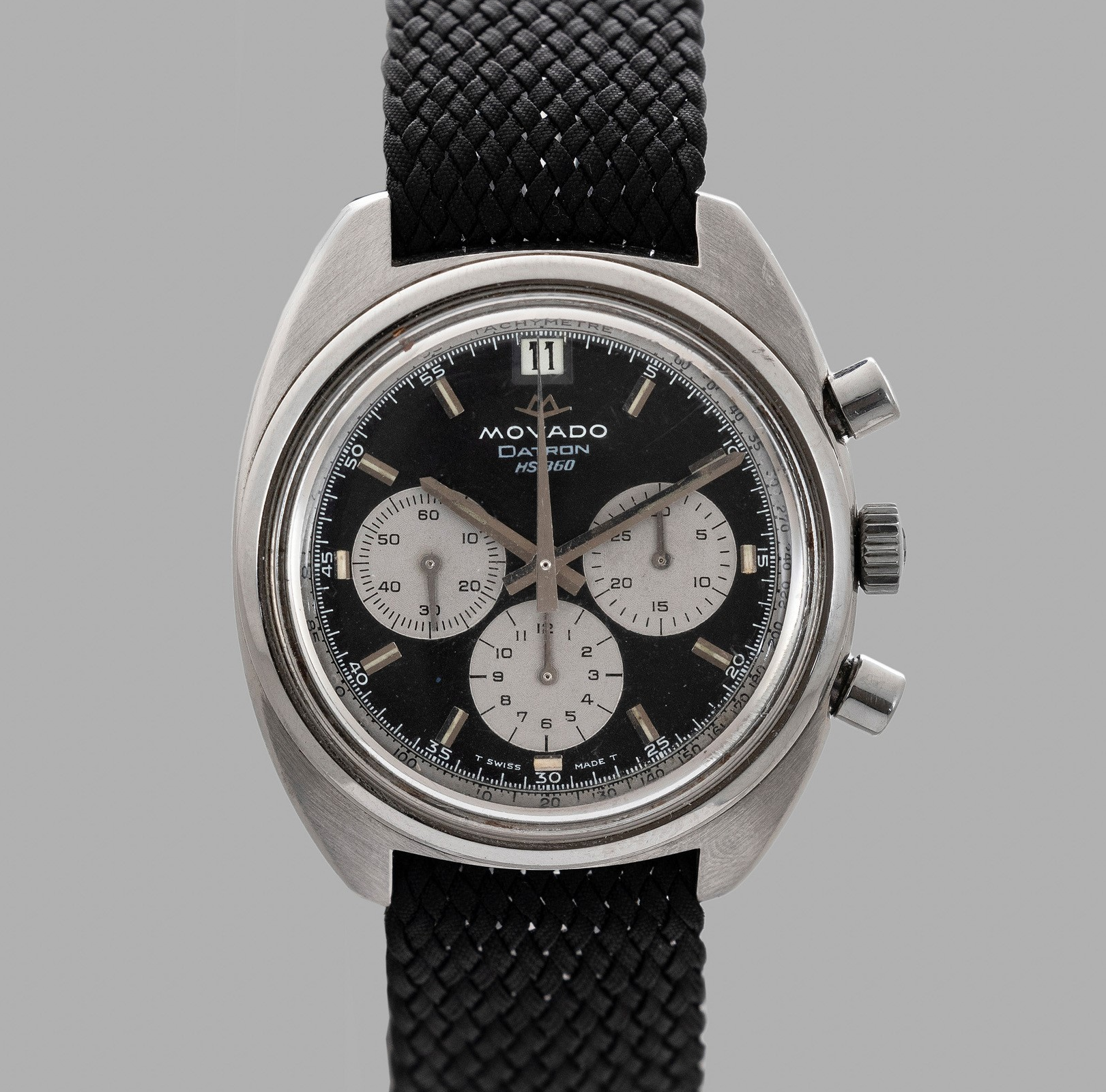
1969 is for Movado a pivotal year for opposing and almost simultaneous reasons. On one hand it is the year of the worldwide race for the first automatic chronograph movement in history, a three-way contest pitting the Heuer-Breitling-Büren-Dubois Dépraz consortium (the "Caliber 11," known as Chronomatic), the Japanese Seiko with its caliber 6139, and a third front formed by Zenith together with Movado and Mondia: this last consortium markets the caliber developed by Zenith — the future legendary "El Primero" — also under the Movado name, as the Datron HS 360. Movado's technical contribution to this race remains more commercial than inventive, but the Datron still ties the brand's name to one of the absolute landmark moments of twentieth-century watchmaking. On the other hand, in that very year, 1969, Movado and Zenith join their fates in a corporate merger that effectively closes the long season of full industrial independence that Achille Ditesheim had inaugurated almost ninety years earlier.
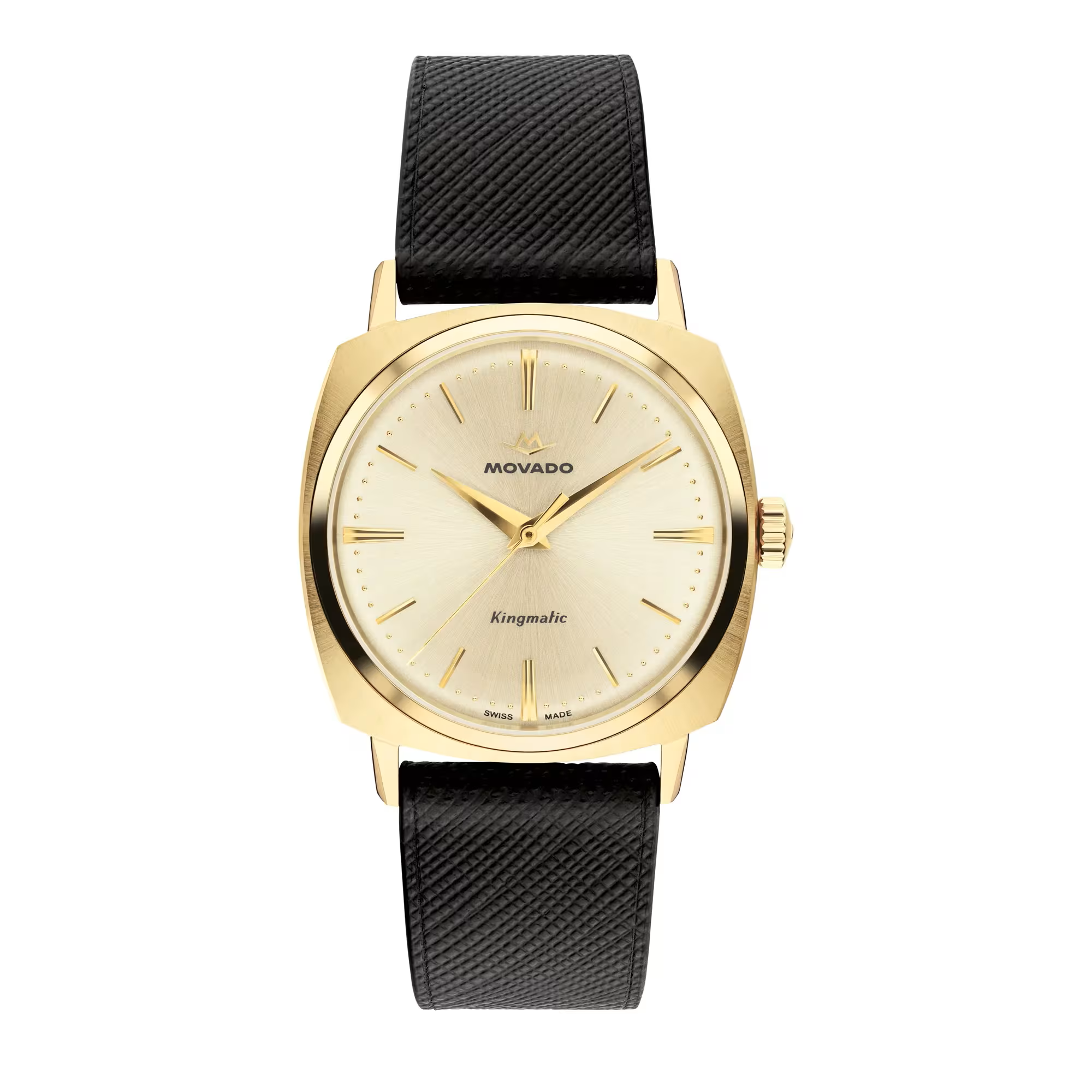
The decisive step toward today's corporate structure comes in 1983, when Cuban-American entrepreneur Gedalio Grinberg acquires the brand through the North American Watch Corporation, later renamed Movado Group: this is the holding company — today led by his son Efraim Grinberg — that owns, besides its own watch brands such as Concord and Ebel, a number of fashion-sector licenses for names such as Coach, Tommy Hilfiger, Calvin Klein, Lacoste and Hugo Boss. This is an important distinction to keep in mind: the Movado brand, the subject of this page, remains the bearer of a genuine, autonomous Swiss watchmaking heritage, rooted in 1881 and crystallized in the icon of the Museum Dial — something quite different from the licensed fashion collections owned by the same holding company, which have nothing to do with the manufacturing tradition recounted here. In 2026, to mark the 145th anniversary of its founding, Movado celebrated the occasion by relaunching in a contemporary key some of its most important historical chapters, including a Heritage reissue of the Kingmatic — a sign of how the brand continues to look to its 1950s-60s archive as a still-living creative resource.