
Tudor
Brand history
Strictly speaking, Tudor's story begins before a company with that name even existed. In February 1926 the widow of Geneva watchmaker Philippe Hüther registered the "The Tudor" trademark on behalf of Hans Wilsdorf — the founder of Rolex. Wilsdorf's idea, as he himself explained, was to offer a watch that Rolex dealers could sell "at a more modest price" than the parent company's models, using the same sales network and the same Oyster cases and bracelets, but with movements from outside suppliers instead of in-house ones: a formula designed to broaden the audience without undermining Rolex's positioning.
For twenty years, however, Tudor remained a brand rather than an independent company. It was only on 6 March 1946 that Wilsdorf formally founded "Montres TUDOR S.A." as a separate entity — which is why both 1926 and 1946 can be found online as its "year of birth": the first is the date the name was registered, the second that of the founding of the company bearing that name. Even after 1946, throughout the following years, it was still Rolex that guaranteed the technical and aesthetic standards of Tudor models and handled distribution and servicing, while the brand gradually built its own visual identity, removing the Rolex name from dials and advertising only from the late 1940s.
In terms of products, the founding milestones are the 1952 Oyster Prince, the first self-winding Tudor, and above all the 1954 Oyster Prince Submariner, the brand's first dive watch: this gave rise to a long line of divers — references 7922, 7923, 7924, 7928, up to the famous 7016 "Snowflake" of 1969 — which over time attracted the attention of several navies around the world.
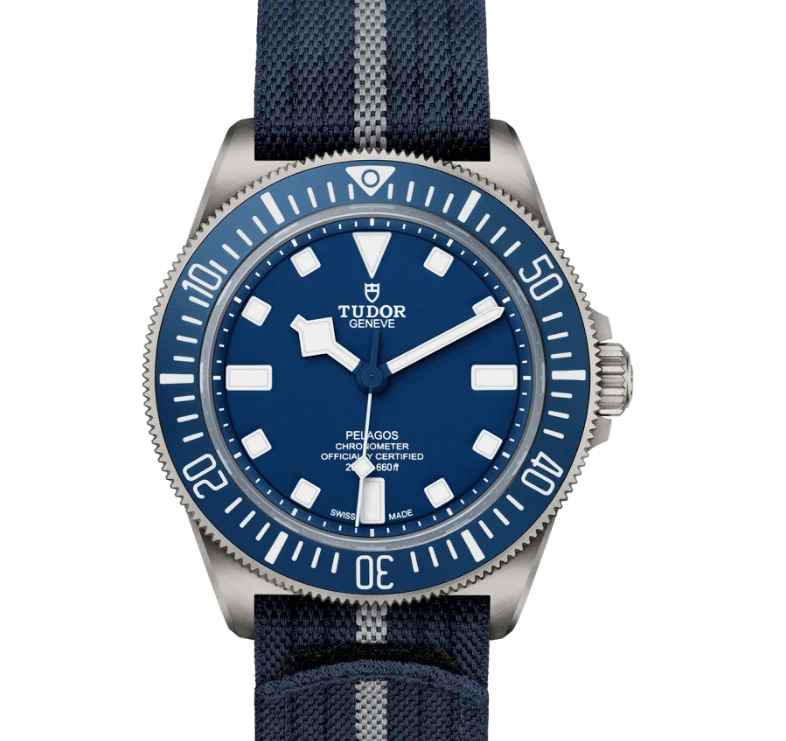
The best-known chapter of this story concerns the French Marine Nationale: as early as 1956 the Groupe d'Études et de Recherches Sous-marines (G.E.R.S.) in Toulon officially evaluated the Tudor Submariner references 7922/7923, judging their water-tightness "perfect". Then came the 7924 "Big Crown" (1958) and the 7928 with crown guards (1959), up to the 7016 "Snowflake" (1969), the first to receive, from 1974, the "TUDOR M.N." engraving with code and year of issue on the caseback. The most famous model, however, remains the 1975 reference 9401, with its unmistakable blue dial and bezel that went down in history as "Tudor blue": it was still issued to Marine Nationale divers in the early 2000s. In the same period, between the 1960s and '80s, Tudor watches also equipped US Navy frogmen and other navies.
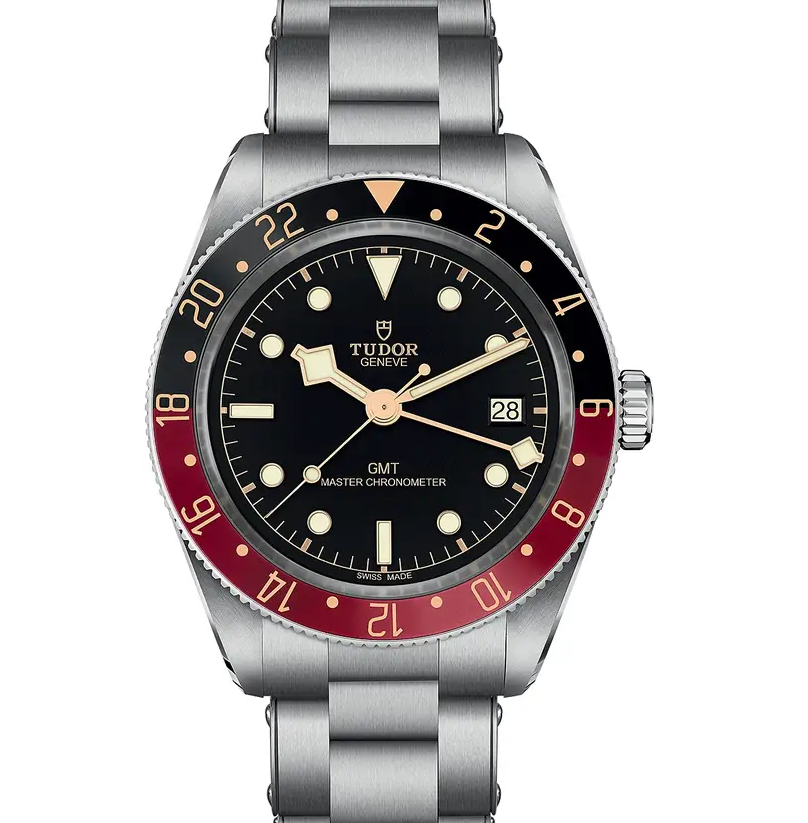
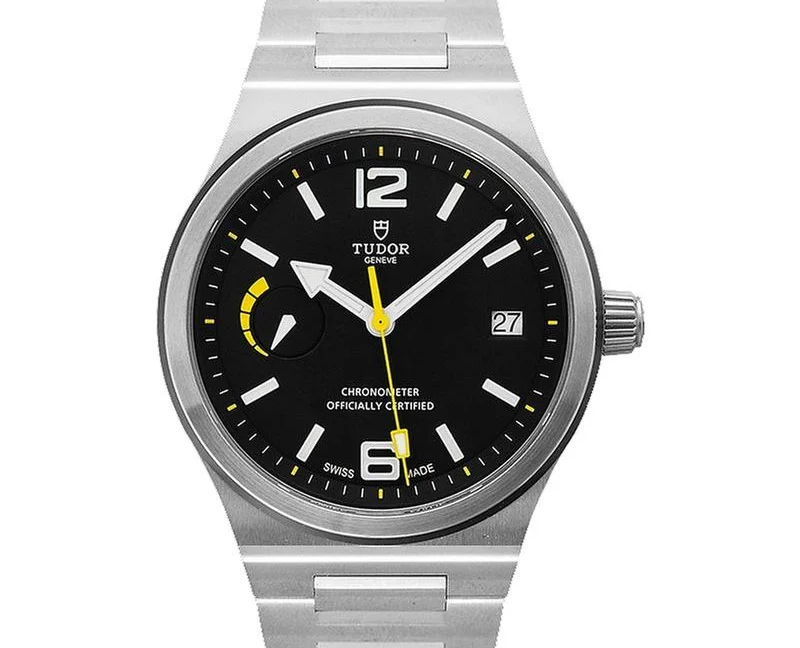
After a long period in the shadows — marked by the rise of quartz and, more recently, by its exit from the US market in 2004 — from 2010 the brand launched a revival strategy based on the Heritage line (Heritage Chrono in 2010, Heritage Advisor in 2011, Heritage Black Bay in 2012), which brought Tudor back into the spotlight and accompanied its return to the United States in 2013. This was also the starting point of the path towards in-house manufacturing, inaugurated in 2015 by the North Flag's MT5621 calibre.
On the corporate side, one often oversimplified point should be clarified: Rolex and Tudor are not linked by a direct shareholder–subsidiary relationship, but are both controlled by the Hans Wilsdorf Foundation, the non-profit foundation set up by Wilsdorf himself to guarantee the brands' independence. Rolex nonetheless remains Tudor's closest historical and industrial reference point — for decades it guaranteed its standards and distribution — but today Tudor designs, produces (partly through the Kenissi movement manufacturing hub) and distributes its watches independently, positioning itself in more accessible price brackets than its "big sister". Fittingly, 2026 marks the centenary of that very registration of the name in 1926.