
Ulysse Nardin
Brand history
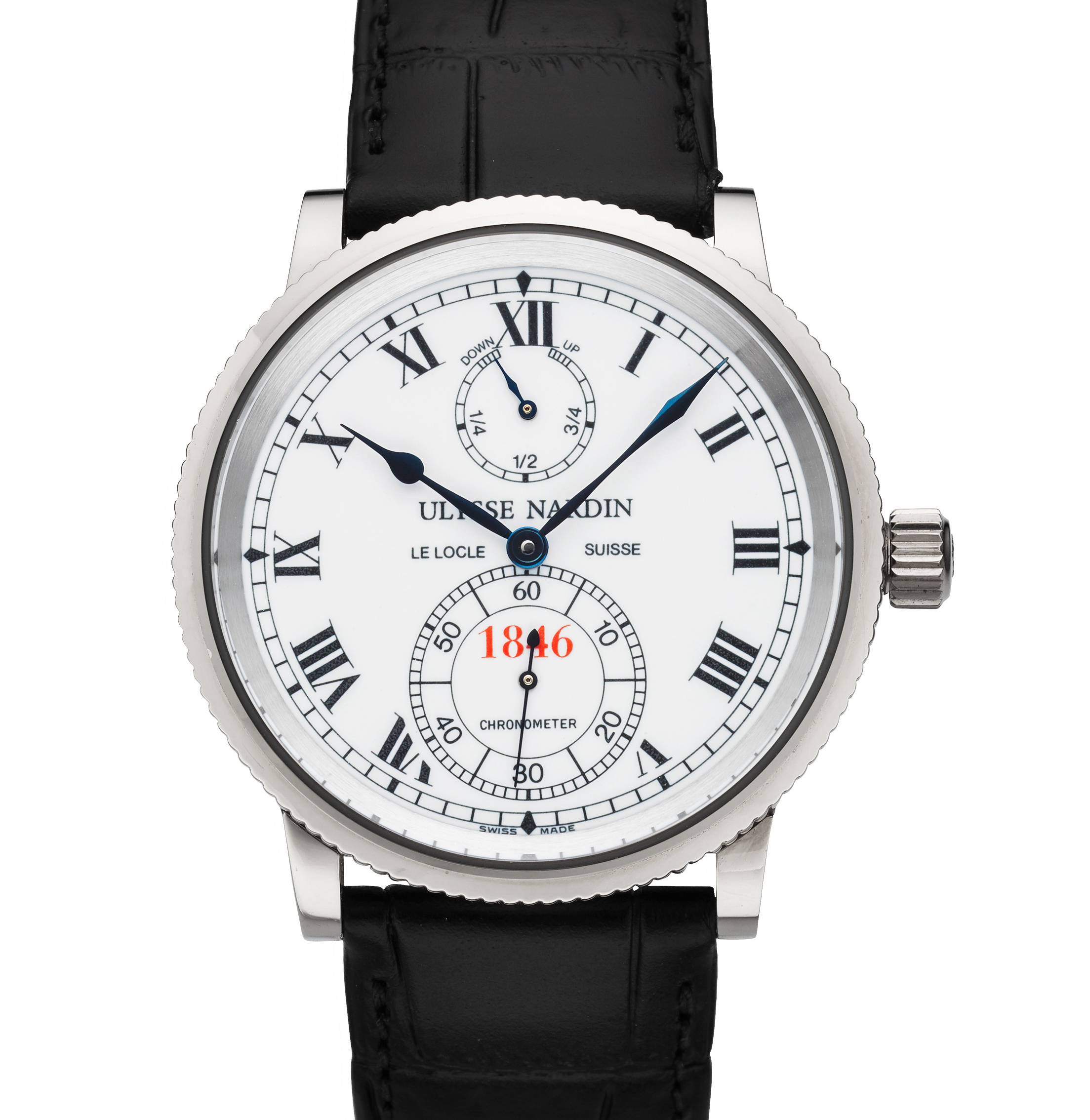
Ulysse Nardin founded his manufacture in Le Locle in 1846, specialising from the outset in making marine chronometers: extremely precise instruments for astronomical navigation, which during the 19th and 20th centuries were adopted by many navies around the world, including the United States Navy from 1902. According to the records of the Neuchâtel Observatory, between 1846 and 1975 the company obtained 4,324 accuracy certificates, 2,411 special prizes and 18 gold medals at international exhibitions, a track record that is still central to the brand's historical narrative today.
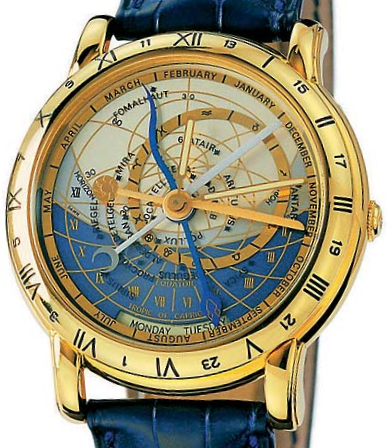
The quartz crisis of the 1970s and '80s brought the manufacture to the brink of bankruptcy. In 1983 entrepreneur Rolf W. Schnyder took it over and, together with watchmaker and mathematician Ludwig Oechslin, launched a radical revival focused on top-level mechanical complications: in 1985 came the Astrolabium Galileo Galilei, the first of a series of astronomical complications that restored Ulysse Nardin's reputation as an avant-garde manufacture in independent haute horlogerie.
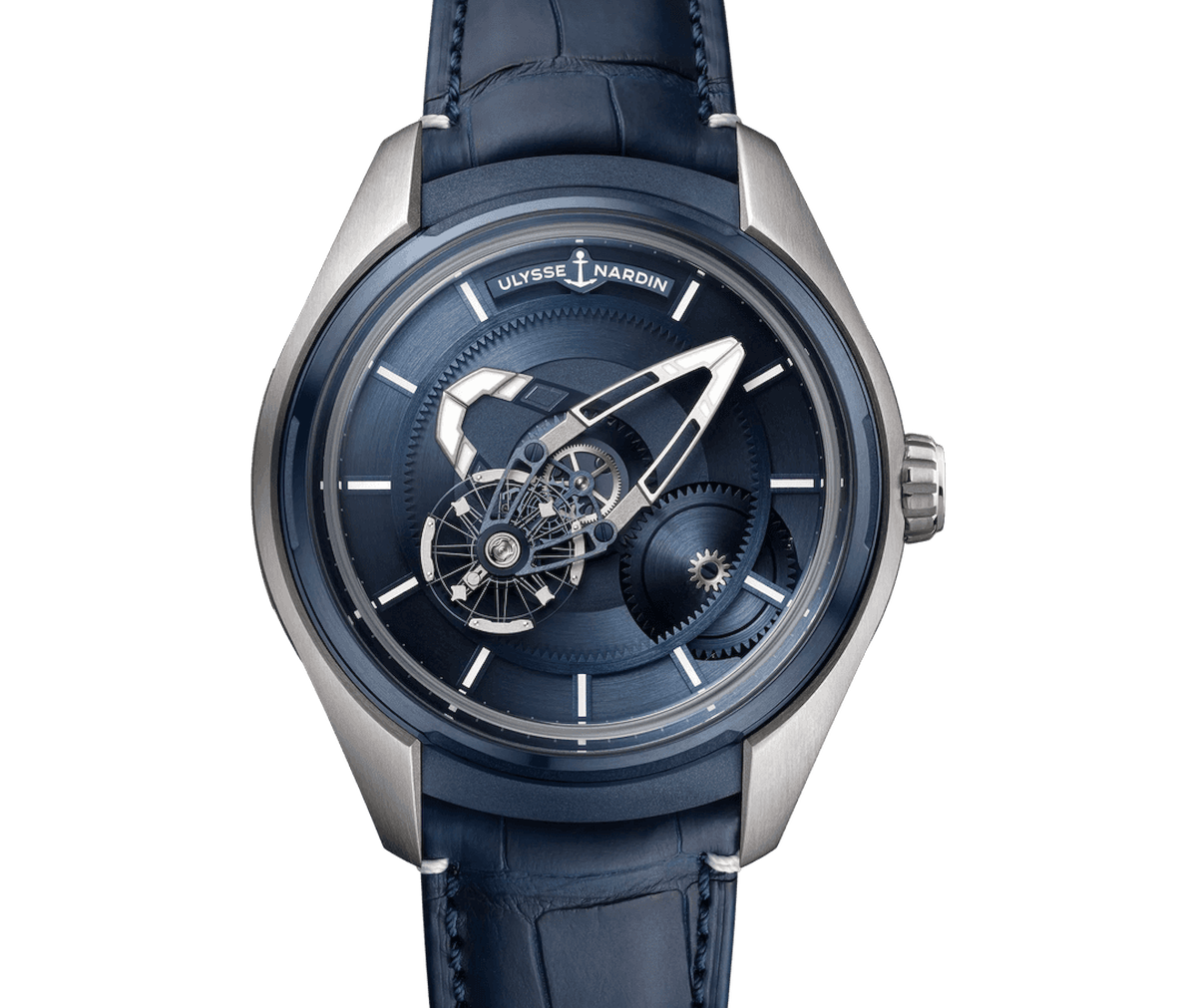
The turning point came in 2001 with the Freak: a watch with no crown and no traditional hands, whose entire rotating movement shows the hours and minutes, fitted with a silicon escapement that was among the first ever applied on an industrial scale in watchmaking. On the corporate side, the French group Kering (then PPR) took a 23% stake in the Sowind Group — the holding company that also controls Girard-Perregaux — in 2008, rising to 50.1% in 2011, before acquiring Ulysse Nardin outright in 2014. In January 2022 Kering sold both Ulysse Nardin and Girard-Perregaux to internal management led by Patrick Pruniaux, returning the manufacture to independent status, which it retains today.