
Junghans
Brand History
Junghans is founded on April 15, 1861 in Schramberg, in the German Black Forest, by Erhard Junghans and his brother-in-law Jakob Zeller-Tobler. The company grows at an impressive pace thanks to mass-production techniques learned by observing the American watch industry: already by 1903 Junghans is the largest watch factory in the world, with over three thousand employees and a production of several million pieces a year, including pocket watches, wall clocks and — from 1927 — wristwatches as well. Over the course of the 20th century the brand also establishes itself as a supplier of precision chronometers, coming to be considered in the 1950s the third-largest chronograph manufacturer in the world after Rolex and Omega.
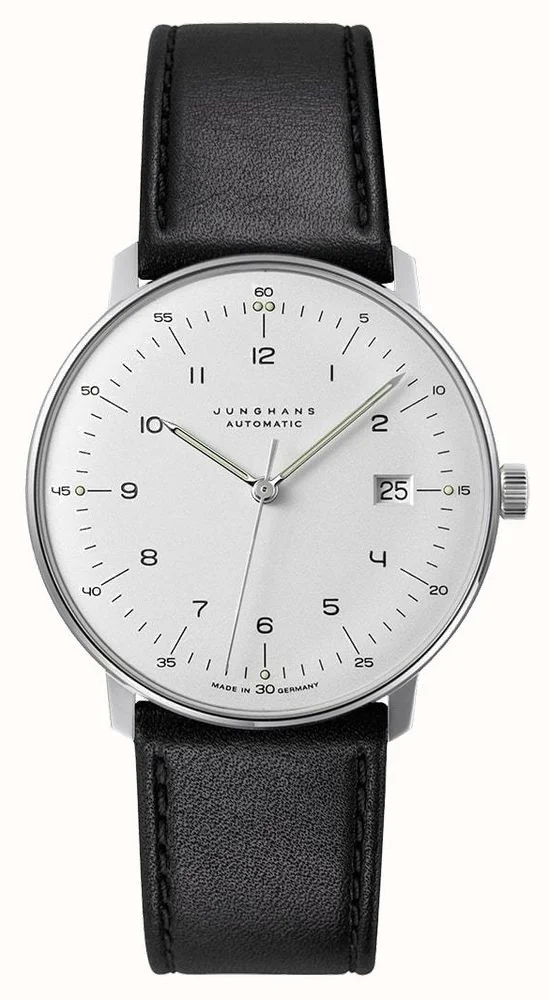
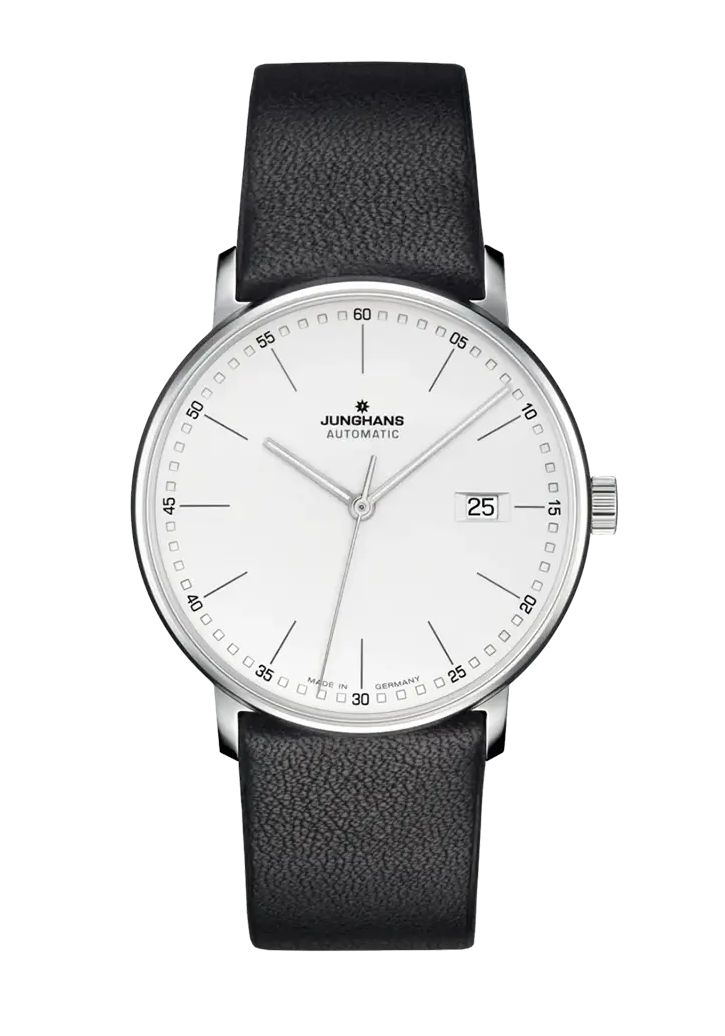
A decisive turning point in the company's aesthetic identity arrives in the mid-1950s, when the Swiss architect, designer and artist Max Bill — a Bauhaus student and later a lecturer at the Ulm School of Design (Hochschule für Gestaltung) — begins collaborating with Junghans, first designing kitchen and table clocks. In 1961 he signs his first wristwatch for the brand: an essential dial, free of any superfluous element, translating into watchmaking the principles of clarity and functionality of the Bauhaus teaching. That language, left substantially unchanged, remains to this day the brand's most recognizable trait.
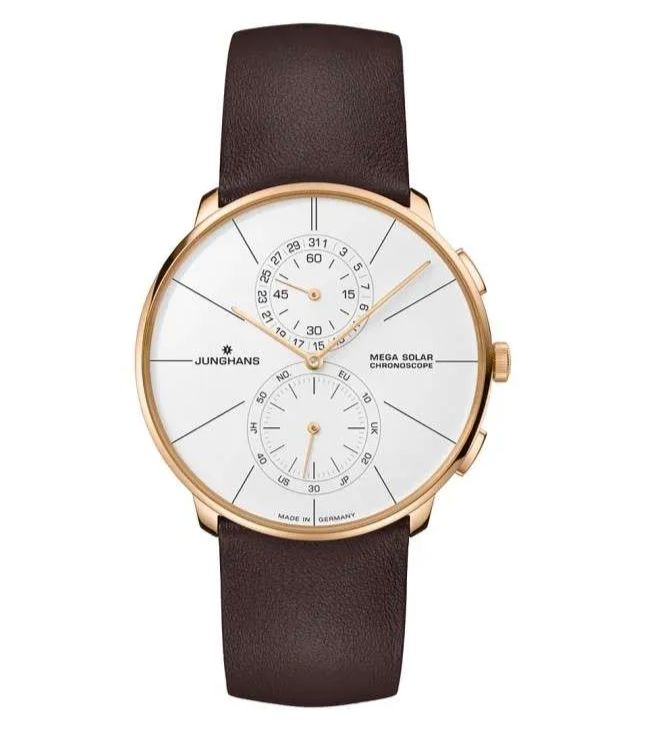
In the following years Junghans continues to tie its name to technical innovation: it is the official timekeeper of the 1972 Munich Olympic Games and, in 1990, presents the Mega 1, the world's first wristwatch to receive a radio signal for exact time. After a bankruptcy in 2008, the company is taken over by entrepreneur Hans-Jochem Stein and continues its activity in Schramberg on a smaller scale than in the past, while keeping intact its identity as a historic brand of German watch design.