
Minerva
Brand History
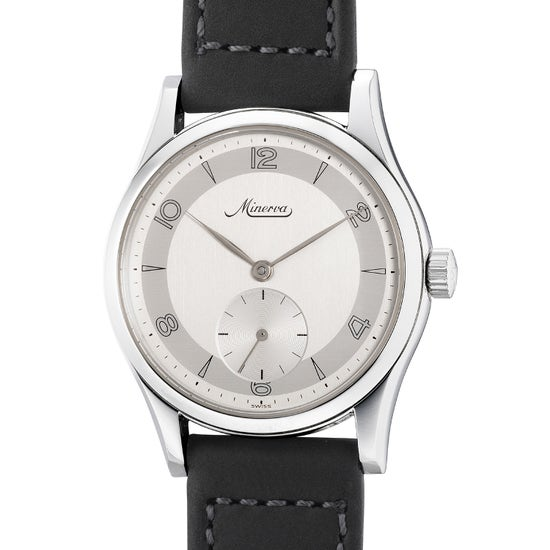
Minerva's story begins in 1858 in Villeret, in the Bernese Jura, when brothers Charles-Yvan and Hyppolite Robert started a business assembling watch components under the name "H. & C. Robert". The company became "Robert Frères Villeret" in 1878 and, after turning into a true vertically integrated manufacture starting in the early twentieth century, took on the name "Minerva SA" in 1929, following the growing commercial success of products already sold under this brand.
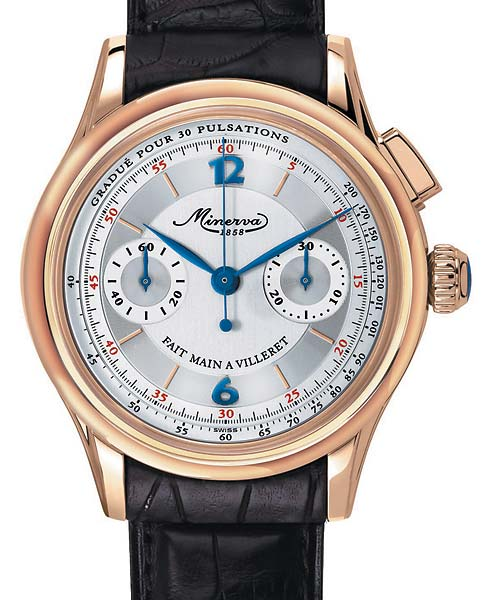
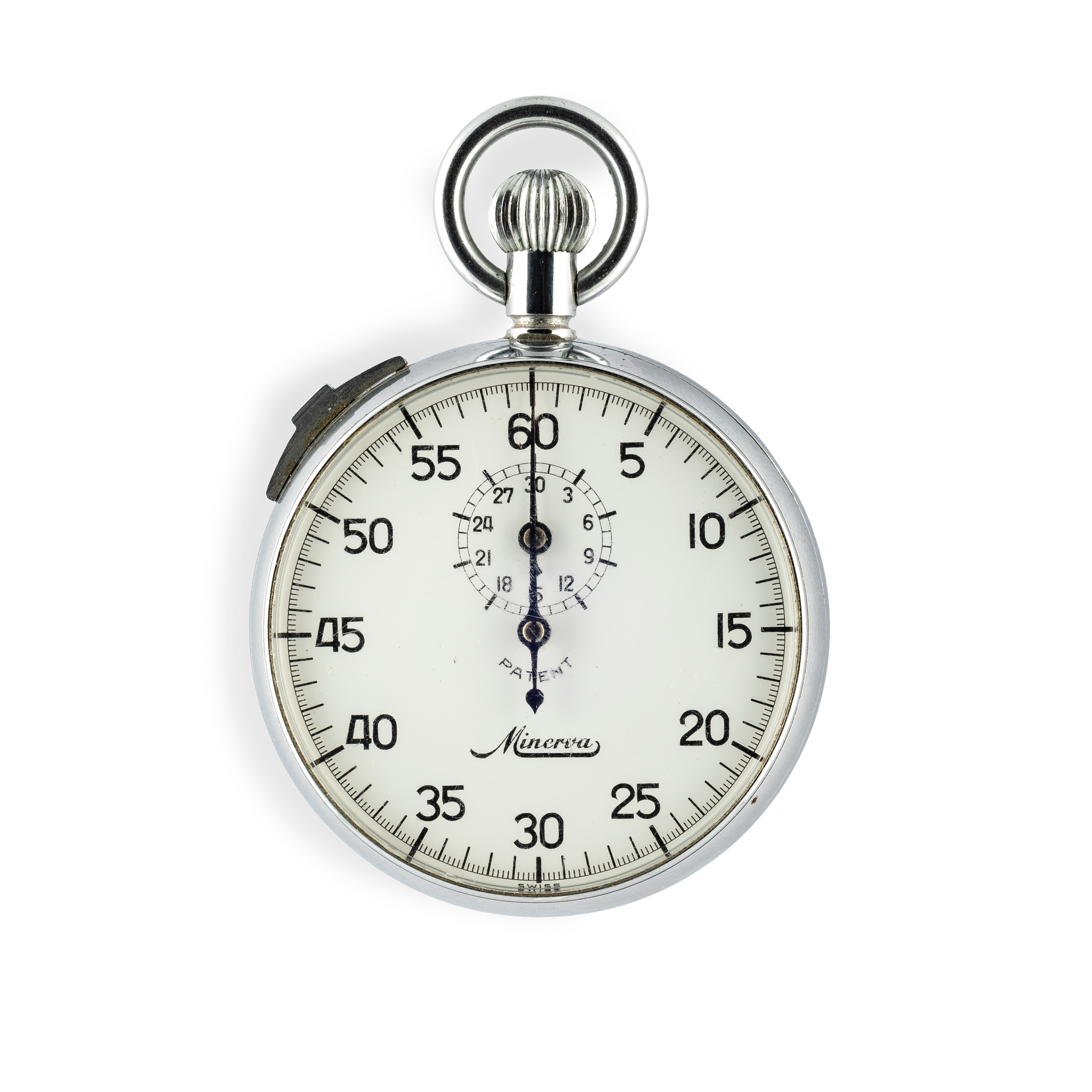
From 1908 Minerva focused its activity on producing chronographs, a specialization that would make its name: in 1923 the famous 13-20 CH calibre was born, a single-button column-wheel chronograph of rare quality, while the 19-9 CH family of split-seconds calibres cemented the company's reputation as a supplier of pocket and table chronometers and chronographs intended for sports timekeeping and military use, often also supplied to other great maisons of the era in addition to being sold under its own name.
In 1943 watchmaker André Frey designed the Pythagore calibre, whose wheels and bridges are arranged according to the golden ratio for purely aesthetic reasons: a movement that remains among the most recognized in independent high watchmaking. Remaining the property of the Frey family until 2000, when it was acquired by financier Emilio Gnutti, Minerva became part of the Richemont group in 2006 and was integrated into Montblanc starting in 2007. Since then the historic Villeret manufacture has continued to produce high-end mechanical movements, today mainly for Montblanc's Villeret and 1858 collections, while remaining an independent and clearly distinct chapter in the history of Swiss watchmaking.