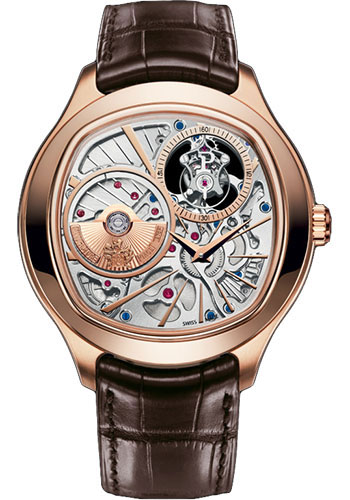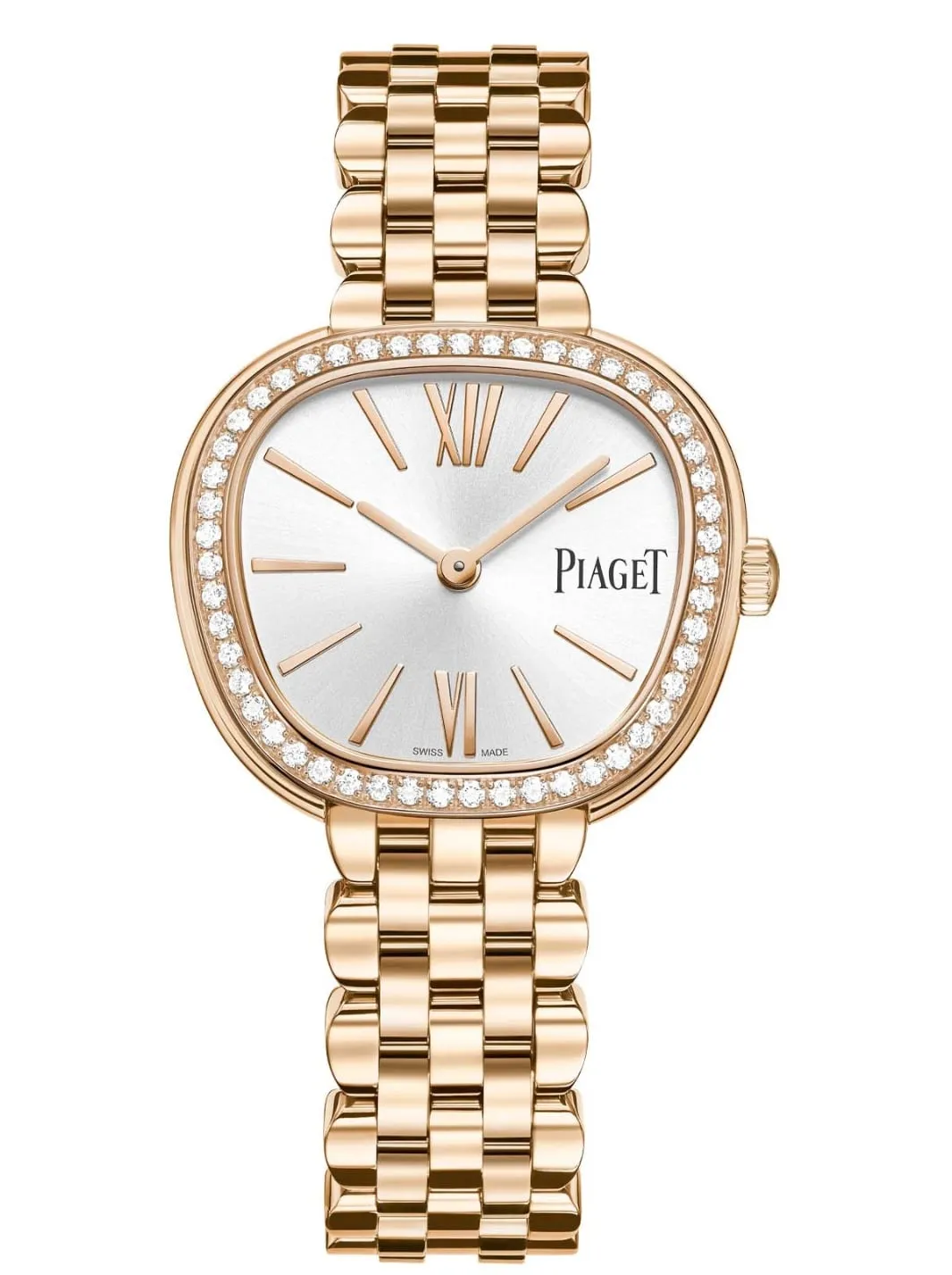

Piaget
Brand History
Piaget's story begins far from the spotlight of fine watchmaking, on a family farm in the small Jura village of La Côte-aux-Fées, where in 1874 Georges Édouard Piaget opened his own watchmaking workshop. For the first few decades the manufacture did not produce watches under its own name: instead it specialized in making high-precision movements and components supplied to other watch houses, quietly building a reputation for technical excellence that would later underpin the brand's entire identity. In 1911 leadership passed to Timothée Piaget, the founder's son, who progressively steered production toward the wristwatch, then on the rise compared to the traditional pocket watch.
It is with the next generation, brothers Gérald and Valentin Piaget, joined by collaborator Camille Pilet, that the company takes the decisive step: in 1943 Piaget is registered as its own brand, marking the passage from anonymous movement supplier to a fully fledged watchmaking house. In 1959 the brand's first boutique opens, a further sign of its intent to manage the relationship with its clientele directly rather than remain a name known only to industry specialists.
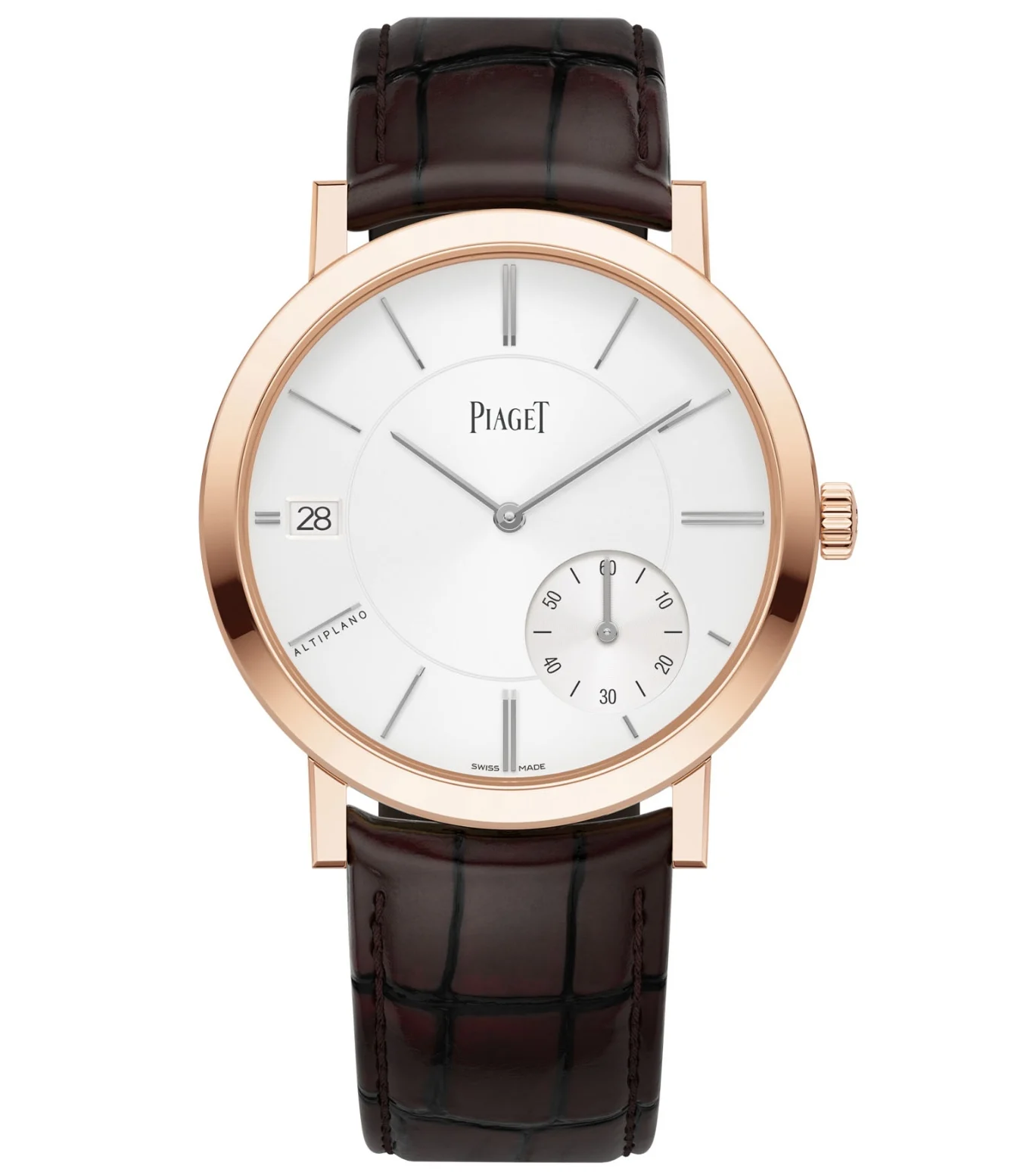
The moment that definitively establishes Piaget as a manufacture of excellence arrives in 1957, with the presentation of the caliber 9P: a manual-winding mechanical movement just 2 mm thick, among the flattest ever made up to that point, the result of years of research into component miniaturization. Three years later, in 1960, Piaget introduces the caliber 12P, an automatic evolution of the 9P which, thanks to an innovative peripheral micro-rotor integrated into the plane of the components, achieves a thickness of just 2.3 mm, remaining at the time the thinnest automatic movement in the world. These two calibers found a specialization — ultra-thin watchmaking — that remains to this day the manufacture's most distinctive technical trait.
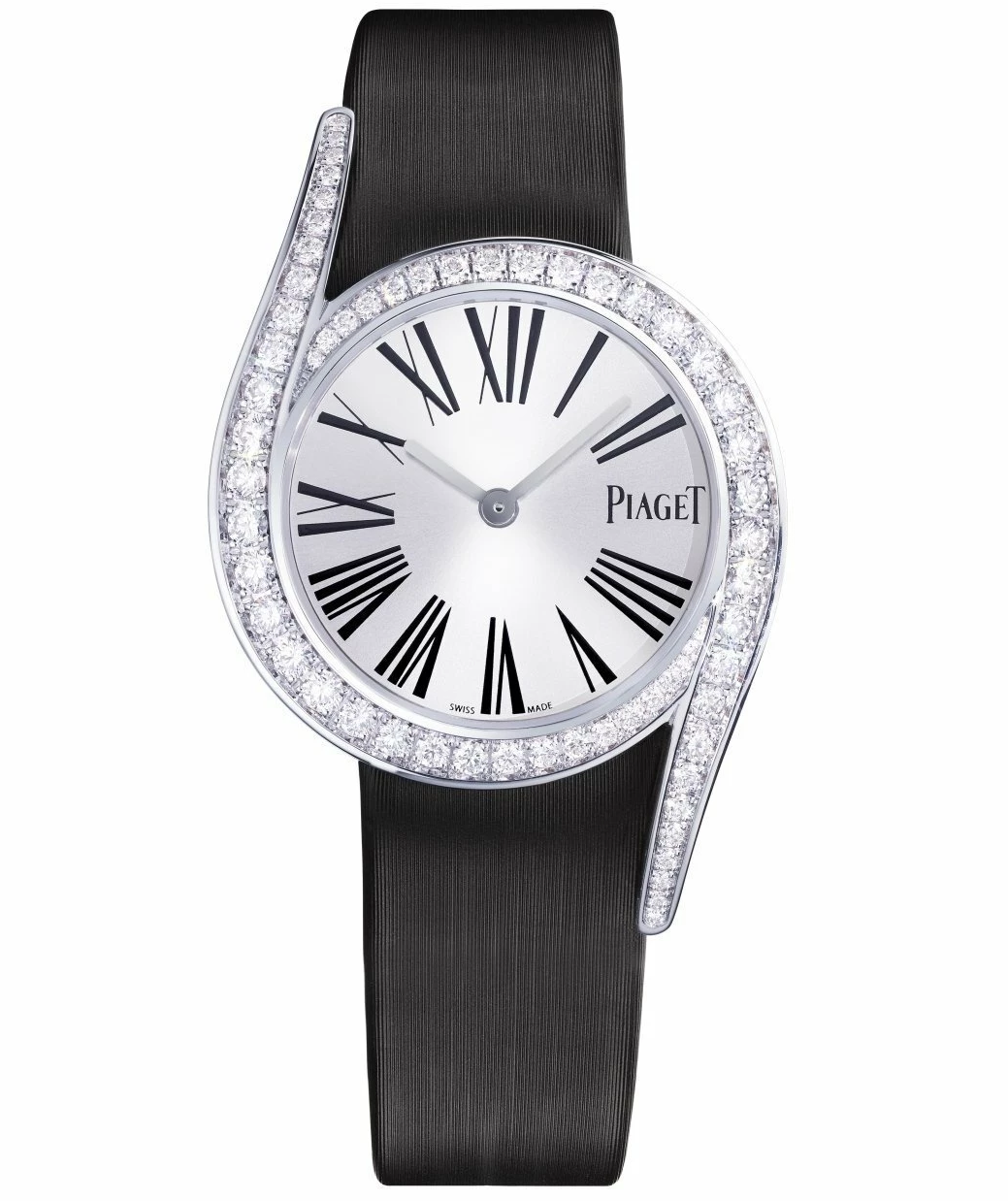
Alongside mechanical watchmaking, starting in the 1960s Piaget develops a second soul, that of fine jewelry: in 1964 it introduces dials made from hard stones — lapis lazuli, turquoise, onyx, malachite, tiger's eye — turning the dial itself into a piece of jewelry. In 1969, at the Basel fair, the maison presents the revolutionary "21st Century Collection", conceived under the creative direction of Yves Piaget: an unprecedented fusion of watchmaking and fine jewelry that redefines the concept of the jewelry-watch and paves the way, in the following decade, for collections such as Polo and for the brand's most glamorous season, when its watches adorn the wrists of Elizabeth Taylor, Jackie Kennedy and Andy Warhol.
In 1988 the Vendôme group — which would later become Richemont, one of the world's largest luxury conglomerates — acquires Piaget, giving the manufacture the resources to keep investing in watchmaking research while preserving the maison's identity. In 2001 a manufacture entirely dedicated to movement production and the working of precious stones and metals is inaugurated in Plan-les-Ouates, Geneva, consolidating under one roof the brand's two historic areas of expertise: ultra-thin watchmaking and fine jewelry. In 2014, with the caliber 900P, Piaget sets a new record for the thinnest manual-winding mechanical watch in the world, confirming that the pursuit of extreme thinness remains, over a century and a half after the founding, the thread running through the manufacture's entire history.