
Tutima
Brand history
Tutima was born in Glashütte, Saxony, in 1927, when Dr Ernst Kurtz brought together in a single industrial project the Uhren-Rohwerke-Fabrik Glashütte AG (UROFA), a movement maker, and the Uhrenfabrik Glashütte AG (UFAG), which assembled them into finished watches. The name "Tutima", from the Latin "tutus" (safe, protected), was reserved for the top models in the range: already in these years Kurtz sensed that the future of watchmaking lay no longer in pockets, but on wrists.
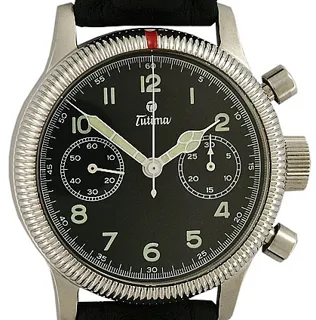
In 1941 UROFA developed calibre 59, the basis of what is considered the first two-pusher flyback chronograph made in Germany: it powered the Tutima pilot's chronographs issued to the Luftwaffe, of which around 30,000 were made between 1941 and 1945. In May 1945, just hours before the end of the war, a bombing raid destroyed the Glashütte factories and, with the subsequent Soviet dismantling of the machinery, the original drawings of calibre 59 were lost too. Kurtz moved production to Ganderkesee, near Bremen, where the brand survived amid financial difficulties and changes of ownership until, in 1960, Dieter Delecate took over the rights and reorganised it as Tutima Uhren GmbH.
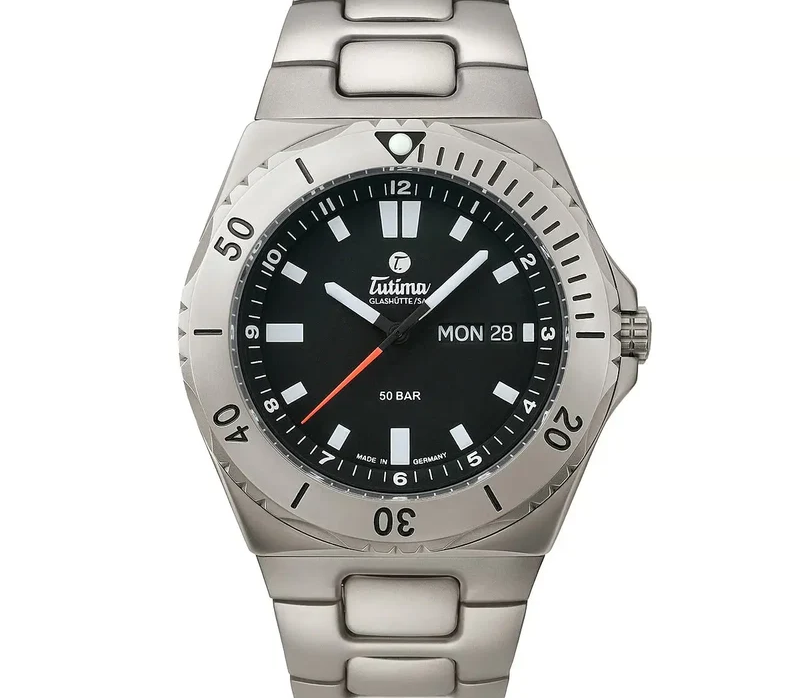
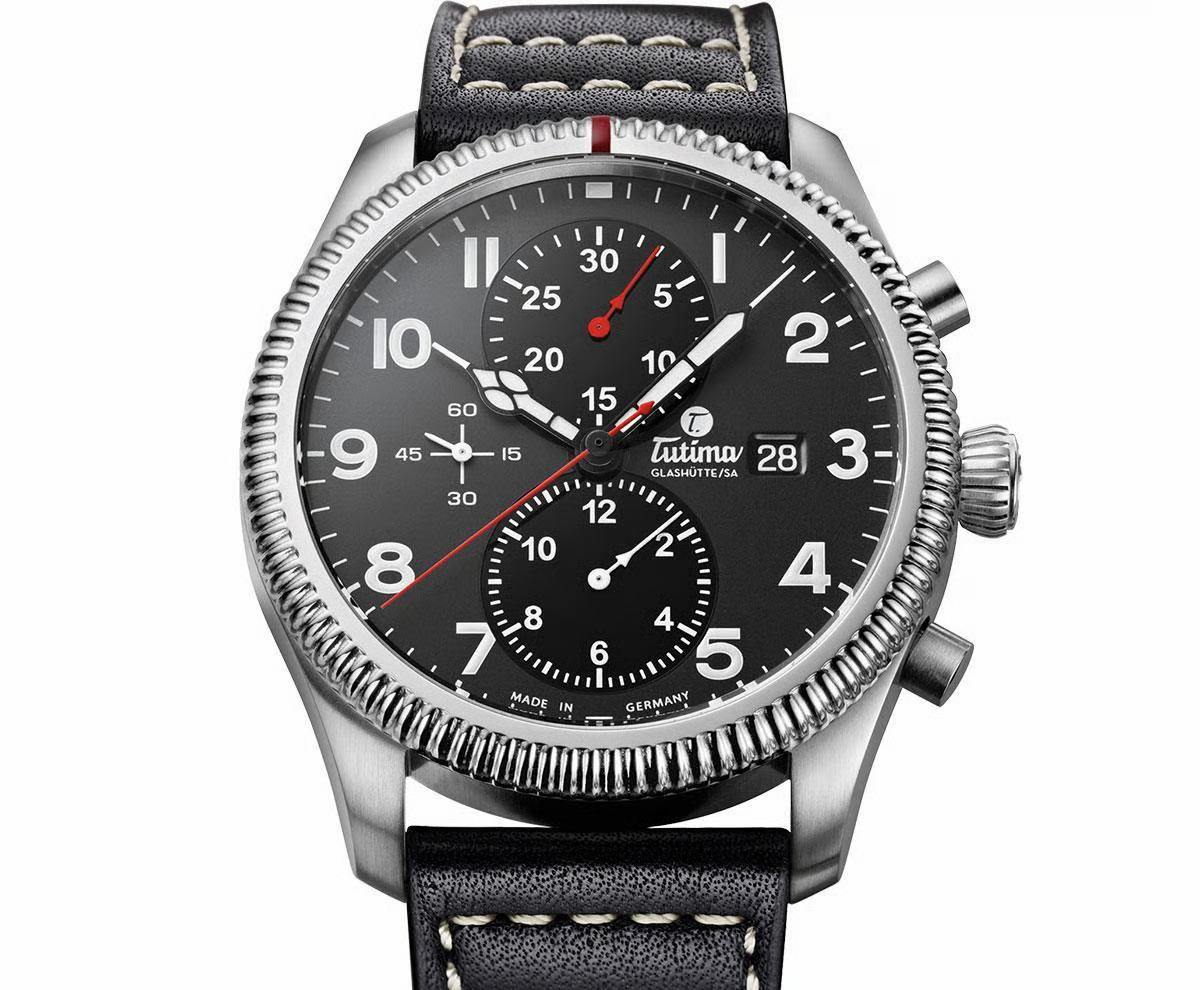
In 1984, using the Swiss Lemania 5100 automatic calibre as a base, Tutima developed the military chronograph adopted as standard equipment for Luftwaffe pilots and, more broadly, for NATO: a wristwatch updated over time that remains in service today. In 2011, after buying a historic building at Glashütte railway station, the brand brought production back to the town where it was born, developing its own movements such as calibre 521 and, in 2017, the Tempostopp's calibre T659. The current collections — including the Flieger, Grand Flieger, M2, Patria and Saxon One — thus combine an aviation and military heritage with manufacture ambitions.