
Breguet
Brand History
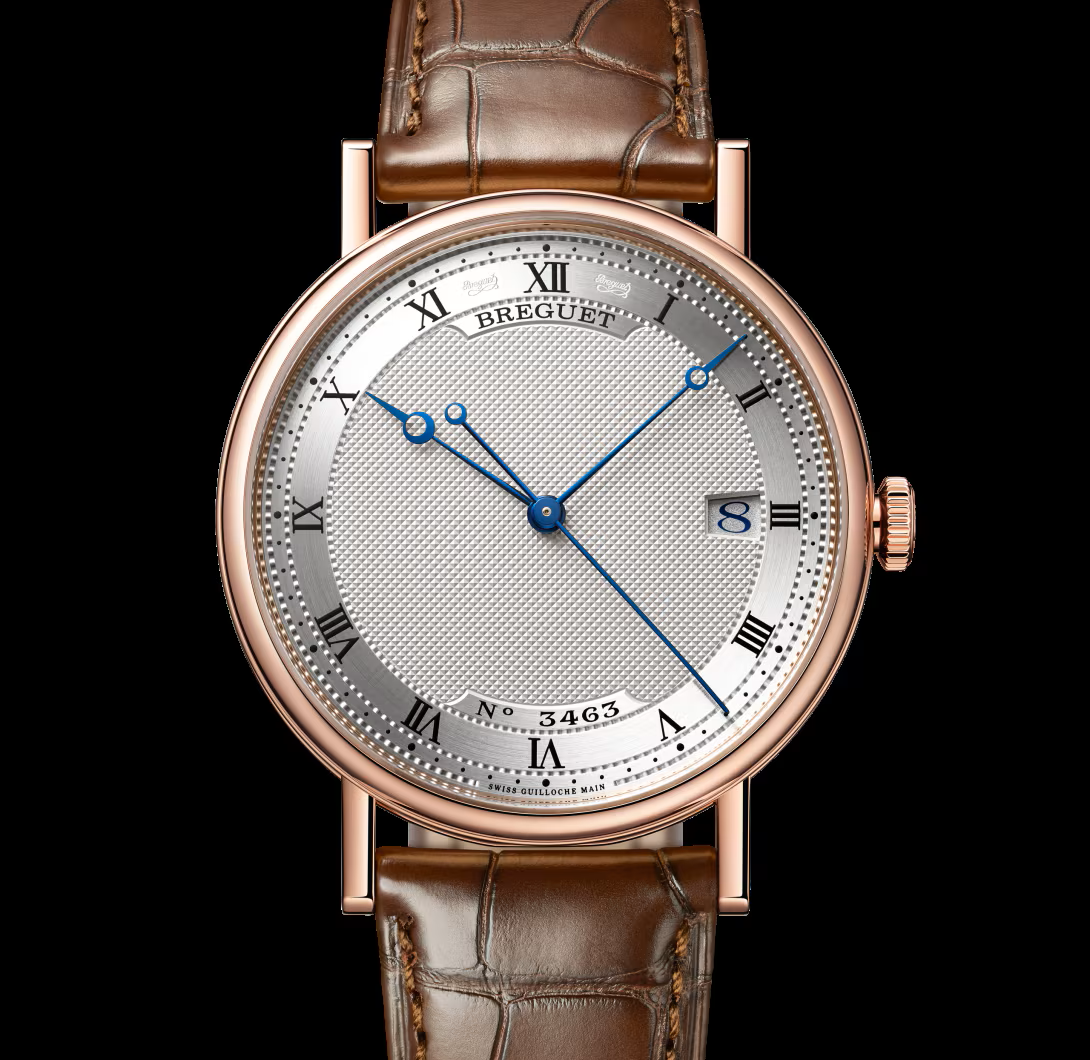
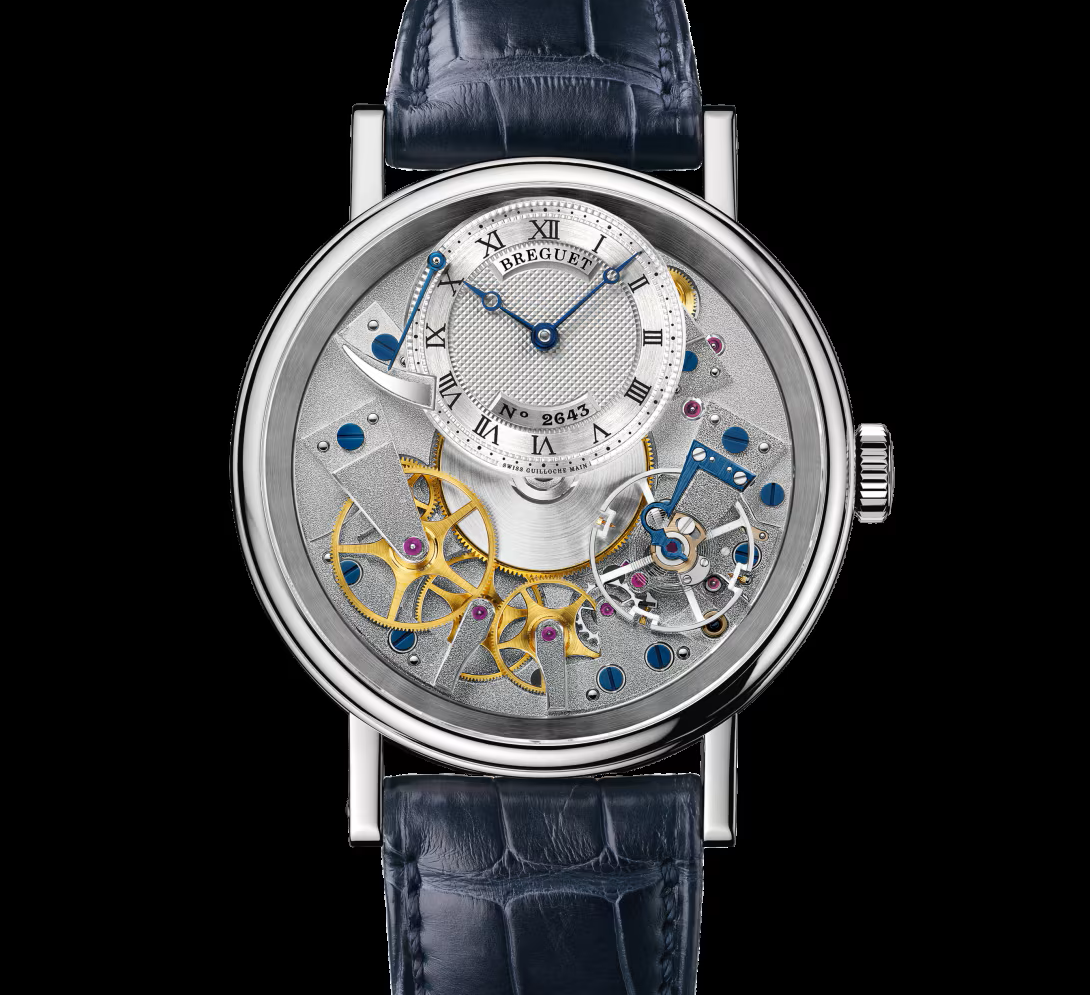
Breguet was born in 1775, when Abraham-Louis Breguet opened his own atelier on the Quai de l'Horloge, in the heart of Paris. Within a few decades it became the reference point of European watchmaking, amassing a list of inventions that still define the vocabulary of high watchmaking today: the "Breguet" hands and numerals (1783), the balance spring with a raised terminal curve known as the "Breguet overcoil" (1795), the "pare-chute," the first shock-absorbing system for the balance wheel (1790), hand-guilloché decoration executed on rose-engine lathes, and above all the tourbillon, patented in 1801, devised to offset the effects of gravity on the precision of pocket watches carried vertically. He is also credited, in 1810, with what is considered the first wristwatch in history, made for Caroline Murat, Queen of Naples — an episode that would give its name, nearly two centuries later, to one of the maison's most celebrated women's collections.
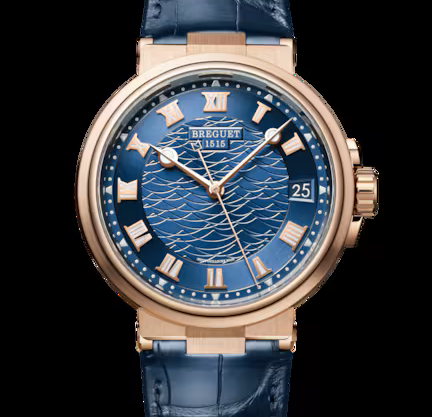
Breguet's clientele in Paris between the Revolution and the Empire included some of the most prominent names in Europe: Marie Antoinette, for whom the "No. 160" pocket watch (later known as the "Marie-Antoinette," completed only in 1827, after the founder's death) was commissioned in 1783, Napoleon Bonaparte, Tsar Alexander I of Russia, and the Ottoman Sultan Selim III. In 1815 Breguet received the appointment of "Horloger de la Marine," official watchmaker of the French Navy, a title that laid the groundwork for the future Marine collection. Upon the founder's death in 1823, the company passed to his son Antoine-Louis and then to his grandson Louis-Clément, who among other things introduced the keyless winding system (1830); in 1870 leadership finally passed to Edward Brown, closing the Breguet family's direct management while the brand went through two world wars while keeping its historic Place Vendôme atelier, opened in 1933.
In 1970 the maison was acquired by Chaumet, in 1987 by the Investcorp group, and production gradually moved to Switzerland, to the Vallée de Joux, where the still-active L'Abbaye manufacture was established in 1994. The decisive turning point came in 1999 with entry into the Swatch group: under the leadership first of Nicolas G. Hayek, and of his grandson Marc A. Hayek from 2010, Breguet has experienced a rebirth that combines the philological recovery of the founder's heritage — faithful replicas of historic models, the rediscovery of forgotten complications — with contemporary technical innovations such as silicon components (since 2006) and high-frequency balance wheels, confirming the maison as one of the highest points of independent Swiss watchmaking within the group.