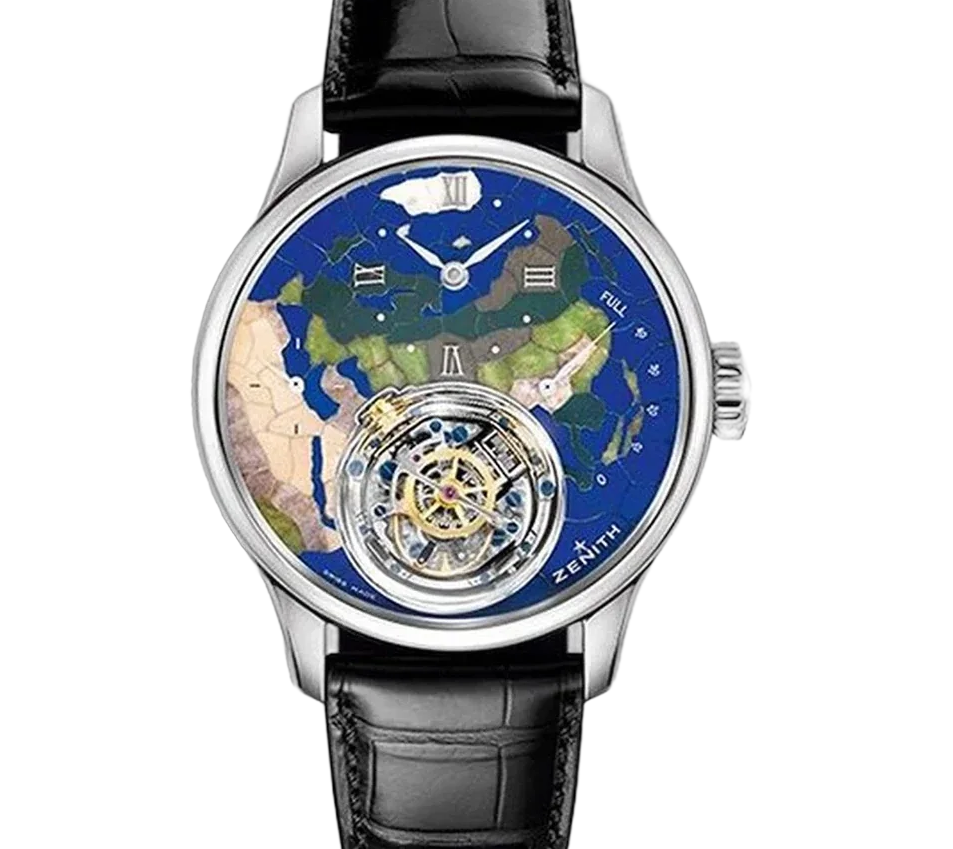

Zenith
Brand history
Zenith was born in 1865 in Le Locle, in the heart of the Swiss Jura Arc, on the initiative of Georges Favre-Jacot, then barely in his twenties. From the outset the company stood out for a production choice unusual for the time: bringing under one roof the dozens of crafts needed to make a watch — from movements to cases, from hands to dials — at a time when most Swiss producers instead relied on a scattered network of outside suppliers (the so-called établissage system). This early vertical integration earned Zenith the title of manufacture in the fullest sense of the term, and in the following years the company won a remarkable number of awards in chronometry and astronomical observatory competitions, which in 1911 led to the company — originally known as the Fabrique des Billodes — being renamed "Zenith": a reference to the highest point of the celestial vault, in keeping with its declared ambition of absolute precision.
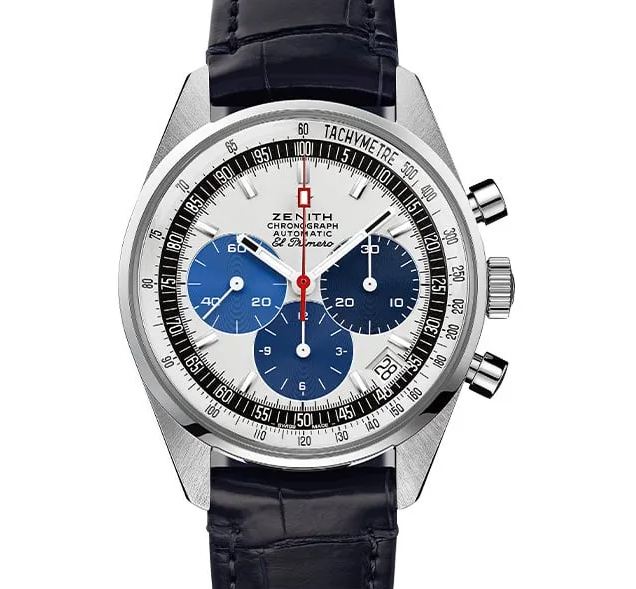
The most debated chapter in the brand's history opened in 1969, when Zenith presented the El Primero calibre: a high-frequency automatic chronograph movement (36,000 vibrations per hour, or 5 Hz), with column wheel and integrated barrel. The name itself — "the first" — claims a first that same year was contested by two other projects announced almost simultaneously: the Chronomatic calibre (Calibre 11), developed by the Heuer-Breitling-Hamilton consortium together with Büren and Dubois-Depraz, and Seiko's calibre 6139, presented in Japan. Available sources do not agree on which of the three actually reached the shops first, since the answer changes depending on the criterion used — date of public announcement, patent filing or actual commercial availability — and this historic dispute still has no single, universally accepted answer today.
The following decade was marked by the quartz crisis: under the ownership of the American Zenith Radio Corporation, which controlled the brand from 1971, mechanical production was seriously called into question. According to the brand's own account, the order to dismantle the tools for making the El Primero was not carried out: watchmaker Charles Vermot hid them in an attic of the Le Locle manufacture, allowing them to be recovered in the 1980s. The rescued calibre found new fame when, from 1988, it became the basis of the Rolex Daytona automatic chronograph. After further changes of ownership, since 1999 Zenith has been part of the French LVMH group, which made it one of the manufactures of its watch division, keeping its historic headquarters in Le Locle.