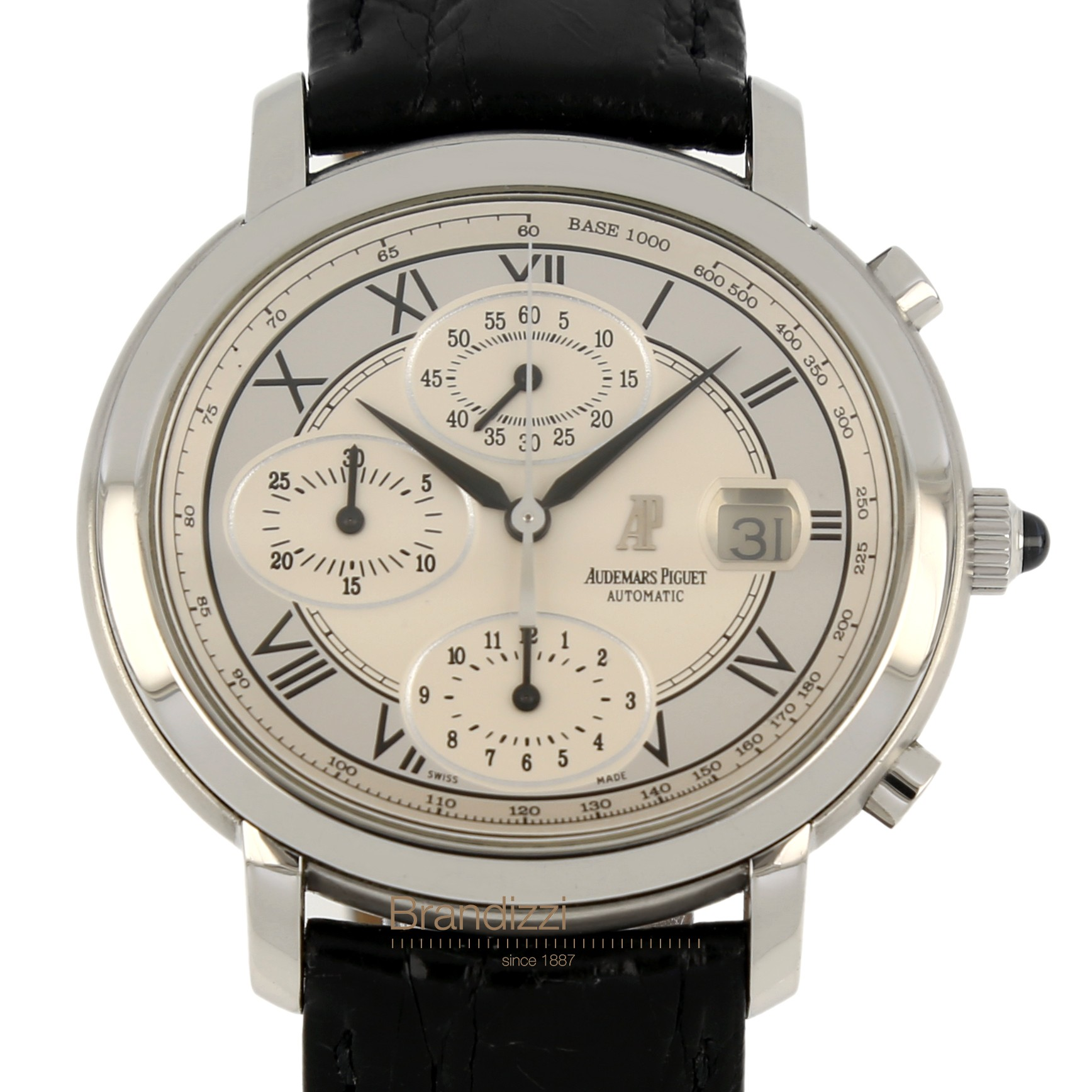

Audemars Piguet
Brand History
Audemars Piguet was founded in 1875 in Le Brassus, in the heart of the Vallée de Joux, the region among the Swiss Jura mountains known as the "cradle of fine watchmaking" for its historic concentration of artisans specializing in the most difficult complications. The manufacture traces its roots to a dense network of watchmaking families active as far back as the late 18th century, and is today the oldest watchmaker still in the hands of its founding families.
For the brand's first century, its reputation was built on complications: perpetual calendars, minute repeaters and tourbillons of the highest precision, often made to order for a select clientele. The turning point came on the evening of 10 April 1970, when CEO Georges Golay asked young Italian designer Gérald Genta to conceive, by the following morning, a luxury sports watch in steel — a segment that simply did not exist in fine watchmaking at the time. The result was the Royal Oak, presented in 1972 at the price of a gold watch despite being made in steel, a choice considered almost provocative at the time.
The Royal Oak's success, initially met with skepticism by the market, redefined the very concept of luxury in watchmaking, proving that technical refinement and high-end finishing could coexist with a material until then considered "base." From that gamble came, over the following decades, all the families that today make up the brand's catalogue: from the Royal Oak Offshore of 1993, designed for a younger, sportier audience, to the Code 11.59 of 2019, the collection with which Audemars Piguet attempted to build a second aesthetic language beyond the iconic octagon.