TAG Heuer
Brand history
The brand's story begins long before the "TAG" initials: in 1860, aged just twenty, Edouard Heuer opened his own watchmaking workshop in Saint-Imier, in the Swiss Jura, the "Uhrenmanufaktur Heuer". This is where the vocation that would accompany the company for more than a century was born: the precise measurement of short intervals of time. In 1869 Heuer filed a first patent for a crown winding and setting system, and in 1882 and 1887 came two decisive patents for chronographs — the latter for the improvement of the oscillating pinion, a mechanism that allows the chronograph to be started and stopped instantly with a pusher and which, in evolved forms, still underpins many modern mechanical chronographs.
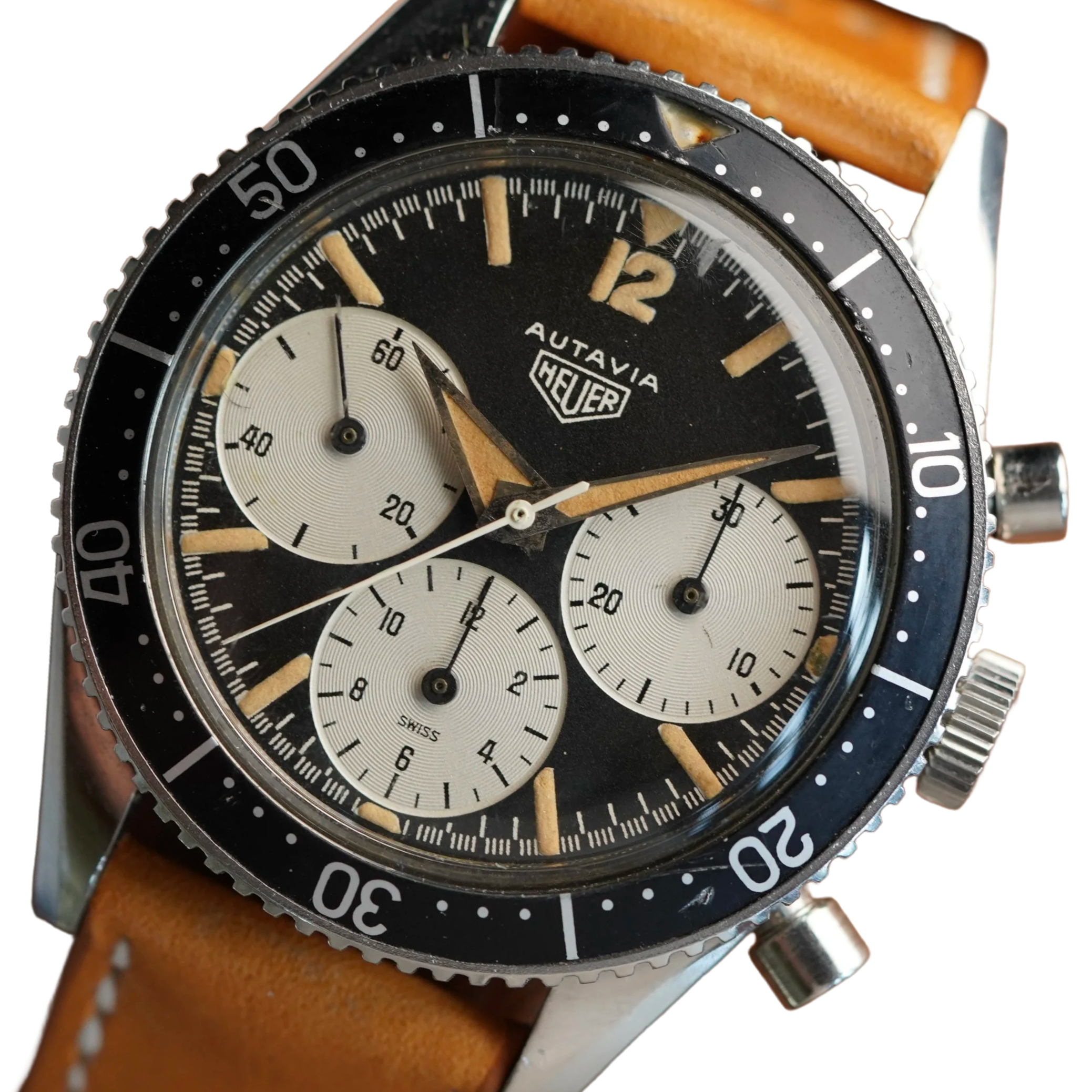
In the 20th century Heuer specialised in sports and dashboard timekeeping: in 1911 the company presented a dashboard chronograph for cars and aeroplanes, and in 1916 the "Mikrograph", the first stopwatch able to measure hundredths of a second, used in sport, industry and the military. It was within this line of work — on-board instruments for motoring and aviation — that the name "Autavia" was born in 1933 (a contraction of AUTOmobile and AVIAtion), initially applied to a dashboard timer and only decades later turned into a wristwatch.
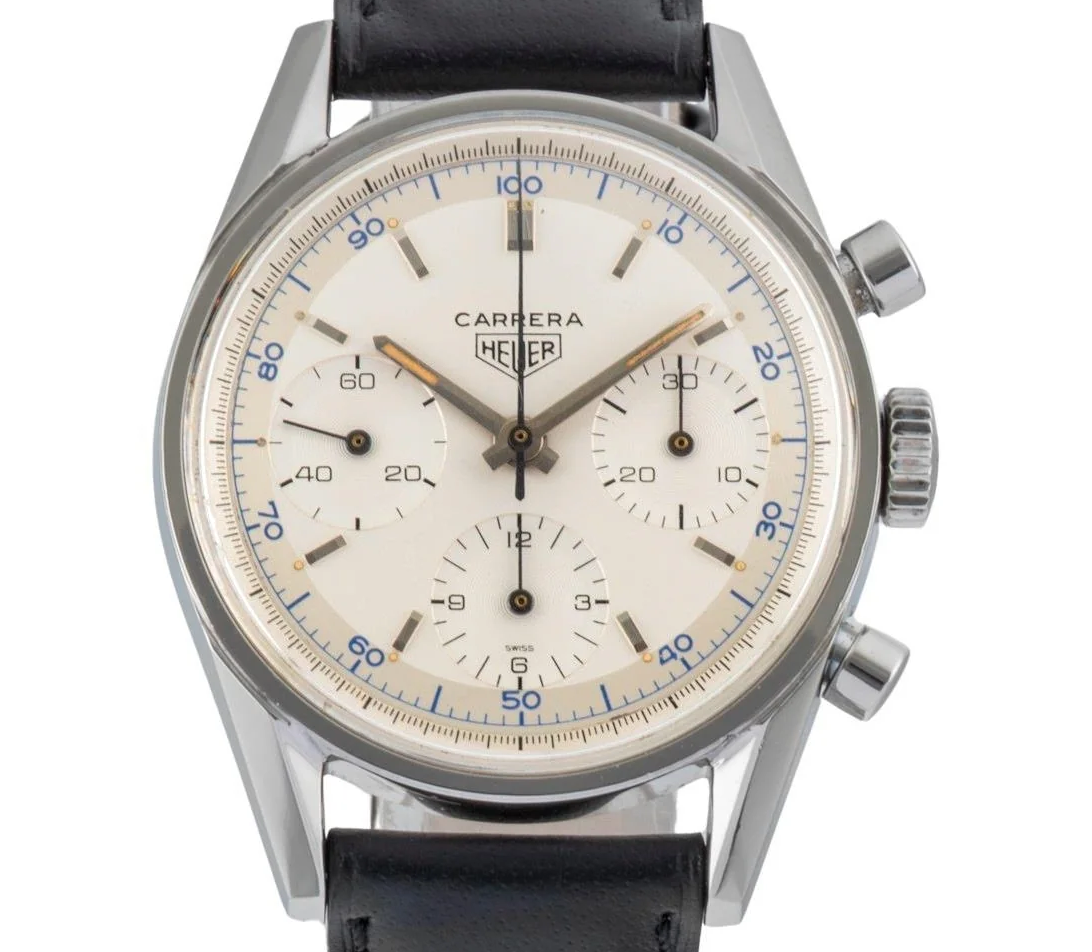
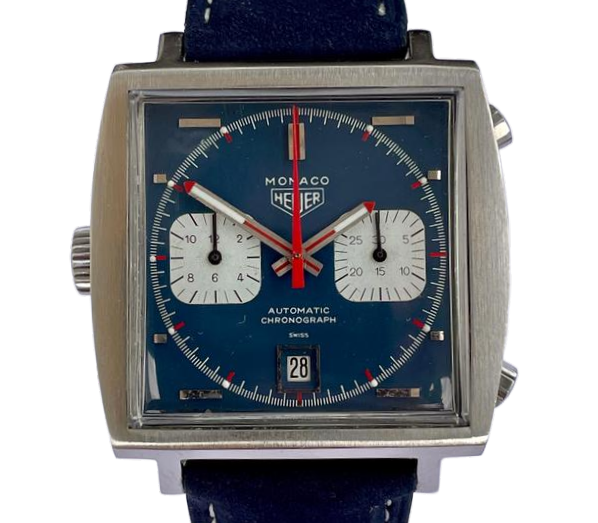
The post-war years and above all the 1960s marked the brand's golden age, led by Jack Heuer, the founder's great-grandson, who headed the company from 1958-1962. It was he who launched, in quick succession, the Autavia wristwatch (1962), the Carrera (1963) and the Monaco (1969), the latter presented with the Calibre 11 "Chronomatic", one of the world's first automatic chronograph movements. These were the same years in which Heuer forged ever closer ties with motor racing: official timing of the Indianapolis 500 from 1971, development of the "Centigraph" system for Scuderia Ferrari, and Heuer watches on the wrists of drivers such as Jo Siffert and Mario Andretti and — in 1962, in space — of astronaut John Glenn.
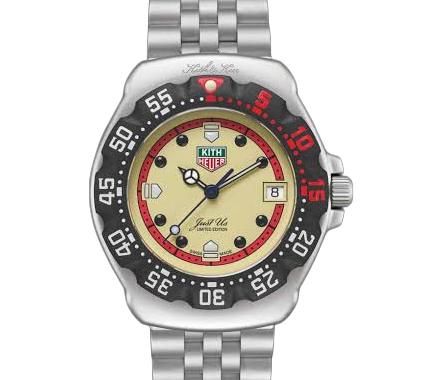
The quartz crisis of the 1970s put the whole Swiss mechanical watch industry, Heuer included, to a severe test. In 1985 the Heuer family sold control of the company to TAG — Techniques d'Avant-Garde, an industrial group with interests in aerospace and, not by chance, in Formula 1 (TAG was then a sponsor and part-owner of the turbo engine powering the McLaren that won the world championship with Niki Lauda in 1984 and Alain Prost in 1985 and 1986). This acquisition gave rise to the name "TAG Heuer", which the company still bears today. The new set-up relaunched the brand with a collection designed for a wider audience, the Formula 1, launched in 1986.
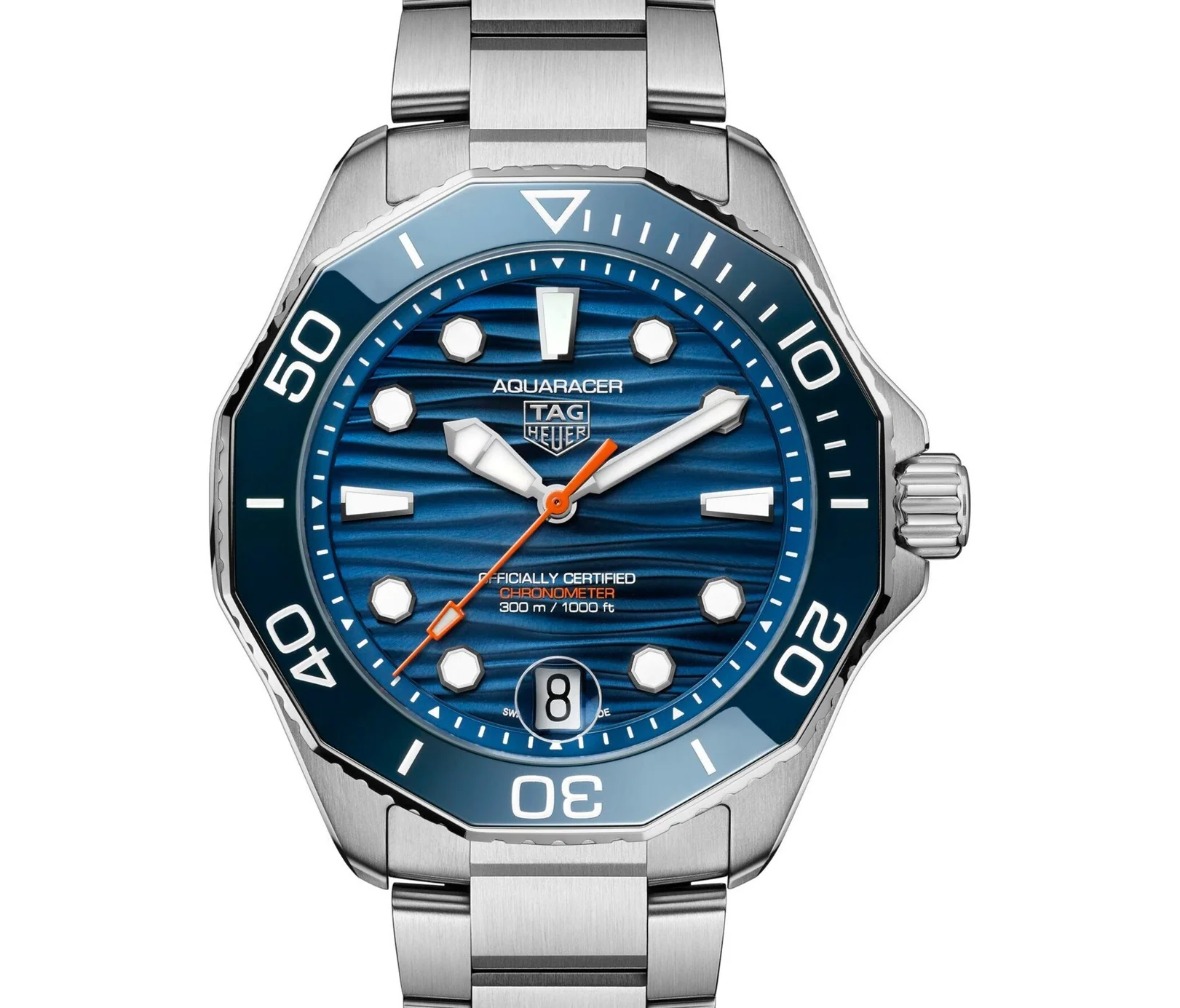
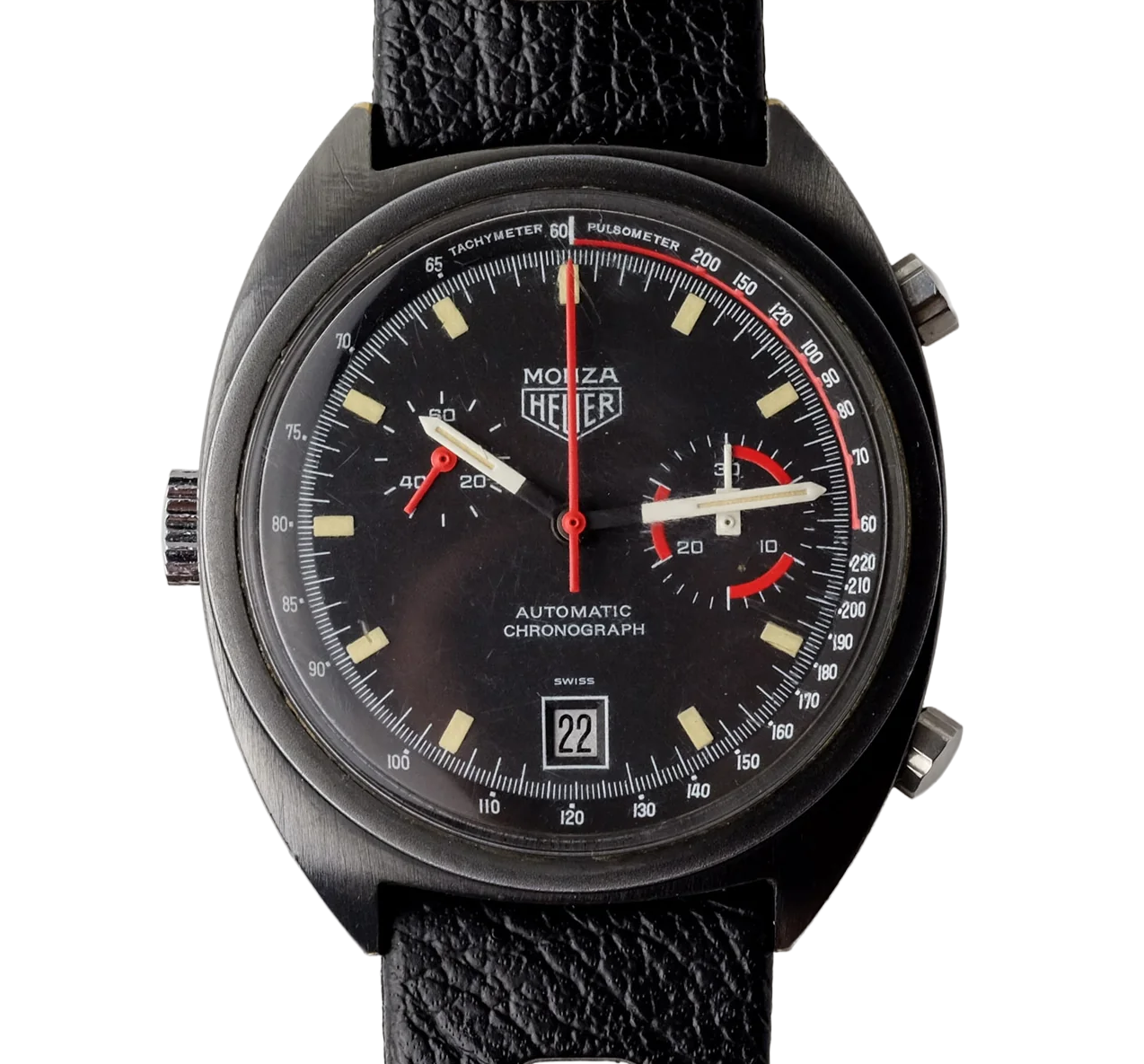
In 1999 TAG Heuer was acquired by LVMH (Moët Hennessy Louis Vuitton), which bought almost all of its shares for around 1.15 billion Swiss francs, placing the brand in its watches and jewellery division. Since then TAG Heuer has continued to explicitly claim its dual heritage: the technical and sporting heritage of Heuer, born in Saint-Imier in 1860, and that of the modern TAG-led relaunch from 1985 — with numerous reinterpretations of historic models (Autavia, Monaco, Monza) alongside contemporary collections.